Disclosure: As an Amazon Associate, kajuandouglas.com earns from qualifying purchases. Links to Amazon on this page are affiliate links; they cost you nothing extra. Listing details such as price and availability change often, so check the current Amazon listing before you buy.
Learning how to choose a smartwatch starts with your phone, not with the watches: a smartwatch is a companion device, and the single most important decision — which ecosystem it belongs to — is largely made by whether you carry an iPhone or an Android phone. Get that right and the remaining choices, about size, battery, features and style, become a pleasant shortlist instead of a confusing catalogue.
This guide walks the decision in the order that matters: phone compatibility first, then what you actually want the watch to do all day, then size and comfort, battery expectations, the wellness and activity features most people use, and the extras that are worth paying for only if your life calls for them.
Quick answer: Match the watch to your phone first — Apple Watch for iPhone, Wear OS or brand watches for Android. Then choose by your main use: notifications and apps, activity and sport, or a bit of both. Pick a case size that suits your wrist, expect anything from a day to over a week of battery depending on the type, and only pay for LTE if you genuinely leave your phone behind.
How to Choose a Smartwatch
In this guide
Gear for This Guide

Apple Watch Series 10 GPS — The iPhone-first reference point: the full-featured Apple Watch experience for people inside Apple’s ecosystem. Check price on Amazon.

Apple Watch SE (2nd Gen) GPS 40mm — The more accessible Apple Watch route, keeping the core experience in a smaller 40 mm case. Check price on Amazon.

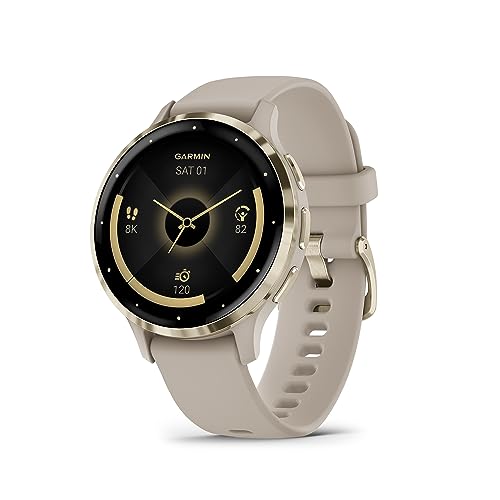
Garmin Venu Sq 2 GPS Smartwatch — An Android-and-iPhone-friendly GPS smartwatch with an AMOLED display and long battery life, aimed at active daily wear. Check price on Amazon.
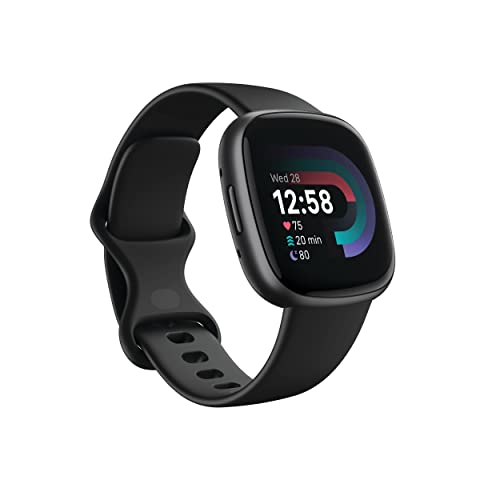
Google Fitbit Versa 4 Fitness Smartwatch — A fitness-leaning smartwatch that works across phone platforms, for buyers whose priority is activity and everyday wellness tracking. Check price on Amazon.
Step 1: Let Your Phone Make the First Cut
Apple Watch works only with iPhone, and it is so deeply integrated — messages, calls, apps, unlocking your Mac — that iPhone owners who want a full smartwatch experience should start there and usually end there. Android owners have the wider field: Wear OS watches from Samsung and Google pair best with Android phones, while Garmin and Fitbit watches work with both platforms, trading some phone integration for longer battery life and stronger sport features. A watch that fights your phone will annoy you daily; a watch that belongs with it disappears into your routine.
Check the details before falling for a design: some features of some watches only work with the same brand of phone, and older phones may not support the newest watches at all. The shortlists in smartwatches picked for Android phones and smartwatches picked for iPhone are organised by phone platform for exactly this reason — start inside your platform’s list, never outside it.
Step 2: Decide What the Watch Is For, All Day
Most buyers use a smartwatch for three things: glancing at notifications without reaching for the phone, tracking activity and everyday wellness signals like steps, workouts, heart rate and sleep, and telling the time with a face that shows the information they care about. Rank those for yourself. A notification-first user wants a bright screen, good app support and comfortable all-day wear. A sport-first user wants accurate GPS, durable build, physical buttons that work with sweaty hands, and battery that survives long sessions. A style-first user should honestly prioritise case design and strap options, because a watch you dislike wearing tracks nothing at all.
Be wary of feature lists as long as your arm. Music storage, voice assistants, contactless payments and app stores matter if you will use them weekly; as occasional novelties they should not steer the purchase. The features owners actually use after month three are a short, unglamorous list — notifications, timers, activity rings or goals, sleep tracking and payments — and choosing a watch that does those things gracefully beats one that does thirty things awkwardly.
Step 3: Get the Size and Fit Right
Smartwatches come in case sizes roughly from 40 mm to 49 mm, and the right size is the one that suits your wrist and your eyes. A case that overhangs the edges of your wrist will catch on sleeves and feel clumsy; a very small case can make text and touch targets fiddly. If you can, try sizes in person — photographs online are notoriously bad at conveying how a watch wears. Consider thickness too, especially if you sleep in the watch for sleep tracking: slimmer watches disappear at night, chunky sport watches announce themselves.
Straps are part of fit, not an afterthought. Silicone and nylon sport straps handle sweat and water and are the practical default for active wear; metal and leather dress a watch up but dislike workouts. Most watches use quick-release straps, so one watch can serve the gym and the office with a thirty-second swap. Budget for a second strap when you buy — it doubles the watch’s wardrobe and its comfort range.
Step 4: Set Honest Battery Expectations
Battery life is the smartwatch category’s great divide. Full-featured watches with bright always-on displays and rich apps typically need charging every day or two — a routine like charging while you shower and dress makes it painless. Sport and fitness-focused watches stretch to many days or even weeks by using more efficient displays and software. Neither is wrong; they are different products wearing the same name. Choose by your tolerance for charging: if a nightly routine sounds fine, the full-featured route is open to you; if you know you will forget, buy the long-battery design and enjoy its other strengths.
Think about when the watch charges, because that decides what it cannot do: a watch charging overnight is not tracking your sleep. Many owners charge during a morning routine or at their desk. Our deeper explainer, smartwatch battery life explained, unpacks what drains a smartwatch battery and how makers’ claims are measured, which helps you read product pages with the right scepticism.
Step 5: Wellness and Activity Features — Comfort Framing, Real Value
Modern watches track workouts, heart rate, sleep stages, blood oxygen estimates and more. Treat these as wellness information — useful for spotting your own patterns, like how a late meal affects your sleep, or whether your resting heart rate trends down as fitness improves — rather than as medical measurements. The value is in trends over weeks, not in any single reading. Features worth having for most people: reliable workout tracking with GPS for outdoor sessions, sleep tracking you will actually wear the watch for, and water resistance that matches your swimming and showering habits.
Check water resistance in plain terms before you buy: some watches shrug off swimming, others only splashes, and leather straps dislike water regardless. If swimming is your sport, start from lists like smartwatches built for swimming where water readiness is the entry requirement, then apply the rest of this guide inside that list.
Step 6: Decide on LTE, Payments and the Extras
An LTE (cellular) watch can call, message and stream with your phone left at home — genuinely liberating for runners and anyone who wants a lighter pocket — at the cost of a more expensive watch, a monthly plan add-on, and shorter battery life. GPS-only models do everything else via your phone’s connection. Most owners are honestly served by GPS-only; buy LTE for a specific, recurring phone-free pattern in your week, not for a hypothetical one. Our head-to-head in LTE vs GPS smartwatch compared works through that decision properly.
Contactless payments are the extra almost everyone ends up loving — a wrist tap at the till is faster than any card — so confirm your bank supports the watch’s payment system before buying if that matters to you. Voice assistants, music storage and app ecosystems vary by platform and are best judged against the two or three specific things you already know you will do.
Common Mistakes When Choosing a Smartwatch
- Buying a watch that does not fully support your phone platform, then blaming the watch for missing features.
- Choosing the largest, brightest model and discovering you will not sleep in it — losing the sleep tracking you bought it for.
- Paying for LTE with no recurring phone-free routine in your week.
- Ignoring strap comfort and case thickness, the two things your wrist notices every hour.
- Judging battery claims without asking what the watch is doing — always-on display and GPS workouts change everything.
Pro Tips for a Choice You Will Still Like in a Year
Buy for the routine you have, not the athlete or executive you intend to become; a watch matched to your real week gets worn, and a worn watch is the only kind that helps. Prioritise the screen’s readability in sunlight if you are outdoors often, and the charging routine if you are not — those two mundane factors predict satisfaction better than any headline feature. Finally, remember the watch is the visible part of a system: its app on your phone is where you will review everything, so glance at that app’s reputation too before you commit.
Choosing for Someone Else: Children, Parents and Gifts
Buying for another person adds constraints that outrank features. For children, the deciding factors are durability, a strap and case sized for small wrists, simple controls, and — for cellular models — a family setup that lets a parent manage contacts and location. Battery that survives a school week of forgetting to charge is worth more than any app. For older parents, prioritise a large, legible display, simple charging (a puck that snaps on magnetically beats a fiddly cable), fall-detection and emergency features where offered, and the platform that matches the phone they already use and that you can help them with remotely.
For gifts generally, buy inside the recipient’s phone ecosystem, keep the receipt’s return window in mind, and favour the model whose size is most forgiving — mid-sized cases fit the widest range of wrists. A watch chosen humbly for someone else’s real life beats a flagship chosen for your own taste, every time.
New, Refurbished or Last Year’s Model?
Smartwatches are an unusually good category for buying the previous generation: the improvements year to year are incremental, the software support typically continues for years, and the discounts at a new launch are real. Refurbished units from the manufacturer carry proper warranties and fresh batteries in many programmes, which addresses the one component that ages. What to avoid is a model so old that its software support is ending — check the manufacturer’s stated support before buying a bargain from several generations back, because a watch cut off from updates loses app compatibility and security fixes alike.
Whichever route you take, the battery deserves one question: is it new, replaced, or original-and-aged? On a second-hand watch, battery health is the difference between a bargain and a daily frustration, and honest sellers of refurbished units state it. Ask, and let the answer steer you.
Reading a Smartwatch Specification Sheet
A few specifications repay attention while the rest can be skimmed. Case size and thickness decide wearability more than any feature. Display brightness, quoted in nits, predicts outdoor readability — the difference between glancing and squinting at a run. Water resistance should be read in plain language: a swimming mention in the manufacturer’s own materials outranks any code. Battery figures should be read as the manufacturer testing gently, as our battery explainer details. Storage matters only if you load music for phone-free exercise. And the sensor list matters less than the platform’s reputation for using sensors well, because software turns the same hardware into very different usefulness.
Two specifications are consistently overvalued by shoppers. Processor names change yearly with barely perceptible differences in daily use, and screen resolution beyond a modest point is invisible at wrist distance. If a decision between two watches is coming down to those, redirect it to strap comfort, charging routine and the companion app — the things your wrist and your habits will actually meet.
The Two-Watch Wardrobe and Other Ownership Patterns
Some owners resolve every dilemma in this guide by owning two watches: a full-featured smartwatch for weekdays and a long-battery sport watch for weekends, expeditions and the nights the smart one is charging. It costs more than one watch and less than most people fear, especially with last-generation models, and it means neither device is a compromise. Others do the reverse — one watch, several straps — and find wardrobe flexibility in a thirty-second swap. Both patterns beat the commonest one: one watch bought to be everything, worn for nothing because it is always charging, always too sporty for the evening, or always too precious for the gym.
Your Checklist, Condensed
Phone platform decides the camp. Main use ranks the features. Wrist decides the size. Charging tolerance decides the battery class. A recurring phone-free pattern — and only that — justifies LTE. A second strap goes in the basket. Six decisions, in that order, and the catalogue of hundreds becomes a shortlist of two or three, between which you may honestly choose by looks. That is not a failure of rigour; it is what rigour is for.
Frequently Asked Questions
Can I use an Apple Watch with an Android phone?
No. Apple Watch requires an iPhone for setup and ongoing use. Android owners should look at Wear OS watches from Samsung or Google, or cross-platform watches from Garmin and Fitbit, which pair with Android (and also with iPhone, with some feature limits). Always confirm your exact phone model is supported before buying.
What size smartwatch should I get?
Match the case to your wrist: smaller cases (around 40–42 mm) suit slimmer wrists and sleep more comfortably; larger cases (45 mm and up) offer bigger, more readable displays and often larger batteries. The case should not overhang the edges of your wrist. Trying sizes in person is the most reliable method.
Is LTE worth it on a smartwatch?
Only if you regularly want connectivity while your phone stays home — running, gym sessions, quick errands — and you accept the extra watch cost, a monthly plan add-on and reduced battery life. For most people whose phone is always nearby, the GPS-only model does everything they need.
How long do smartwatch batteries really last?
Full-featured watches typically last a day to two days per charge with typical use; fitness and sport watches commonly last many days to weeks. Always-on displays, GPS workouts and LTE are the biggest drains. Makers’ headline figures assume gentle use, so read them as best-case numbers.
Can a smartwatch replace a fitness tracker?
For most people, yes — modern smartwatches track workouts, heart rate and sleep as well as dedicated trackers, and add notifications and apps. Dedicated trackers still win on battery life, size and simplicity. Our comparison of the two formats works through who should choose which.
Should I wait for the next model to come out?
Smartwatches improve incrementally each year, and current models are discounted as successors approach. If a current watch fits your phone, wrist and routine, it will serve you for years; waiting makes sense only if a specific announced feature addresses a real need of yours. A watch bought and worn beats a perfect watch postponed.
Reading Your Own Days: The Self-Audit That Should Precede Every Shortlist
Most smartwatch regret comes from buying for an imagined life rather than the lived one, and the cheapest corrective is a week’s honest observation before any money moves. The audit is simple: notice how often you currently check your phone and why, which notifications genuinely deserve your wrist, how you actually exercise rather than how you intend to, and what your current watch, if you wear one, does well enough that a smart replacement must at least match. A week of that attention produces a personal specification no review can supply.
The notification question deserves particular honesty, because it decides how much platform you need. Some people want a strict filter — calls, messages from a handful of people, calendar warnings — and nothing else, and for them almost any watch suffices, with battery life and comfort deserving the budget instead. Others genuinely run their day from their wrist, triaging, replying and glancing constantly, and they should weight the operating system, the reply options and the app ecosystem heavily. Both people exist, they need different watches, and marketing addresses them identically, which is why the audit must come first.
Exercise honesty matters just as much. A watch bought for marathon training by someone whose actual movement is walking and weekend cycling will carry sensors and size they never use while lacking the comfort and battery their real routine rewards. Buy for the activity you did last month, with a modest allowance for the one you are credibly building toward, and let committed athletes — who know exactly who they are — buy the specialised tools this guide’s general advice would undersell.
Finally, audit your tolerance for charging, because it is a personality trait disguised as a specification. Some owners happily dock a watch nightly beside the phone and never think about it; others find every additional charging ritual a small tax they eventually refuse to pay, and the watch migrates to a drawer. Neither temperament is wrong, but they point at different categories of watch, and knowing yours in advance is worth more than any comparison of screen brightness.
Case Materials, Glass and Straps: The Ownership Layer
Specifications concentrate on what a watch computes; ownership is about what it is made of, and materials decide how the watch ages, how it feels at hour fourteen, and whether it survives the life you actually lead. This layer deserves deliberate attention because it cannot be upgraded later: the case and glass you buy are the case and glass you keep.
Case materials trade weight against resilience and price. Aluminium is light, kind to smaller wrists and entirely adequate for most lives, at the cost of showing knocks more readily. Stainless steel adds heft, a more traditional watch presence and better resistance to daily scarring, and many owners find the weight reassuring rather than tiring. Titanium splits the difference for those who want durability without mass. The honest test is wearing, not reading: a watch that feels present for the first hour may feel oppressive by evening, and retailers’ return windows exist precisely for this discovery.
Glass follows the same logic. Standard strengthened glass serves most owners well; sapphire, where offered, resists scratches from keys, walls and gym equipment noticeably better and keeps a watch looking new for years, which matters to people who keep devices long and notice cosmetic wear. Neither choice affects the electronics, so the decision is about your environment and your temperament: rougher days and longer ownership argue for the harder glass, gentler days make it a luxury.
Straps are the most underestimated and most fixable element. The strap in the box is a starting point, not a verdict, and the standard lug or quick-release systems on most watches open a world of materials: silicone for sport and water, woven nylon for breathable all-day comfort, leather for the office, metal for occasions. Budget a second strap into any purchase and the watch becomes two watches, which resolves many style hesitations that otherwise distort the choice of the watch itself. Comfort at the strap decides whether the watch is worn daily, and a watch in a drawer tracks nothing.
Software Longevity: How Long Will This Watch Stay Current?
A smartwatch is a small computer, and like every computer it has a software lifetime that ends before its hardware does. Choosing well includes asking how many years of updates a model realistically receives, because the day updates stop, new phone pairings grow fragile, apps drift away and security fixes end, while the watch still ticks perfectly on the wrist — an orphan in working order.
The ecosystems differ in their habits, and the pattern to look for is the maker’s track record with older models rather than promises about new ones. Established platforms with long support histories are a safer home for a watch you intend to keep, and buying the current or recent generation rather than a heavily discounted older one usually buys additional years of relevance that outweigh the saving. This is the one place where the newest model has an argument beyond novelty: its clock starts later.
Phone upgrades interact with this too. A watch near the end of its support life may pair happily with today’s phone and refuse a phone two generations newer, stranding owners at exactly the moment they upgrade the device they care about more. If you replace phones often, weight software longevity heavily; if you keep phones for many years, the watch and phone may age out together in a natural, cheaper harmony. Either way, the question belongs in the choosing process, because it is invisible in the shop and decisive in year four.
Buying for the Wrist It Will Live On: Comfort Testing That Matters
Every other criterion in this guide can be researched; comfort must be experienced, and it is the criterion most likely to decide whether the watch is worn in month six. A deliberate comfort test, run inside the return window, is therefore part of choosing, not an afterthought.
Wear the watch for full days, not minutes, including a workout, a night’s sleep if you intend to track it, and a day of typing, which is where case height and crown position announce themselves against desk and cuff. Check the underside after exercise for how the sensor housing sits through movement, and check your wrist at day’s end for the strap’s verdict. Swap the strap before concluding the watch is uncomfortable, because straps cause more rejections than cases do, and the fix is cheap.
Pay attention to the small frictions that compound: a crown that digs when you flex your wrist, a case that catches on sleeves, a buckle that annoys during sleep. Individually trivial, these are the sensations that decide whether the watch becomes clothing or equipment, and clothing is what a successful smartwatch must become. Choose the watch you forget you are wearing, with the features your audit demanded, and you have chosen correctly in the only order that works: life first, specifications second, comfort always.
Where to Buy and How to Judge a Deal Without Regret
The choosing process ends at a checkout, and the manner of buying deserves the same deliberateness as the model selection, because return terms, warranty handling and timing shape the ownership experience as surely as specifications do. A smartwatch is worn against skin, sized to a wrist and judged over days, which makes it one of the products where the right to change your mind has real value.
Favour sellers whose return policy lets you genuinely wear the watch — full days, a workout, a night — rather than merely unbox it, and read the conditions before purchase rather than after disappointment. Buy the size you measured, not the size that happens to be discounted, because a bargain in the wrong case size is a slow, daily discomfort purchased at a discount. Where previous-generation models are offered alongside current ones, compare their remaining software support as this guide advises; the cheaper watch with two fewer years of updates may be the more expensive ownership.
Timing helps the patient. New models arrive on fairly predictable cycles in this category, and the weeks around a launch soften prices on the outgoing generation, which is often the sweet spot for buyers whose audit does not demand the newest features. Refurbished units from the manufacturer, with warranty, suit buyers comfortable trading an unblemished box for a lower tier of spending. What timing should never do is rush you past the comfort test or the audit; a watch bought hastily at a wonderful price and worn reluctantly is the most expensive kind there is.
The Decision, Compressed: A Five-Line Checklist
Everything in this guide reduces to five questions, and a buyer who can answer all five can choose in an afternoon and stop researching with a clear conscience. One: which watches does my phone truly support, with the features I care about intact? Two: what is the watch for, in my audited, actual days — filtering notifications, accompanying exercise, replacing my phone on runs, or some honest mixture? Three: does the size, weight and strap disappear on my wrist across a full day and a night? Four: does its battery rhythm fit my temperament — nightly charging accepted, or multi-day freedom required? Five: will it still be supported and pairable for as long as I realistically keep it?
A watch that passes all five is not merely a good choice; it is your choice, defensible against every newer model and every contrary review, because it was fitted to a life rather than to a launch event. Keep the answers written down, too. When the next generation arrives, as it reliably will, those five answers let you judge it in minutes: unless it changes one of your answers for the better, your current watch remains the right one, and the choosing skill this guide teaches will have paid for itself a second time.
Ecosystem Depth: Apps, Watch Faces and the Long Tail of Usefulness
Beyond the headline features, platforms differ in the long tail: the breadth of third-party apps, the quality of watch faces, the integrations with the services your life already runs on. This depth rarely decides a purchase for a light user, and routinely decides it for a heavy one, so the choosing question is which kind of user your audit said you are.
App breadth matters when the watch must stand in for the phone in specific moments: the boarding pass that must appear at the gate, the smart-home control from the garden, the transit card, the music service whose offline downloads you rely on for runs. List the three or four services you would genuinely want on your wrist and verify each one’s presence and quality on the platforms you are considering, because an ecosystem’s total app count is a vanity figure while your four apps are your life. A platform missing your one essential service is the wrong platform however superior its hardware.
Watch faces are the interface you will see ten thousand times, and platforms differ in whether faces are a curated handful, a designer’s gallery or an open bazaar of variable quality. What matters practically is whether you can build a face that shows your chosen information — time, date, weather, next event, activity progress — in a style you are happy to wear to both the gym and dinner. Spend choosing time inside each platform’s face editor if you can; ten minutes there predicts years of daily satisfaction more reliably than ten minutes comparing processors.
Voice assistants complete the ecosystem picture, because the wrist is where voice control is most natural: setting timers while cooking, dictating replies while walking, asking questions with hands full. Assistants differ in competence and in which phone platforms they accompany, and for owners who expect to talk to their watch daily, that difference belongs on the shortlist of deciding factors rather than in the footnotes where comparisons usually bury it.
Water Resistance, Durability Ratings and What They Mean in Practice
Water resistance figures are among the most misread specifications in the category, and choosing well requires translating them into the life your watch will actually meet: showers, rain runs, pool laps, sea swims, and the sauna that ratings quietly exclude.
The ratings describe laboratory pressure tests, not invitations. A watch rated for shallow water activities handles swimming pools and showers comfortably and should still be kept out of high-pressure water, hot tubs and saunas, where heat and steam attack seals in ways pressure tests do not model. Watches built for swimming usually add a water-lock mode that ejects water from the speaker afterwards, a small feature whose presence signals the maker’s real intent for the device. Divers and serious open-water swimmers need purpose-built instruments and know it; everyone else should match the rating to their wettest ordinary week, with a margin, and then treat seals as consumables that age — a five-year-old watch’s resistance is a historical fact, not a current promise, and veterans retire older watches from the pool accordingly.
Durability beyond water follows the same pattern of honest matching. Impact resistance, case construction and glass hardness matter in proportion to the knocks your days deliver: trades, climbing, contact sports and small children all raise the tariff. A protective case or a screen protector is a legitimate choosing strategy for rough lives, cheaper than buying the toughest watch in the catalogue, provided it does not muffle the sensors or the fit. Choose for the life you have, protect for the accidents it includes, and the watch will look and work the way you hoped for as long as you keep it.
Trying Before Deciding: Showroom Tests That Actually Reveal Something
Most showroom interactions with a smartwatch reveal almost nothing, because the watch is tethered, in demo mode and lit like jewellery. A deliberate five-minute test extracts real information even under those conditions, and it is worth scripting before you go so the sparkle does not do your thinking for you.
Put the watch on and wear it while you examine everything else; comfort judgements need minutes, not seconds, and the walk around the shop is data. Raise your wrist naturally and read the time and a notification at arm’s length, in the shop’s bright light and again turned toward the window’s daylight, because a screen that only performs under retail lighting will disappoint on every sunny street. Work the crown, the buttons and the touchscreen with the hand you will actually use, including with slightly damp fingers if the shop allows, and judge whether the controls feel like instruments or obstacles. Type or dictate one short reply if the demo permits; the reply experience is where platforms quietly diverge, and it is a daily act you are buying.
Then interrogate your own shortlist rather than the salesperson’s. Ask how long this model receives software updates, what the warranty does with a battery that fades in year two, and whether the strap system is standard or proprietary, because those three answers predict ownership better than the demonstration loop does. Leave without buying if you possibly can; a night’s distance between the shop’s theatre and your audit’s honesty is the cheapest quality filter in consumer electronics, and the watch that still wins in the morning is very likely the right one.
The Resale and Hand-Me-Down Test: Choosing a Watch With a Second Life
A final choosing lens that quietly separates good purchases from great ones: what happens to this watch when you are done with it. Smartwatches cascade through families remarkably well — to a teenager, a parent, a partner — and they hold resale value in proportion to their platform’s longevity and their physical condition. A watch from a well-supported ecosystem, with a standard strap system and a battery that still holds a useful charge, finds a second wrist easily, and that second life is real value that belongs in the purchase calculation alongside the launch-day features.
Choosing with the cascade in mind changes small decisions: favour the model whose software support runs longest, keep the box and spare strap links, prefer the harder glass if your life is rough, and avoid engraving, however charming the offer, unless the watch is truly forever. None of these compromises the first owner’s enjoyment; all of them compound. And there is a satisfaction in handing on a watch that still works beautifully which no trade-in counter quite replicates — the choosing was so sound that it served two people, which is as good a definition of a well-bought gadget as this guide can offer.
Choose in that spirit — audit honestly, test comfort ruthlessly, respect the software calendar, and buy once for years rather than twice in frustration — and the watch on your wrist will feel less like a purchase and more like a decision you keep being glad you made, which is the highest praise any choosing guide can honestly promise.
One Watch or a Rotation: A Note for People Who Already Own Watches
Many buyers arrive at this decision already owning a traditional watch they love, and for them the smartwatch question has an extra dimension the first-time buyer never faces: not which watch replaces the collection, but whether a smartwatch joins a rotation, serves specific duties, or quietly becomes the only watch worn. Each pattern is legitimate, and naming yours in advance prevents the common disappointment of buying a smartwatch that competes with a beloved mechanical piece on the mechanical piece’s own terms — appearance, ceremony, permanence — where it was never going to win.
The duty-watch pattern suits most collectors best: the smartwatch for exercise, travel, workdays and notification-heavy life; the traditional watch for evenings, occasions and the pleasure of the thing itself. Chosen this way, the smartwatch’s compromises stop mattering — it need not impersonate jewellery, because jewellery exists elsewhere in the drawer — and its strengths, comfort and utility, get the whole budget of attention. The full-conversion pattern, where the smartwatch becomes the only watch, asks more of it: materials, strap wardrobe and a face with genuine style all rise in importance, and the choosing criteria in this guide should be weighted toward the ownership layer accordingly. Either way, the decision is about the role, and roles, once named honestly, choose watches almost by themselves.
Whichever pattern is yours, hold the line the audit drew: a smartwatch earns its wrist by serving the days you actually live, in the company of whatever else you love to wear, and a choice made on those terms ages gracefully because it was fitted to a life that changes slowly, rather than to a product cycle that changes every single year without fail.
And if the process in this guide has a final virtue, it is that it transfers: the audit, the comfort test, the software calendar and the five questions will serve you for the next watch, and the one after that, long after today’s models are museum pieces, because they were never about the models at all.
So take the afternoon the decision deserves, answer the five questions in writing, and then stop researching with a clear conscience — the perfect watch does not exist, but the right watch for your wrist, your phone and your days absolutely does, and it is findable by exactly the method you have just read.
That confidence, once earned, is worth more than any single feature on any specification sheet ever printed.
Choose well, wear it daily, and let the decision disappear into the background of a life it quietly improves.
Welcome to the wrist, well chosen.
Related Guides
How much should I expect to spend on a first smartwatch?
Think in tiers rather than figures. Entry-level models cover notifications, basic activity tracking and respectable battery life; mid-range models add better screens, more polished software and broader features; flagship and premium-material models add refinement, durability and ecosystem depth. For most first-time buyers the mid-range is the sweet spot, because it avoids both the frustrations of the cheapest tier and the diminishing returns of the top one.
Does a smartwatch need to match my phone’s brand?
Not always, but compatibility is the first filter. Some watches work only with one phone platform, while others support both with reduced features on one side. Check the specific pairing you intend, and weight the features you would lose — replies, payments, app depth — rather than assuming a cross-platform watch behaves identically on both phones.
Should I choose a round or square watch?
Let your habits decide. Square designs typically show more text at a glance, which suits notification-heavy use, while round designs wear like traditional watches and suit people who value appearance and glanceable time. Neither is functionally superior in general; try both shapes on your wrist if you can, because proportion against your wrist decides more than the catalogue photograph suggests.