Disclosure: As an Amazon Associate, kajuandouglas.com earns from qualifying purchases. Links to Amazon on this page are affiliate links; they cost you nothing extra. Listing details such as price and availability change often, so check the current Amazon listing before you buy.
The active vs passive speakers choice decides the architecture of your whole system, not just which box you buy. Active (powered) speakers carry their amplifiers inside the cabinets: plug them into the wall, connect a source, and listen. Passive speakers are cabinets and drivers only, waiting for an amplifier or receiver to power them. Neither is better in the abstract — they suit different budgets, rooms and temperaments — but the choice echoes for years, because it decides what you can upgrade and how.
This comparison explains how each works, what each really costs as a complete system, and where each wins: simplicity and value in small setups on one side; flexibility, surround sound and component upgrades on the other. It also untangles the terminology, because ‘powered’ and ‘active’ are used loosely in shops, and the distinction occasionally matters. By the end you will know which camp your next system belongs to.
Active vs passive speakers: The Short Answer
Choose active/powered speakers for simple stereo setups, desks, turntables and TVs — one purchase, no receiver, excellent value. Choose passive speakers if you want surround sound, already own an amplifier, or enjoy upgrading components separately. The amplifier is the dividing line: built in, or bought separately.
In this guide
Side-by-Side Comparison
| Factor | Active | Passive Speakers |
|---|---|---|
| Amplifier | Built into the speaker cabinets | Separate amplifier or AV receiver required |
| Setup | Plug in, connect source, play | Wire amplifier to speakers; more setup and settings |
| Starting cost (complete system) | Lower — one purchase does it | Higher — speakers plus amplifier plus wire |
| Upgrade path | Replace the speakers as a whole | Upgrade speakers or amplifier independently |
| Surround sound | Limited; stereo-focused (some ecosystems excepted) | The standard route to full home theatre |
| Sources and switching | A handful of inputs on the speaker | Amplifier/receiver offers many inputs and switching |
| Space | No extra box; cables to both speakers (power) | Amplifier needs a home; speaker wire to each speaker |
| Best for | Desks, small rooms, simple living-room stereo | Home theatre, hi-fi building, larger systems |
How to Decide, Step by Step
Step 1: Start from what you already own
An existing amplifier or receiver makes passive speakers the natural, cheaper next step; starting from nothing makes active speakers the simpler and usually better-value entry. Inventory your sources too: a turntable, TV and streamer all needing connection favours a receiver’s switching, while a phone and one other source fit comfortably on an active speaker’s inputs. Let the existing household equipment cast the first vote.
Step 2: Decide whether surround sound is in your future
If a full home-theatre system with centre and surround speakers is a genuine ambition, passive speakers with an AV receiver are the established route, and starting there avoids replacing everything later. If your future is stereo — music and better TV sound from two speakers — active models serve it completely. Be realistic: many people who buy ‘just in case’ surround capability never use it, and pay for it in complexity every day.
Step 3: Compare complete system costs
Price the whole working chain. Active: the speakers, perhaps stands. Passive: speakers, amplifier or receiver, speaker wire, stands. At modest budgets the active system usually delivers more sound per total spend because the manufacturer matched the amplifier to the drivers. At higher budgets the passive route’s flexibility starts to pay, because you can allocate money asymmetrically — great speakers with a modest amplifier today, a better amplifier next year.
Step 4: Consider how you like to own technology
Active speakers are appliances: they work, and when they age you replace them whole. Passive systems are hobbies: components can be repaired, swapped and upgraded individually, and a good amplifier can serve several generations of speakers. Neither temperament is superior, but mismatch causes regret — appliance people resent receiver menus, and hobbyists feel trapped by sealed active speakers. Choose for the owner you are, not the one in the advertisement.
As you work through this guide, keep the bigger picture in mind. Our roundup of best powered speakers for turntable shows how the main options compare, and the companion piece on how to choose a speaker covers the neighbouring decision in the same detail.
The Terminology, Untangled
Strictly, an ‘active’ speaker has an electronic crossover and a separate amplifier channel for each driver, while a ‘powered’ speaker has one amplifier per cabinet feeding a passive crossover. In shops and listings the words are used interchangeably to mean ‘has an amplifier inside’, and for buying purposes that loose meaning is fine: what matters is that the speaker needs mains power and a line-level source, not speaker wire from an amplifier. True active designs are common in studio monitors, which is one reason monitors measure so consistently.
The matching advantage is real either way. When a manufacturer builds the amplifier into the speaker, they know the drivers’ exact requirements and can tune power, crossover and protection precisely, which is why modest active speakers often sound more composed than a random amplifier-speaker pairing at the same total cost. The passive system’s counter-advantage is choice: thousands of combinations, each with its own character, and the freedom to change one element at a time as your taste or budget evolves.
Who Each Option Suits
Active speakers suit desks and studios, turntable corners, TV upgrades, small and medium rooms, and anyone who wants the shortest path from box to music. They dominate desktop audio for good reason: nearfield monitors are active almost by definition. They also suit minimalists and shared households, where a system that anyone can operate beats a system with an instruction file. If your system plan ends at two speakers and a subwoofer, active is very likely your answer.
Passive speakers suit home-theatre builders, owners of existing amplifiers, larger rooms needing serious power, and listeners who enjoy the component hobby. They are also the practical choice for in-wall and in-ceiling installations and for very long production runs — a passive speaker has no electronics to become obsolete, which is why thirty-year-old passive speakers still serve happily with modern amplifiers, while thirty-year-old active electronics would be a museum piece.
Ready to Buy? Start Here
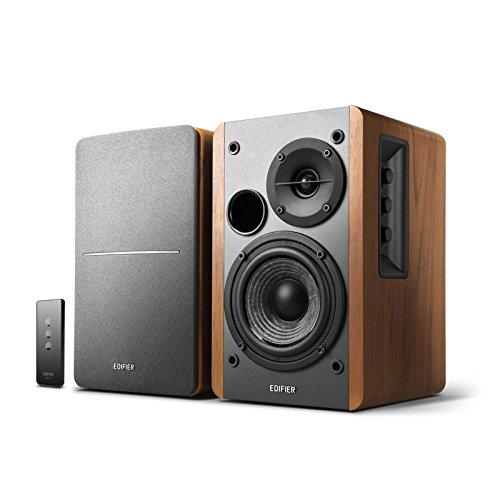
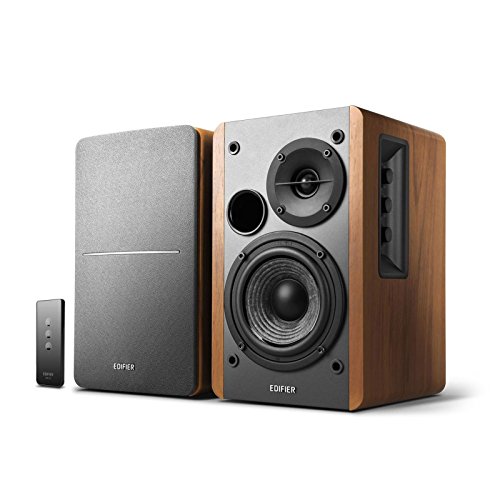
Edifier R1280T Powered Bookshelf Speakers
A compact powered pair with optical, coaxial and dual RCA inputs, which makes it unusually easy to connect to a TV, a turntable or a computer without a separate receiver. Front bass and treble controls let you adjust the balance without digging through menus. Check price on Amazon.

JBL Professional 305P MkII Studio Monitor
A powered nearfield studio monitor sold for desktop music production and close listening. Its waveguide is designed to keep the sound consistent as you move around a desk, and each speaker has its own amplifier and volume control. Check price on Amazon.

ELAC Debut 2.0 B6.2 Bookshelf Speakers
A passive bookshelf pair with a 6.5-inch aramid-fibre woofer, designed for use with a separate amplifier or AV receiver. It is a long-standing reference point for people building a first component stereo or home-theatre front stage. Check price on Amazon.
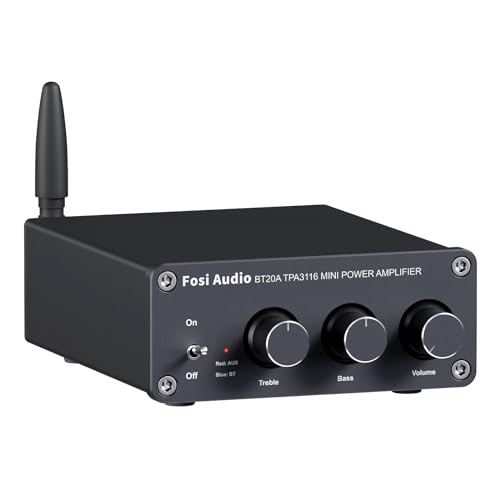
Fosi Audio BT20A Bluetooth Amplifier
A compact two-channel Class D amplifier with Bluetooth, made to drive a pair of passive speakers from a phone, TV or computer. Small amplifiers like this are the missing link when you own passive speakers but no receiver. Check price on Amazon.
Common Mistakes
Buying passive speakers and forgetting the amplifier
It happens constantly: beautiful speakers, no way to make sound. If the product description does not mention built-in amplification or mains power, you need an amplifier — budget for it.
Connecting passive speakers to a powered speaker’s outputs incorrectly
Some powered pairs have a speaker-level output for their passive partner cabinet only. That output is not a general amplifier for separate passive speakers; check the manual before improvising.
Assuming active means lower quality
Studio professionals work on active monitors daily. The format carries no quality penalty; at modest budgets it usually carries a quality advantage through matched amplification.
Buying a receiver ‘just in case’ for a stereo life
Unused surround channels, menus and remotes tax you daily for a hypothetical future. Buy for the system you will actually build in the next two years.
Pro Tips
- Starting from zero with stereo ambitions: go active and keep life simple.
- Own an amplifier already? Passive speakers are your natural upgrade.
- Surround ambitions mean passive plus a receiver — commit early.
- Active speakers need a power socket at each cabinet; check your room layout.
Going Deeper: Context That Helps
Protecting speakers is mostly about restraint. Amplifiers damage speakers in two ways: too much power can overheat or over-extend a driver, but far more commonly a small amplifier driven into distortion — clipping — produces harsh high-frequency energy that burns out tweeters. If the sound turns harsh, gritty or compressed as you raise the volume, turn it down; that harshness is the warning sign. Children, pets and parties are the other risks: a volume limit in the receiver’s settings, grilles left on, and speakers placed where they cannot be knocked over will prevent most household speaker casualties.
Speaker specifications reward careful reading. Frequency response figures only mean something with a tolerance attached — ’60 Hz to 20 kHz’ without a plus-or-minus figure could hide a response that is already far down at 60 Hz. Driver size tells you about potential, not results: a well-designed 5-inch woofer in a solid cabinet can sound cleaner than a cheap 8-inch driver in a resonant box. Weight is an unfashionable but useful clue, because rigid cabinets and real magnets are heavy. Treat specifications as a way to shortlist, then let placement, room and your own ears make the final decision.
Ageing affects speakers slowly and mostly at the edges. Foam woofer surrounds on older speakers can crumble after a couple of decades, rubber surrounds last longer, and capacitors in crossovers drift with age, subtly changing the balance. None of this matters for a new purchase, but it explains why a vintage speaker may not sound as its measurements once promised. For modern speakers, dust, sunlight and humidity are the main enemies: keep them out of direct sun, wipe dust with dry or barely damp cloths, and avoid placing drinks on top of cabinets, where one spill can stain veneer and swell the wood beneath.
Whatever the product, the cheapest upgrade is usually time spent with the manual and the settings menu. Manufacturers bury genuinely useful options — EQ presets, dialogue modes, level trims, firmware updates — several layers deep, and most owners never find them. An hour spent exploring settings with familiar content playing will teach you more about your system than a week of reading reviews, and it costs nothing. Keep notes of what you changed so you can undo anything that makes things worse, and change one thing at a time so you know which adjustment caused which result.
Returns windows are part of the buying process for audio gear, and you should use them deliberately. Sound is personal and room-dependent, so a product that reviews well can still disappoint in your space. Buy from sellers with clear return policies, keep packaging until you are sure, and test with your own content at your own volumes in the first days — not the night before the window closes. A structured test, with the same three songs or scenes each time, reveals differences that casual listening misses and turns a vague feeling into a decision you can act on.
Hearing safety deserves a mention in any audio guide. Comfortable TV and music listening sits well below the levels that risk hearing damage, but portable speakers at parties, and headphones especially, can creep upward in noisy environments as you compete with background sound. If you have to shout to be heard over your own system, it is too loud for long sessions. Many devices offer volume limiting — worth enabling for children — and taking listening breaks during long sessions protects both your ears and your enjoyment, because tired ears judge sound poorly.
Speaker sound is shaped as much by the room as by the speaker itself. Hard floors, bare walls and large windows reflect sound back at you, which can make even a good speaker seem harsh or echoey, while soft furnishings, rugs and curtains absorb those reflections and calm the result. Before blaming a speaker for disappointing sound, look at the room: a rug between the speakers and your seat, curtains over a large window, or a bookshelf filled with books behind you can change the sound more than a modest upgrade would. This is why the same speaker can sound impressive in a shop demo room and merely ordinary at home — the demo room was treated, and yours is not.
Stereo imaging depends on symmetry. When the left and right speakers are at different distances from you, or one is tucked into a corner while the other sits in open space, the stereo image pulls toward the closer or louder side and voices stop sounding centred. Aim for a rough triangle: the two speakers and your head at the corners, with both speakers the same distance from your seat and at the same height. Small adjustments — ten centimetres here, a slight toe-in there — are free, reversible and often more rewarding than new cables or accessories, so always finish placement before spending money on upgrades.
Bass behaves differently from the rest of the sound. Low frequencies are long waves that build up in corners and along walls, which is why a speaker can sound boomy in one spot and thin a metre away. Moving a speaker even slightly out from a wall reduces the wall’s reinforcement of the bass; moving your seat away from the back wall often fixes boominess that no tone control can. If your system has a subwoofer, its position matters even more, because a single subwoofer excites the room unevenly and your seat may sit in a peak or a null in the bass response.
Speaker sensitivity and impedance explain more about real-world loudness than headline wattage. Sensitivity tells you how loud a speaker plays with a given amount of power; a sensitive speaker on a modest amplifier can easily outplay an insensitive speaker on a powerful one. Impedance, measured in ohms, describes the load the speaker presents to the amplifier — most home speakers are nominally 8 or 6 ohms, and amplifiers are happiest when the speaker’s impedance stays within the range the amplifier is rated for. Matching these two figures sensibly matters far more than chasing the biggest watt number on a box.
Every speaker is a compromise between size, bass and efficiency — engineers call it Hoffman’s Iron Law: pick two, sacrifice the third. A tiny speaker can be efficient or produce deep bass, but not both at once, which is why small portable speakers sound impressive for their size yet cannot reproduce the lowest notes of a film soundtrack. Understanding this trade-off sets honest expectations. If a product promises room-filling deep bass from a box the size of a paperback, physics says the claim needs salt; the sound may still be enjoyable, but the lowest octave will be suggested rather than truly reproduced.
Burn-in and warm-up are debated endlessly, but the bigger variable is your own hearing. Your ears adapt to a new speaker over the first days of listening, which is why a speaker that sounded bright on day one often seems balanced by day five — your brain has recalibrated, not the hardware. The practical lesson is to live with a new setup for a week of normal listening before judging it or changing settings. Judge with familiar recordings you know well, at the volume you actually use, in the seat you actually sit in; first impressions in a shop or in the first ten minutes at home are unreliable.
Cables and connections cause more speaker problems than speakers do. A single stray strand of copper touching the neighbouring terminal can short an amplifier; a loose banana plug or a corroded RCA connector adds crackle that sounds like a failing driver. Oxygen-free copper wire of adequate gauge, clean tight connections and strain relief where cables bend will keep a system reliable for years. Expensive exotic cables, by contrast, have never been shown to change sound in controlled listening tests once gauge and connection quality are adequate — spend the difference on placement, room treatment or better recordings instead.
Frequently Asked Questions
What is the difference between active and powered speakers?
In everyday shopping language, none: both mean the amplifier is built into the speaker. Technically, a true active speaker amplifies each driver separately after an electronic crossover, while a powered speaker uses one amplifier per cabinet with a conventional crossover inside. Studio monitors are often genuinely active; most home powered speakers use the simpler design. The distinction rarely changes a buying decision — what matters is that both need mains power and a source, not an external amplifier.
Do active speakers sound better than passive?
Neither format guarantees better sound. Active speakers benefit from amplifiers matched exactly to their drivers, which gives them an edge in complete systems at modest budgets. Passive systems can reach higher with carefully chosen separate amplifiers, and they dominate high-end and surround installations. At the same total system cost, a good active setup is hard to beat for stereo; at higher budgets, passive flexibility wins listeners over. Judge complete systems, not formats in the abstract.
Can I connect active speakers to an amplifier or receiver?
Active speakers connect to line-level outputs — a receiver’s pre-out or zone output, a streamer’s RCA output, a TV’s optical or headphone socket — never to an amplifier’s speaker terminals, which would feed them amplified power and can damage them. Many receivers lack pre-outs on cheaper models, so check before planning a mixed system. If your receiver has only speaker outputs, passive speakers are the correct match for it.
Which is cheaper overall?
For a first stereo system, active speakers are usually cheaper as a complete purchase, because the amplifier is included and no wire or receiver is needed. Passive systems start costing more but can become economical over time: the amplifier survives speaker upgrades, and second-hand passive speakers are plentiful. The honest comparison is total cost over the years you will own the system, including the upgrades you realistically expect to make.
Can active speakers be used for home theatre?
For stereo TV sound, absolutely — a powered pair with an optical or HDMI input is a fine TV upgrade. For true surround with centre and rear channels, active speakers are impractical in most homes because every speaker needs power and signal cabling, and consumer surround processing lives in AV receivers designed for passive speakers. Some wireless ecosystems blur this line with active rears and soundbars. For a classic 5.1 or Atmos build, passive remains the standard architecture.
Do active speakers become obsolete faster?
Their electronics can age out — a Bluetooth or streaming standard may date — while their amplifiers and drivers keep working through wired inputs for many years. Passive speakers contain no electronics except the crossover, so they cannot become digitally obsolete at all. If longevity matters, choose active speakers with good wired inputs so they remain useful after their wireless features age, and treat any smart features as a bonus rather than the foundation.
Inside the Two Architectures: Where the Work Happens
The difference between these families is a difference of address: where the amplification lives, and where the signal is divided. In a passive system, one amplifier in a separate box powers everything, and a network of components inside the speaker divides the full-strength signal between woofer and tweeter after amplification. In an active system, the division happens first, at gentle signal strength, and a dedicated amplifier inside the speaker serves each driver with a signal already tailored to it. That architectural detail explains nearly everything else in this comparison. The active design lets engineers match each amplifier to its driver exactly, correct the driver’s behaviour electronically, and protect it precisely, because the whole system was designed as one instrument. The passive design lets owners choose, upgrade and replace each part independently, because the system is a collaboration between instruments. Neither philosophy is a trick or a compromise; they are two honest answers to the question of where intelligence should live in a playback chain — concentrated and optimised, or distributed and replaceable.
The crossover, in plain terms
If one component deserves a paragraph, it is the crossover, the traffic director that sends lows to the woofer and highs to the tweeter. In passive speakers it works at high power with coils and capacitors, which is elegant, proven and slightly lossy, and its behaviour shifts a little with volume and temperature. In active speakers it works at low power, often digitally, which permits precision and adjustability that passive networks cannot economically match. This is why active speakers can extract startling performance from modest drivers, and why passive speakers reward better amplification so visibly: each design spends its precision at a different point in the chain.
Where Each Architecture Earns Its Living
The studio and the desk
Professional monitoring is active territory, and the reasons are practical: engineers need predictable, self-contained accuracy at arm’s length, with no amplifier variables between studios. The home desk inherits the same logic — two active speakers, one cable each for power and signal, and the system is complete, compact and honest. For nearfield listening, active is not merely convenient; it is the industry’s settled answer.
The main room and the growing system
The principal listening room, especially one that also serves films and surround sound, remains passive’s homeland. A receiver orchestrates many channels, room calibration and every source the household owns, and passive speakers let that orchestra be upgraded section by section over years. Active speakers can serve here, and some serve beautifully, but the ecosystem of surround processing, calibration and multi-channel amplification is built around passive speakers, and swimming with that current is easier than against it.
The television corner and the simple life
For the household that wants television and music to sound properly good with the least possible apparatus, active speakers with a screen connection are the modern short answer: two boxes, no receiver, no rack, and sound that embarrasses the television’s own. Passive cannot compete on simplicity; it does not try to. It competes on the decade after, when tastes grow and rooms change.
Failure, Repair and the Fifteen-Year Question
Architectures age according to their contents. A passive speaker contains drivers, a crossover and a cabinet: almost nothing to become obsolete, little to fail, and a realistic working life measured in decades, with repairs that any competent technician can perform. The amplifier that serves it is a separate life, replaceable when it fails or when its connections age out, without touching the speakers. An active speaker contains all of that plus amplifiers, digital processing and, often, wireless platforms and apps. Each addition is a capability and a lifespan: electronics age faster than drivers, platforms are discontinued, and a failed amplifier inside a speaker idles the whole instrument while it awaits a specialist or a part that may no longer exist. None of this makes active speakers a poor purchase — their working lives are still long, and reputable makers support them — but it changes the shape of ownership. Passive systems are heirlooms with replaceable servants; active systems are appliances with heirloom sound. Buyers who keep things for fifteen years and buyers who refresh happily should choose differently, and both should choose knowingly.
Heat, power and the electricity bill of convenience
Active speakers carry their amplifiers everywhere, including into standby, and a pair idling in a room draws a small continuous tribute that passive speakers, silent when their amplifier sleeps, do not. The sums are modest and the convenience is real, but in a house with several active systems the tribute adds up, and a switched power strip is a legitimate accessory. Passive systems concentrate their consumption in one box that can be powered down completely, which is tidier for the fastidious.
Sound Character: What the Architectures Tend to Do
Generalising carefully: active systems tend toward control. The amplifier’s grip on each driver is direct, bass is disciplined, and the speaker presents the recording with a tidiness that flatters detail and exposes sloppy production without mercy. Passive systems tend toward variety: the same speakers change character with different amplification, which is a liability in careless hands and a joy in deliberate ones, because the owner can tune the system’s temperament by choosing its partners. This is why two listeners can audition the same passive speakers and disagree — they heard different systems wearing the same cabinets — while active speakers present a fixed, designed personality that listeners accept or decline as a whole. Neither tendency is a ranking. Control suits the listener who wants the recording, unmediated; variety suits the listener who wants a system that is partly theirs. Know which listener you are, and the architecture selects itself with unusual clarity.
Volume, distance and the size of the ambition
At high volumes in large rooms, the passive tradition’s heavy artillery — big amplifiers, big speakers — still holds the field, because power and scale are bought separately and without internal packaging limits. Active systems reach impressively far, especially with subwoofer help, but their amplifiers live in boxes that must also be speakers, and physics audits the arrangement at party volume. At desk and living-room volumes, the audit never happens, and active’s control tells instead. Match the architecture to the loudest honest evening you host, not the loudest imaginable one.
Cables, Clutter and the Truth About Simplicity
Active speakers are marketed as the cable-free choice, and the claim deserves its paragraph of honesty. Each active speaker needs mains power, so the speaker cables of the passive world are replaced by power cables, and the signal still arrives by wire in most serious setups — by interconnect, by digital cable, or by the network. The true simplification is not the absence of cables but the absence of boxes: no amplifier shelf, no receiver, no rack of sources demanding furniture and ventilation. Passive systems centralise their clutter in one stack that can be hidden in a cabinet; active systems distribute theirs to wherever the speakers stand. Rooms with power sockets where the speakers belong find active genuinely tidier. Rooms without them discover that extension leads are also cables, and less elegant ones than the speaker wire they replaced. Walk your sockets before choosing, as the positioning guidance in this series advises for so many decisions, because architecture is destiny only after the room has voted.
Choose the architecture that matches your temperament: optimised and complete, or modular and evolving. Then stop shopping for philosophies and start listening, because both, honestly implemented and properly placed, will fill a room with more truth than most recordings know what to do with.
Buying Scenarios, Worked Honestly
Consider three buyers. The first has a desk, a computer and a love of detail: active monitors end the search in an afternoon, and every alternative adds boxes without adding truth. The second is furnishing a family room for films, games and music across twenty years: a receiver and passive speakers form a system that can absorb every future the household invents, from a games console not yet designed to a centre channel added when dialogue becomes precious. The third wants the television to sound grown-up and the room to stay calm: active speakers with a screen connection deliver it in two boxes, and the absence of a rack is itself the feature. None of the three is compromising. Each has matched architecture to life, which is the entire discipline this guide teaches. The compromises appear only when buyers borrow each other’s answers — the desk listener buried in separates, the twenty-year household locked into a platform, the calm room colonised by a rack it never wanted.
The second-hand dimension
Used markets treat the architectures differently, and thrifty buyers should know it. Passive speakers are the safest second-hand purchase in audio: little to fail, easy to test, and decades of life remaining in good examples. Amplifiers are a moderate risk, testable and repairable. Active speakers concentrate the risk — electronics, platforms and amplifiers in one box — and deserve more caution, a longer test, and a preference for makers who still supply parts. None of this forbids a used active bargain; it prices the caution the bargain requires.
The Verdict in One Breath
Active for the desk, the studio habit, the television corner and the household that wants the question answered completely and compactly. Passive for the main room, the surround ambition, the long ownership and the listener who enjoys choosing the parts. Both for the house that has both kinds of room, which is most houses, eventually. Architectures, like connections in the companion comparison, are departments rather than rivals, and the mature household staffs each department with the design that suits its work.
Staffed departments, like staffed anything, outperform a single overworked generalist. Give each room the architecture that flatters it, and the whole house sounds considered — because it was.
A note on trying before committing
Because the architectures present fixed versus variable personalities, audition them differently. Judge an active speaker as a finished dish: if its balance does not please you in the shop, it will not change at home. Judge passive speakers as ingredients with potential: ask what amplifier the shop is using, and remember that a different partner will season them differently. Buyers who audition with the wrong method reject good active speakers for being unchangeable and good passive speakers for a partner’s faults. Both errors are avoidable, and both are common, and avoiding them is worth more than any single specification in this comparison.
Audition rightly, choose by temperament and room, and the architecture question — like every question in this series — dissolves into the listening it was always serving.
Dissolved questions leave only music behind. That residue is the goal.
Goals, unlike architectures, are not in competition. Reach yours by whichever design your rooms prefer.
Prefer honestly, buy once, and listen for years.
The household with both, revisited
It is worth ending where most households end: with actives at the desk and the television, passives in the main room, and no sense of contradiction anywhere. The two architectures coexist in millions of homes precisely because they were never truly rivals. They are answers to different questions that happen to share a vocabulary. Learn the questions — where does the intelligence live, who chooses the partners, what fails and when, what grows and how — and you can walk into any shop, any listing, any era of equipment, and know within minutes which design is speaking to you. That fluency, more than any single purchase, is what this guide was trying to hand over.
Fluency, once handed over, cannot be unlearned. Use it on every system you ever buy.
Every system, in every room, for the rest of a listening life.
A listening life is a long and pleasant sentence. Punctuate it with good systems.
Good systems, in the plural, in the rooms that earned them.
Earned rooms, filled rooms, listening rooms. That is the whole ambition.
Ambition, in audio, is best measured in rooms filled well.
Fill yours, one architecture at a time.
One at a time, each in its place, each doing the work it was designed for. That is a house with its audio in order.
Order, in a house, is audible. Guests hear it before they see it.
Let them hear it from the door, in the first room, through the right architecture.
The right architecture, in the right room, needs no introduction.
It introduces itself, in music, the moment anyone presses play.
Press it, in every room you have furnished with sound.
Furnished with sound is a fine description of a home. Make it yours.
Yours, room by room, architecture by architecture.
That is how houses become homes with systems in them, rather than systems with houses around them.
The distinction matters, and your ears will report it nightly.
Nightly reports, favourably filed, are the dividend of a decision made with this guide’s questions in hand.
Keep the questions in hand for the next system, and the next.
The next system is closer than you think. They always are.
Until then, the current one deserves your full attention and your favourite records.
Favourite records, played on the right architecture, are the whole hobby in one image.
Hold that image, and shop toward it.
Toward it, and then into it, nightly.
One more distinction the brochures blur
Between the pure architectures sits a large middle family: powered passive speakers, wireless actives with passive partners, and soundbars with internal everything. The middle is not a failure of categorisation; it is the market serving real rooms. Judge any middle design by this guide’s underlying questions rather than by its label — where the division happens, what can be replaced, what the platform depends on — and the middle becomes as legible as the poles. Labels are for shelves. Questions are for buyers.
Buyers with questions are the industry’s favourite customers and its most satisfied ones. Be both.
Satisfaction, in audio, is mostly the absence of surprises after the purchase. Buy with questions and the surprises retire early.
Early retirement for surprises; long service for the system. That is the bargain.
Strike it, in whichever architecture your rooms prefer.
Prefer, purchase, place, play. The four verbs of every successful system in this series, in the only order that works.
Work them in order, and the system works in return.
Returns, in audio as in finance, compound. Start early.
Early, as in tonight, with the records already waiting.
The records have waited through the whole comparison. Honour their patience.
Patience, honoured, becomes listening. Listening becomes the habit of a house.
The habit of a house is the finest specification of all.
Specify it, buy toward it, and live inside it.
Inside it is where the music was always meant to be heard.
Meant, and now — with the architecture chosen — delivered.
Delivered nightly, in the rooms that chose it.
Rooms choose well when their owners ask the right questions. Yours have.
Have, and will, for every system still to come.
Still to come is a pleasant prospect, from inside a house already full of music.
Full of music is the natural state of a house whose systems were chosen well. Keep it full.
Full, daily, and at the volume each room deserves.
Deserved volumes, deserved systems, deserved evenings.
Evenings are the currency. Spend them listening.
Listening, not comparing, is the wealth.
Grow wealthy, then, at whatever volume the evening sets, through whichever architecture the room chose.
The room chose well. It usually does, when asked properly.
Asked properly, rooms are remarkably honest advisers.
Take their advice, and take the evening off from deciding.
Evenings off from deciding are evenings given to listening. Give generously.
Generosity, repaid in music, is the best exchange rate in the house.
Trade at it nightly, and prosper.
Prosperity, measured in evenings, is the only kind audio sells.
Buy evenings, then, and let the architectures compete to supply them.
Supply, in either design, will not disappoint a household that chose by room and temperament.
Related Guides
These guides and roundups cover the closest decisions and fixes in this category:
- best active speakers for turntable
- best amplifier for speakers
- best bookshelf speakers under 500
- best powered bookshelf speakers for pc under 200
- bluetooth vs wired speakers
- speaker buying guide
Are powered speakers and active speakers the same thing?
Not exactly, though the terms are often used loosely. A powered speaker simply contains an amplifier; a true active speaker divides the signal before amplification and gives each driver its own amplifier. Many consumer powered speakers use one amplifier with a passive crossover inside, which is a perfectly good design — just know which you are buying.
Can I add a subwoofer to active speakers?
Usually yes: many active speakers provide a subwoofer output, and some ecosystems include a matching subwoofer. Set the crossover where the main speakers naturally fade, match levels by ear, and the combination gains the low foundation neither architecture supplies alone in a small cabinet.


