Disclosure: As an Amazon Associate, kajuandouglas.com earns from qualifying purchases. Links to Amazon on this page are affiliate links; they cost you nothing extra. Listing details such as price and availability change often, so check the current Amazon listing before you buy.
The bluetooth vs wired speakers debate sounds like a technology argument, but it is really an argument about habits. Bluetooth offers freedom: any phone becomes the source, no cables cross the room, and the speaker can move. Wired offers certainty: no pairing, no dropouts, no delay, and sound quality limited only by the recording. Most households end up with both, using each where its strengths matter — the interesting question is which should be your main system.
This comparison covers sound quality, latency, reliability, convenience and cost, and it explains what Bluetooth codecs actually do, because the letters after ‘Bluetooth’ matter more than the word itself. It also covers the hybrid reality: many speakers offer both, and choosing a speaker with a wired input as well as Bluetooth is often the smartest answer of all, giving you wireless ease for daily use and a cable for the moments that demand it.
Bluetooth vs wired speakers: The Short Answer
Choose Bluetooth for convenience, portability and phone-based listening in casual settings. Choose wired for your main music system, for TV and gaming where delay matters, and anywhere reliability is non-negotiable. Best of all, choose speakers that offer both and use each connection where it shines.
In this guide
Side-by-Side Comparison
| Factor | Bluetooth | Wired Speakers |
|---|---|---|
| Sound quality | Very good with modern codecs; still compressed | Full quality, limited only by the source and speaker |
| Latency (delay) | Noticeable on many setups; low-latency codecs help | Effectively none |
| Convenience | Excellent — any phone, no cables | Fixed in place; source must connect physically |
| Reliability | Occasional dropouts, pairing quirks, interference | Works every time once connected |
| Range | Roughly a room or two; walls reduce it | As long as the cable you run |
| Power | Battery or mains; battery runs out | Mains-powered; always ready |
| Multi-room | Usually one speaker (or a stereo pair) | Whole systems can be wired or networked |
| Best for | Kitchens, gardens, travel, casual listening | Main listening, TV, gaming, critical work |
How to Decide, Step by Step
Step 1: Decide where delay matters
Latency is Bluetooth’s structural weakness: encoding, transmission and decoding take time, and lips expose it. For music alone, delay is invisible. For video, gaming and live instruments, it ranges from mildly annoying to unusable depending on the codec and devices. If the speaker’s main job involves a screen, wired wins or you must specifically seek low-latency Bluetooth support at both ends of the connection — speaker and source alike.
Step 2: Judge the sound quality question realistically
Modern Bluetooth codecs transmit music at quality levels most listeners cannot distinguish from wired in normal rooms, especially with the better codecs. The audible gaps appear with critical listening, high-quality recordings and revealing speakers. Be honest about your listening: background and casual listening will never expose Bluetooth’s limits, while a dedicated listening chair might. Match the connection to the listening you actually do, not the listening you imagine.
Step 3: Count the friction, not just the features
Wired friction is paid once, during installation. Bluetooth friction is paid in small instalments forever: pairing to a new phone, reconnecting after a dropout, discovering the speaker is claimed by another device. None of it is serious, but households differ in tolerance. If the speaker serves non-technical users daily, a wired connection to a fixed source — or a Wi-Fi speaker — can be kinder than Bluetooth’s small daily negotiations.
Step 4: Look for both, and check the codec list
The pragmatic purchase is a speaker with Bluetooth for convenience and at least one wired input for certainty. Then check which Bluetooth codecs it supports and whether your phone uses them; a speaker and phone that share a high-quality codec sound noticeably better than a mismatched pair. Also check whether the wired input suits your fixed source — optical for a TV, RCA or 3.5 mm for older gear, USB for a computer.
As you work through this guide, keep the bigger picture in mind. Our roundup of best bluetooth speakers under 100 shows how the main options compare, and the companion piece on how to pair a speaker covers the neighbouring decision in the same detail.
Codecs, Explained Without the Hype
A codec is the language Bluetooth uses to compress music for transmission. The universal baseline codec works everywhere and sounds acceptable. Better codecs, where both phone and speaker support them, transmit more data and preserve more detail, particularly in treble. The practical rule is that codec support must match at both ends: an advanced speaker paired with a phone that only offers the baseline gains nothing. Check your phone’s Bluetooth specification alongside the speaker’s before paying extra for codec badges.
Low-latency codecs are a separate family aimed at video and gaming, trading a little quality for much less delay. They only work when source and speaker both support the same one, which is common in gaming gear and rare in general speakers. If lip-sync matters and you cannot run a cable, this matching is the specification to hunt for — not the Bluetooth version number, which by itself guarantees neither quality nor low delay.
Who Each Option Suits
Bluetooth speakers suit kitchens, bathrooms, gardens, workshops, travel and any room where the source is a phone in someone’s pocket and the listening is social or background. They also suit renters and rearrangers, because nothing is installed. Their natural limit is the main-system role: fixed, critical, screen-based listening exposes their weaknesses in delay and connection management, even though their raw sound can be excellent.
Wired speakers suit the main living-room system, the TV, the desk where work and calls happen, and any listener who values set-and-forget reliability. They also suit long installations — in-ceiling and multi-room systems — where a cable run once serves for decades. The households that thrive usually own both: wired where the system lives, Bluetooth where life happens, and no guilt about using each exactly where it belongs.
Ready to Buy? Start Here

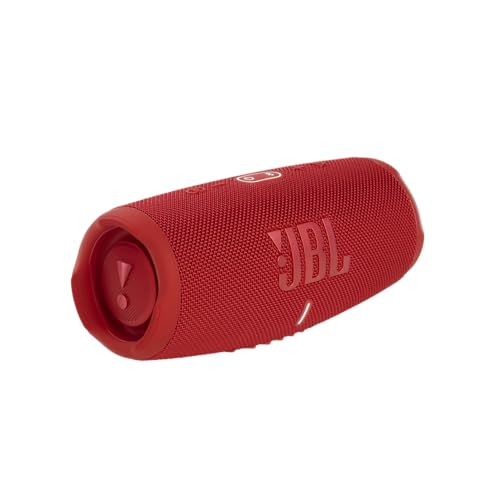
JBL Charge 5 Portable Speaker
A portable Bluetooth speaker with an IP67 waterproof and dustproof rating, designed for bathrooms, gardens and trips away. Its rugged build also makes it a forgiving speaker to clean and to move from room to room. Check price on Amazon.
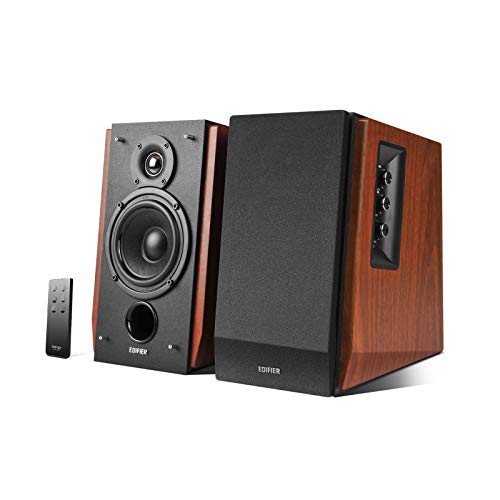
Edifier R1700BT Bluetooth Bookshelf Speakers
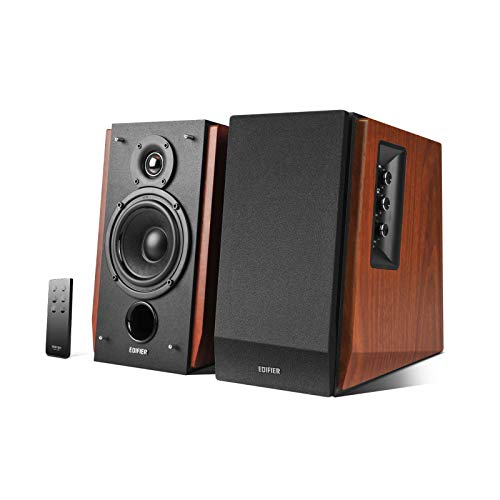
A powered bookshelf pair with Bluetooth for phones and wired inputs for a turntable or TV, plus a remote for volume and input switching from the couch. The angled front baffle aims sound slightly upward when the speakers sit on a low shelf or desk. Check price on Amazon.

ELAC Debut 2.0 B6.2 Bookshelf Speakers
A passive bookshelf pair with a 6.5-inch aramid-fibre woofer, designed for use with a separate amplifier or AV receiver. It is a long-standing reference point for people building a first component stereo or home-theatre front stage. Check price on Amazon.

Amazon Basics 14-Gauge Speaker Wire, 200 Feet
A long spool of 14-gauge oxygen-free copper speaker wire with colour-coded conductors, suited to longer runs between an amplifier and passive speakers. Thicker wire matters most on long runs, where thin wire can waste amplifier power. Check price on Amazon.
Common Mistakes
Blaming Bluetooth sound quality for a bad speaker
A poor speaker sounds poor on any connection. Judge the speaker first; Bluetooth’s compression is a smaller factor than cabinet and driver quality in almost every real product.
Buying Bluetooth for a TV without checking delay
Many TVs and speakers combine into noticeable lip-sync error. For TV duty, wire it, or verify low-latency support and test with speech during the returns window.
Assuming a higher Bluetooth version means better sound
Version numbers govern features and efficiency, not audio quality directly. Codecs and their matching between devices decide what you hear.
Running a wired system on a cable that’s too thin for the run
Long runs of thin wire waste power and dull passive speakers. Wired’s reliability advantage assumes adequate gauge and clean connections — give it both.
Pro Tips
- A speaker with both Bluetooth and a wired input is the safest purchase.
- Match codecs between phone and speaker before paying for premium Bluetooth features.
- For TV and gaming, default to wired unless low-latency support is proven.
- Keep one wired ‘reference’ setup in the house for critical listening and calls.
Going Deeper: Context That Helps
Listening level matters for judging any speaker. Human hearing perceives bass and treble as weaker at low volumes — the Fletcher-Munson effect — so a speaker auditioned quietly can seem thin, and the same speaker loud can seem bass-heavy. Many receivers and some speakers compensate with loudness or dynamic EQ features for late-night listening. When you compare speakers or settings, match the volume between them as closely as you can, because the louder option almost always sounds ‘better’ in a quick comparison even when it is not. A cheap sound-level app on a phone is accurate enough to level-match for home comparisons.
Multi-room and streaming speakers add a networking layer to ordinary audio problems. A speaker that drops off the network, lags behind its partner in a stereo pair, or refuses to appear in an app is usually suffering from weak Wi-Fi at its location, a congested 2.4 GHz band, or a router setting — not a failed speaker. Placing the router centrally, keeping speakers within a room or two of it, and updating firmware through the maker’s app solves most of these cases. Wired Ethernet, where a speaker offers it, removes the variable entirely and is worth using for a fixed living-room setup.
Protecting speakers is mostly about restraint. Amplifiers damage speakers in two ways: too much power can overheat or over-extend a driver, but far more commonly a small amplifier driven into distortion — clipping — produces harsh high-frequency energy that burns out tweeters. If the sound turns harsh, gritty or compressed as you raise the volume, turn it down; that harshness is the warning sign. Children, pets and parties are the other risks: a volume limit in the receiver’s settings, grilles left on, and speakers placed where they cannot be knocked over will prevent most household speaker casualties.
Speaker specifications reward careful reading. Frequency response figures only mean something with a tolerance attached — ’60 Hz to 20 kHz’ without a plus-or-minus figure could hide a response that is already far down at 60 Hz. Driver size tells you about potential, not results: a well-designed 5-inch woofer in a solid cabinet can sound cleaner than a cheap 8-inch driver in a resonant box. Weight is an unfashionable but useful clue, because rigid cabinets and real magnets are heavy. Treat specifications as a way to shortlist, then let placement, room and your own ears make the final decision.
Ageing affects speakers slowly and mostly at the edges. Foam woofer surrounds on older speakers can crumble after a couple of decades, rubber surrounds last longer, and capacitors in crossovers drift with age, subtly changing the balance. None of this matters for a new purchase, but it explains why a vintage speaker may not sound as its measurements once promised. For modern speakers, dust, sunlight and humidity are the main enemies: keep them out of direct sun, wipe dust with dry or barely damp cloths, and avoid placing drinks on top of cabinets, where one spill can stain veneer and swell the wood beneath.
Whatever the product, the cheapest upgrade is usually time spent with the manual and the settings menu. Manufacturers bury genuinely useful options — EQ presets, dialogue modes, level trims, firmware updates — several layers deep, and most owners never find them. An hour spent exploring settings with familiar content playing will teach you more about your system than a week of reading reviews, and it costs nothing. Keep notes of what you changed so you can undo anything that makes things worse, and change one thing at a time so you know which adjustment caused which result.
Returns windows are part of the buying process for audio gear, and you should use them deliberately. Sound is personal and room-dependent, so a product that reviews well can still disappoint in your space. Buy from sellers with clear return policies, keep packaging until you are sure, and test with your own content at your own volumes in the first days — not the night before the window closes. A structured test, with the same three songs or scenes each time, reveals differences that casual listening misses and turns a vague feeling into a decision you can act on.
Hearing safety deserves a mention in any audio guide. Comfortable TV and music listening sits well below the levels that risk hearing damage, but portable speakers at parties, and headphones especially, can creep upward in noisy environments as you compete with background sound. If you have to shout to be heard over your own system, it is too loud for long sessions. Many devices offer volume limiting — worth enabling for children — and taking listening breaks during long sessions protects both your ears and your enjoyment, because tired ears judge sound poorly.
Speaker sound is shaped as much by the room as by the speaker itself. Hard floors, bare walls and large windows reflect sound back at you, which can make even a good speaker seem harsh or echoey, while soft furnishings, rugs and curtains absorb those reflections and calm the result. Before blaming a speaker for disappointing sound, look at the room: a rug between the speakers and your seat, curtains over a large window, or a bookshelf filled with books behind you can change the sound more than a modest upgrade would. This is why the same speaker can sound impressive in a shop demo room and merely ordinary at home — the demo room was treated, and yours is not.
Stereo imaging depends on symmetry. When the left and right speakers are at different distances from you, or one is tucked into a corner while the other sits in open space, the stereo image pulls toward the closer or louder side and voices stop sounding centred. Aim for a rough triangle: the two speakers and your head at the corners, with both speakers the same distance from your seat and at the same height. Small adjustments — ten centimetres here, a slight toe-in there — are free, reversible and often more rewarding than new cables or accessories, so always finish placement before spending money on upgrades.
Bass behaves differently from the rest of the sound. Low frequencies are long waves that build up in corners and along walls, which is why a speaker can sound boomy in one spot and thin a metre away. Moving a speaker even slightly out from a wall reduces the wall’s reinforcement of the bass; moving your seat away from the back wall often fixes boominess that no tone control can. If your system has a subwoofer, its position matters even more, because a single subwoofer excites the room unevenly and your seat may sit in a peak or a null in the bass response.
Speaker sensitivity and impedance explain more about real-world loudness than headline wattage. Sensitivity tells you how loud a speaker plays with a given amount of power; a sensitive speaker on a modest amplifier can easily outplay an insensitive speaker on a powerful one. Impedance, measured in ohms, describes the load the speaker presents to the amplifier — most home speakers are nominally 8 or 6 ohms, and amplifiers are happiest when the speaker’s impedance stays within the range the amplifier is rated for. Matching these two figures sensibly matters far more than chasing the biggest watt number on a box.
Every speaker is a compromise between size, bass and efficiency — engineers call it Hoffman’s Iron Law: pick two, sacrifice the third. A tiny speaker can be efficient or produce deep bass, but not both at once, which is why small portable speakers sound impressive for their size yet cannot reproduce the lowest notes of a film soundtrack. Understanding this trade-off sets honest expectations. If a product promises room-filling deep bass from a box the size of a paperback, physics says the claim needs salt; the sound may still be enjoyable, but the lowest octave will be suggested rather than truly reproduced.
Burn-in and warm-up are debated endlessly, but the bigger variable is your own hearing. Your ears adapt to a new speaker over the first days of listening, which is why a speaker that sounded bright on day one often seems balanced by day five — your brain has recalibrated, not the hardware. The practical lesson is to live with a new setup for a week of normal listening before judging it or changing settings. Judge with familiar recordings you know well, at the volume you actually use, in the seat you actually sit in; first impressions in a shop or in the first ten minutes at home are unreliable.
Frequently Asked Questions
Does Bluetooth reduce sound quality compared to wired?
Slightly, in measurable terms, because Bluetooth compresses the audio. With modern codecs shared between phone and speaker, the difference is inaudible to most listeners in most rooms, especially for streaming services. It becomes relevant for critical listening with high-quality recordings on revealing speakers. The speaker’s own quality dwarfs the connection’s effect: a good Bluetooth speaker beats a poor wired one, and the best setup is a good speaker that offers both connections.
Why is there a delay between video and sound on Bluetooth?
Bluetooth encodes audio, sends it, and decodes it, and buffering is added to prevent dropouts — together producing a delay that can reach a noticeable fraction of a second. Lips reveal it because your brain expects speech and mouth movement to coincide. Low-latency codecs reduce it greatly when both devices support them. Some TVs and apps offer audio-delay compensation. For permanent TV setups, a wired connection removes the problem entirely, which is why it remains the recommendation.
Can a Bluetooth speaker also be used wired?
Many can: a large share of Bluetooth speakers include a 3.5 mm auxiliary input, and powered home speakers commonly add optical, RCA or USB alongside Bluetooth. Check the input list before buying if you want this flexibility. Using the wired input also helps when the battery is flat or Bluetooth is misbehaving. Note that some portable speakers disable their aux input’s convenience features, and a few recent models have dropped wired inputs entirely — another reason to read the specification list, not the headline.
Which is more reliable for a party or event?
Wired, if the setup allows it, because nothing can unpair, run out of battery mid-song or wander out of range in a guest’s pocket. Bluetooth’s party risk is social as much as technical: anyone paired can hijack the music. For events, either wire the speaker to a fixed source or use a mains-powered Bluetooth speaker with the source device kept beside it and charged. Professionals wire their systems for exactly these reasons, even when every component also offers Bluetooth.
Is Wi-Fi better than both?
For home multi-room music, Wi-Fi streaming has real advantages: higher quality than standard Bluetooth, no phone-call interruptions, music that keeps playing when your phone leaves, and grouped rooms. Its costs are network dependence and app-based setup. Many households use Wi-Fi for the fixed home system, Bluetooth for portable and casual use, and wires for TV and the main amplifier — each technology in the role it performs best, rather than a single winner.
Do wired speakers need an amplifier?
Passive wired speakers do — the wire carries amplified power from an amplifier or receiver. Powered and active speakers have the amplifier built in, so their ‘wired’ connections are line-level cables from the source. When people say wired speakers are more work, they usually mean passive systems. A powered speaker with a wired input is as simple to run as a Bluetooth model once the cable is in place, with none of the pairing overhead.
What Actually Travels Down Each Path: A Signal’s Journey
Follow one song through both systems and the comparison sharpens. On the wired path, the music leaves the source as data or as a finished analogue signal, travels a cable that neither interprets nor alters it in any way you can hear, and arrives whole; the speaker’s job begins at the door. On the Bluetooth path, the music is compressed for the journey by whichever codec both ends agree on, carried through a radio environment it shares with your router, your neighbours and your microwave, reassembled at the speaker, and only then converted to sound. Modern codecs make that journey remarkably faithful, and in casual listening the difference from the cable is small to vanishing. But the journeys explain the families’ characters: the wired path has almost no way to fail interestingly, while the wireless path has several — interference, range, a codec disagreement, a second device asserting an old claim — each individually rare and collectively familiar to anyone who has owned wireless speakers for years. Reliability in audio is mostly the absence of interesting failures.
Latency: the delay you can see
Wireless audio takes time to package and unpack, and video exposes it: lips and voices drift apart by an amount that varies with codec and equipment. For music alone, delay is irrelevant; for film, games and anything with a screen, it ranges from invisible to maddening, and the wired path’s near-zero delay is its quiet superpower. Many wireless systems compensate well, and televisions often help, but the buyer whose main seat faces a screen should weight this section as heavily as sound quality itself, because a sync problem cannot be un-heard once noticed.
Rooms and Lives: Where Each Connection Belongs
The kitchen, the bathroom and the workshop
Rooms that are steamy, splashy, dusty or simply far from the hi-fi belong to wireless almost by acclamation. A cable across a kitchen is a trip hazard and a cleaning grievance; a wireless speaker on a shelf is a radio for the modern age, moved in seconds and forgiven everything. Portability compounds the case: the speaker that travels from counter to garden to garage serves three rooms for the price of one, a trick no wired system can perform without a second and third system.
The listening chair and the television wall
Rooms with a fixed seat and a fixed screen belong, on the evidence, to wires. The equipment never moves, so wireless buys nothing; the delay matters, so wireless risks something; and the cable, once run, is invisible for a decade. The main listening system of a settled household is the wired path’s ancestral homeland, and it holds the territory on merit: fidelity, immediacy, and a total absence of pairing ceremonies between you and the music.
The rented room and the shared house
Where walls cannot be drilled and housemates rotate, wireless respects the lease and the politics alike. Where a household shares one system among many phones, wireless also wins socially: anyone can play, from their own pocket, without touching the equipment. Wired systems in shared houses develop gatekeepers, and gatekept music is played less.
The Hybrid Household: Why the Answer Is Usually Both
Notice how the previous section kept awarding different rooms to different connections. That is the honest verdict of this comparison for most households: wired for the system that stays, wireless for the sound that wanders. The two are not rivals in a home; they are departments. A wired main system anchors serious listening and film nights, while wireless speakers colonise the kitchen, the desk, the bedroom and the garden, each doing the job its connection suits. The buyer choosing a first or only system must still pick a side, and the decision procedure in the main guide handles that case. But the buyer adding a second system should feel no loyalty to the first one’s connection, because rooms, not ideologies, should decide. Households that grasp this stop arguing about which technology is better and start asking the only productive question: better for this room, this seat, this use?
Multi-room systems and the wired backbone
Wireless multi-room platforms deserve their own sentence in this comparison, because they offer something the wired tradition historically could not: the same music, synchronised, in every room, controlled from one pocket. Wired households can achieve it with additional equipment and effort, and many do, but the wireless ecosystems made it ordinary. If whole-home music is the dream, the wireless path is not merely convenient; it is the native technology of the dream itself.
Failure Modes and Lifespans: The Decade View
Over ten years, the two paths fail differently. Wired systems fail mechanically and rarely: a cable’s connector loosens, a plug oxidises, a pet conducts an experiment. Each failure is visible, local and fixable with hands. Wireless systems fail in software and in time: an update changes behaviour, a platform is discontinued, a battery fades until the portable speaker is portable in name only, a phone’s new operating system renegotiates old friendships imperfectly. None of this condemns wireless — its convenience is real and daily — but it prices the convenience honestly: wireless speakers are consumer electronics with a technology lifespan, while wired speakers are furniture with a mechanical one, routinely outliving the sources of three decades. Buyers who keep equipment for a very long time, or who dislike replacing things that still work, should hear that clearly. Buyers who refresh their technology happily will never notice the difference, and for them the point is trivia.
Batteries: the quiet clause in the wireless contract
A portable wireless speaker contains a consumable, and its capacity declines with every charge cycle and every hot summer in a car. Mains-powered wireless speakers escape the clause; battery models sign it. The practical responses are simple: favour replaceable batteries where offered, store the speaker part-charged rather than full or empty, and treat a fading battery as maintenance rather than betrayal. Wired speakers, having no battery, offer no equivalent lesson, which is rather their point.
Sound Quality, Stated Plainly and Without Tribalism
At the same total budget, carefully spent, the wired path still holds a quality edge: the money goes into drivers, cabinets and amplification rather than radios, batteries and wireless engineering, and the signal path is shorter and simpler. The edge is real and it is also routinely exaggerated. In ordinary rooms, at ordinary volumes, with ordinary recordings, a good wireless speaker is not a compromised experience; it is a good one, and the difference from its wired equivalent is smaller than the difference made by placement, which this series’ positioning guidance addresses for both families. The listener who will hear the edge is the listener with a fixed seat, revealing recordings and the habit of doing nothing else while the music plays. That listener should buy wired and never apologise. Every other listener should buy the connection that fits the room and the life, and never apologise either. Apologies, in this comparison, are the only true error.
Choose by room, by seat and by whether the music must travel. The cable and the radio are both honourable servants; the household that assigns each to its proper work will be served by both, for years, without a single argument about which is better in the abstract — because in the concrete, where music lives, both are.
The Social Physics of the Two Connections
Connections shape behaviour in ways specifications never mention. A wired system gathers people: the music lives in one room, at one system, and listening becomes an event with a place. A wireless speaker disperses music: it follows the cook, the gardener, the person in the bath, and listening becomes an accompaniment to life rather than an appointment with it. Neither shape is superior; they are different theories of what music is for, and households hold one theory or the other in their bones. The family that eats together with music in the kitchen is wireless in its soul even if its main system is wired. The listener who dims the lights for an album is wired in theirs. Recognising your household’s theory settles this comparison faster than any codec discussion, because technology that agrees with a household’s theory of music gets used constantly, and constant use is the multiplier on every other virtue a speaker has.
Guests, grandparents and the five-second test
Apply the five-second test to both paths: can a guest, or a grandparent, get music playing within five seconds of deciding to, without instruction? Wireless passes when the speaker is already paired to a household device and fails hilariously when it is not. Wired passes when the system wakes with one button and fails behind a receiver’s input menu. Whichever system you own, engineer it to pass this test for your actual guests, because music that requires the owner’s presence is music the household hears only when the owner is home — and the owner, on the evidence of most households, is not home nearly enough for that to be the plan.
A Word on Cost Accounting
Compare total systems, not speakers. The wired path’s invoice includes the amplifier or receiver, the cables, and possibly the furniture to hold them; the wireless path’s invoice includes, over its life, perhaps a replacement battery or a replacement speaker when its platform ages out. First-year costs flatter wireless; ten-year costs often flatter wired, whose speakers persist while sources rotate cheaply beneath them. Neither accounting wins universally, because households value the years differently, but an honest comparison runs both sums before deciding, and refuses to compare a wireless speaker’s price against a wired speaker’s price as if the rest of either system were free.
The verdict, compressed for the shop floor
Fixed seat, fixed screen, long ownership, listening as an event: wired. Moving rooms, shared control, music as accompaniment, whole-home dreams: wireless. Both, assigned by room: the grown-up answer, and the one most households arrive at within a few years whether they planned it or not. Plan it, and you will arrive there cheaper, with less equipment bought twice and fewer arguments conducted in the abstract.
Arguments in the abstract are the one product neither connection sells. Refuse delivery, choose by room, and spend the saved energy on the music itself, which has been patiently waiting out the entire debate.
One connection, kept well
Whichever path a room takes, keep it well. Wired owners: check connectors yearly, keep cables dressed and strain-free, and label both ends of every run. Wireless owners: keep the pairing list tidy, the firmware current, and the battery treated kindly. Maintenance is the tax both connections levy, and it is small, and the households that pay it cheerfully are the ones whose systems sound, years later, exactly as they did on the proud first evening.
The proud first evening is a standard worth keeping. Keep it, and the comparison never needs reopening.
Reopen it only when a new room asks a new question, and answer that question the same way: by the room, the seat and the life lived around the music.
The life around the music is, in the end, the music’s home. Furnish it well.
The last practical word
If you are buying today and remain torn, buy the speaker whose sound you prefer and whose connection includes the other as a guest: the wireless speaker with an auxiliary input, or the wired system with a small wireless receiver added. Hospitality between the two paths is widely available, cheaply bought, and it converts an agonising either-or into a comfortable both-and. The purists will forgive you eventually. Your household will thank you immediately.
Immediately is a good time for thanks. Arrange to receive some tonight, at volume, in the room of your choice.
The room of your choice: that freedom, whichever connection delivers it, is the entire point.
Points, unlike cables, need no routing. Enjoy yours directly.
Directly, daily, and without a single ceremony standing between you and the first note.
The first note, on time and in tune, is every system’s promise.
Keep the promise by keeping the system, and the system will keep it back.
Back and forth, faithfully, for as long as you both shall listen.
Listen long, and listen well.
Well is a direction, not a destination, and both connections can take you there.
Take whichever road runs through your rooms, and travel it daily.
Daily travel is what turns equipment into a household institution.
Institutions are kept, not replaced. Choose one worth keeping.
Worth keeping, worth hearing, worth the small care it asks.
Ask little, give much: that is the specification above all specifications.
Judge every candidate, wired or wireless, by that specification first.
First, and the rest of the specification sheet will fall into line.
Lines are for cables and for conclusions. This is the conclusion.
Conclude, connect, and listen. In that order, every time.
Every time is often. Make often easy.
Easy, daily and delightful: the three-word review every owner wants to give.
Give it, a year from now, about the system you choose today.
Today’s choice, judged by next year’s gratitude, is a choice made properly.
Properly made choices need no revisiting. Make yours, and move on to the music.
The music, once again, is waiting with exemplary patience.
Reward the patience. Press play, by cable or by air.
By cable or by air, the note arrives the same: on time, in tune, at home.
At home is where the note belongs, and where you belong with it.
Belonging, delivered by either technology, is the real product.
Buy the product, in whichever box it comes.
Boxes differ. Belonging does not.
Choose the box your rooms ask for, and let the belonging take care of itself.
It will, in a house where the music plays daily.
Daily music is the house’s heartbeat. Keep it strong.
Strong, steady and shared: a fine heartbeat, by wire or by wave.
Shared heartbeats are the healthiest kind.
Keep yours shared, and the technology will take care of the rest.
The rest, handled well by either path, is only ever the music.
Only the music. It was only ever the music.
Let it play, through whichever door your house prefers.
Doors are for walking through, not for debating. Walk through yours.
The music is on the other side, in the room, where it lives.
Live there with it, daily, and the great connection debate will seem, in retrospect, like a pleasant way to pass the time before the concert.
The concert, unlike the debate, rewards attendance over analysis.
Attend yours tonight, in full, from the first note to the last.
First note to last, uninterrupted by doubt about the connection.
Doubt, banished by a decision well made, stays banished.
Yours is well made. Enjoy the banishment.
Enjoyment, in the end, outranks every specification in this guide.
Outranked specifications retire gracefully. Enjoyment does not retire.
Keep it employed for years, in every room that wants music.
Every room that wants music deserves an answer, and you now know both answers by heart.
By heart is how the best decisions are kept.
Keep this one, and let the speakers keep the music.
The music, kept well, keeps the household.
Households, like connections, thrive on being kept well.
Keep both, and both will keep you in music for years.
Years of music is the only outcome this guide has ever promised.
Promised, and — with your decision made — delivered.
Delivered daily, starting tonight, in the room of your choice.
Choose the room, and begin.
Related Guides
These guides and roundups cover the closest decisions and fixes in this category:
- best wireless speakers for music
- best wire for speakers
- best speakers for music
- best bluetooth speakers for tv
- active vs passive speakers
- how to choose a speaker
Can I use a Bluetooth speaker with a wired connection as a backup?
Many wireless speakers include an auxiliary input, and using it gives you the best of both paths: wireless convenience day to day, and a cable for the television, for guests with older devices, or for the day the radio environment misbehaves. Check for the socket before buying if the backup matters.
Will a wired connection improve a cheap speaker?
It will deliver the cleanest signal the speaker can accept, but it cannot add capability the speaker lacks. Connection quality reveals a speaker; it does not upgrade one. Spend first on the speaker itself, then on the path that suits the room.