Finding the best rabbit ear antennas that fits your setup is less about chasing the most expensive option and more about matching the right features to the way you actually use the device. A rabbit ear antenna that looks strong on a spec sheet can still be the wrong choice if it is awkward to set up, hard to live with day to day, or missing the one feature you rely on most. That is why this guide focuses on practical fit: what each option does well, where it falls short, and who it suits best. Rabbit ear antennas are the simplest way to watch free local channels: two adjustable dipoles on your TV stand, no subscription, no installation. The best ones combine extendable rabbit ears for VHF with a loop or panel for UHF, so you get the full range of local broadcasts in clear high definition. We reviewed the current listings for best rabbit ear antennas and narrowed the field to six options that cover the main use cases, from a straightforward everyday choice to more capable models for heavier demands. Each product below is linked to its listing so you can verify the exact configuration, included accessories, and availability before you buy. Use the comparison table further down the page to line the six picks up side by side, then read the buying guide if you want help weighing the trade-offs. The goal is simple: help you choose once, with confidence, and avoid paying for features you will never use or settling for a model that leaves you wanting more within a few months. The sections that follow explain how the picks were chosen, walk through each product in detail, and finish with the questions readers ask most often about best rabbit ear antennas. If you are short on time, the comparison table and the final recommendation give you the short version; if you want the reasoning, the buying guide and the per-product sections explain it.
In this guide
Quick picks: best rabbit ear antennas
| # | Product | Where to buy |
|---|---|---|
| 1 | Philips Indoor TV Antenna Rabbit Ears for Local Channels, 15 Inch Extendable Dipoles, 4K 1080P VHF UHF | Check on Amazon |
| 2 | Wideskall Universal Indoor Rabbit Ear TV Antenna for HDTV Ready VHF UHF Dual Loop Coaxial | Check on Amazon |
| 3 | TV Antenna, Rabbit Ears TV Antenna for Local Channels, Ultra HD 4K/1080p, Works with All TVs | Check on Amazon |
| 4 | Rabbit Ears TV Antenna, Indoor TV Antenna for Smart TVs and Older TVs, Digital HDTV Antenna for Local Channels | Check on Amazon |
| 5 | Rabbit Ear TV Antenna 2026 Upgraded, TV Antenna for Smart TV Indoor, Cut Cable for Free 4K/1080p HD Channels | Check on Amazon |
| 6 | Bsadne Smart Indoor TV Antenna – Long Range Rabbit Ears, Cable-Free Digital HDTV Channels, Stickiness Base | Check on Amazon |
How the picks were chosen
Every product in this guide was selected from current listings for best rabbit ear antennas, and each one had to meet the same bar before it earned a place. First, the product had to be the right kind of device for the keyword — a genuine rabbit ear antenna, not an accessory, a part, or a loosely related item that happens to share a word in its title. Second, it had to come from a listing with clear, verifiable specifications, so the strengths and trade-offs below are grounded in what the listing actually states rather than guesswork. Third, the shortlist had to cover a range of needs: different sizes, capacities, and feature sets, so that readers with different budgets and different daily routines can all find a fit. The factors weighed most heavily were VHF and UHF reception, adjustable dipoles and loop, range and placement, and ease of setup — the four things that most often decide whether a rabbit ear antenna ends up used every day or left in a drawer. Ease of setup and everyday usability counted alongside raw capability, because a device that is frustrating to install or maintain rarely gets used to its full potential. Listings that lacked enough detail to verify what you actually receive were left out, and any renewed listing included is clearly marked as renewed in its section. Where two listings described essentially the same product, only one was kept, so the six picks below are genuinely different options rather than variations on the same item. The result is a shortlist you can compare honestly: each product’s strengths are stated plainly, its trade-offs are stated just as plainly, and the recommendation at the end names the pick that suits most readers and the situations where a different option is the smarter buy. The shortlist is deliberately small: six options are enough to cover the real differences between models without turning the comparison into a catalogue, and every pick below earns its place on merit rather than on brand familiarity alone.
Top picks at a glance
Each pick below links to its listing so you can confirm the exact configuration and availability before ordering. The comparison table after the product sections lines all six up side by side.
1. Philips Indoor TV Antenna Rabbit Ears for Local Channels, 15 Inch Extendable Dipoles, 4K 1080P VHF UHF
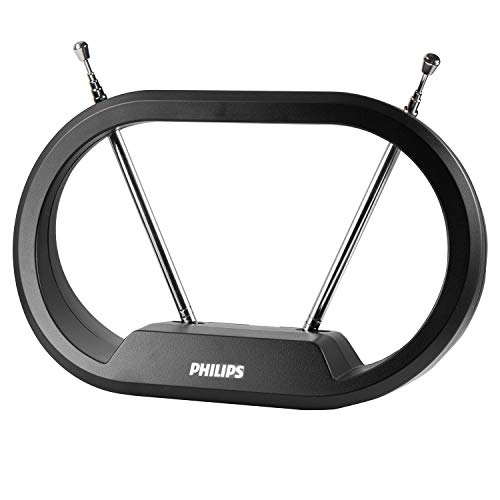
Philips Indoor TV Antenna Rabbit Ears for Local Channels, 15 Inch Extendable Dipoles, 4K 1080P VHF UHF earns its place in this roundup of best rabbit ear antennas by covering the essentials well: it does the core job reliably, it is straightforward to set up, and it fits the everyday use case most readers have in mind. The Philips indoor TV antenna has 15-inch extendable rabbit-ear dipoles for VHF and UHF reception, built for local channels in 4K and 1080p, as a tabletop HDTV antenna. The tabletop base sits flat on a shelf or TV stand, and the dipoles fold down for storage. Extend the dipoles fully, then shorten them slowly while rescanning until the picture is stable. Mark the best dipole position with a small sticker so you can find it again after cleaning. Before ordering, check the listing for the exact configuration — model, size, and included accessories can vary between listings that look similar at a glance, and the model number is the surest way to confirm you are getting the version described here.
Strengths:
- Philips is a trusted name in TV antennas, with a solid build.
- The 15-inch extendable dipoles adjust to pull in weaker VHF stations.
- A simple tabletop design that sits neatly beside the TV.
Trade-offs:
- It is a passive antenna, so very distant stations may need an amplified model.
- The base is light and can tip if the dipoles are fully extended at an angle.
- Reception depends heavily on your distance from the broadcast towers.
This antenna fits viewers near broadcast towers who want a reliable, well-made rabbit ear antenna.
Best for: viewers near towers who want a trusted-brand rabbit ear antenna
Not suited for: viewers far from towers, or anyone who needs amplification
2. Wideskall Universal Indoor Rabbit Ear TV Antenna for HDTV Ready VHF UHF Dual Loop Coaxial

Wideskall Universal Indoor Rabbit Ear TV Antenna for HDTV Ready VHF UHF Dual Loop Coaxial earns its place in this roundup of best rabbit ear antennas by covering the essentials well: it does the core job reliably, it is straightforward to set up, and it fits the everyday use case most readers have in mind. The Wideskall universal indoor rabbit ear antenna is HDTV-ready for VHF and UHF, with a dual loop and coaxial connection for local channels. The coaxial cable connects straight to the TV antenna input with no adapter needed. Try the antenna near a window first, then move it only if the signal stays weak. Keep the coaxial cable away from power cables to avoid interference. Before ordering, check the listing for the exact configuration — model, size, and included accessories can vary between listings that look similar at a glance, and the model number is the surest way to confirm you are getting the version described here.
Strengths:
- A universal design that works with HDTV-ready sets old and new.
- The dual loop helps with UHF channels the dipoles alone miss.
- A straightforward coaxial connection with no power needed.
Trade-offs:
- No amplifier, so fringe reception is limited.
- The build is lighter and plainer than the Philips.
- Placement takes trial and error to find the best spot.
This antenna fits budget buyers who want a simple universal rabbit ear antenna for local channels.
Best for: budget buyers who want a simple universal indoor antenna
Not suited for: viewers in weak-signal areas who need an amplified antenna
3. TV Antenna, Rabbit Ears TV Antenna for Local Channels, Ultra HD 4K/1080p, Works with All TVs

TV Antenna, Rabbit Ears TV Antenna for Local Channels, Ultra HD 4K/1080p, Works with All TVs earns its place in this roundup of best rabbit ear antennas by covering the essentials well: it does the core job reliably, it is straightforward to set up, and it fits the everyday use case most readers have in mind. This rabbit ears TV antenna is built for local channels in Ultra HD 4K and 1080p, and works with all TVs that have a coaxial antenna input. The antenna works with any TV that has a coaxial input, from old tube sets to new smart TVs. Rescan channels after every adjustment, since a small move can add or lose stations. Rescan channels seasonally, since broadcast lineups change through the year. Before ordering, check the listing for the exact configuration — model, size, and included accessories can vary between listings that look similar at a glance, and the model number is the surest way to confirm you are getting the version described here.
Strengths:
- Works with all TVs, old and new, through a standard coaxial input.
- Tuned for Ultra HD 4K and 1080p local broadcasts.
- A simple, no-power design that just works.
Trade-offs:
- No amplification for distant or blocked signals.
- The generic design gives no brand support to fall back on.
- You may need several rescans to find the best dipole position.
This antenna fits households that want a cheap, universal rabbit ear antenna for any TV.
Best for: households that want a cheap universal antenna for any TV
Not suited for: viewers far from towers, or anyone who wants a brand-name product
4. Rabbit Ears TV Antenna, Indoor TV Antenna for Smart TVs and Older TVs, Digital HDTV Antenna for Local Channels

Rabbit Ears TV Antenna, Indoor TV Antenna for Smart TVs and Older TVs, Digital HDTV Antenna for Local Channels earns its place in this roundup of best rabbit ear antennas by covering the essentials well: it does the core job reliably, it is straightforward to set up, and it fits the everyday use case most readers have in mind. This rabbit ears TV antenna is an indoor digital HDTV antenna for smart TVs and older TVs, built for local channels with adjustable reception. The adjustable dipoles and loop tune separately, so you can optimize VHF and UHF independently. Place it high and near a window for the best chance at distant stations. Try the antenna on top of the TV first, since height usually helps. Before ordering, check the listing for the exact configuration — model, size, and included accessories can vary between listings that look similar at a glance, and the model number is the surest way to confirm you are getting the version described here.
Strengths:
- Works with both smart TVs and older sets.
- Adjustable design lets you tune VHF and UHF separately.
- A digital HDTV antenna with no subscription or power needed.
Trade-offs:
- No amplifier, so weak signals stay weak.
- The lightweight build can be knocked over easily.
- Channel counts vary a lot by location.
This antenna fits mixed households with both a smart TV and an older set.
Best for: households with both smart TVs and older TVs
Not suited for: viewers in fringe areas who need amplification
5. Rabbit Ear TV Antenna 2026 Upgraded, TV Antenna for Smart TV Indoor, Cut Cable for Free 4K/1080p HD Channels

Rabbit Ear TV Antenna 2026 Upgraded, TV Antenna for Smart TV Indoor, Cut Cable for Free 4K/1080p HD Channels earns its place in this roundup of best rabbit ear antennas by covering the essentials well: it does the core job reliably, it is straightforward to set up, and it fits the everyday use case most readers have in mind. This upgraded 2026 rabbit ear TV antenna is built for smart TVs indoors, for cutting cable and receiving free 4K and 1080p HD channels. The 2026 design is tuned for current digital broadcasts, including the subchannels many viewers miss. Run a channel scan in the evening, when reception is often at its best. Run the first channel scan in the evening, when reception is often strongest. Before ordering, check the listing for the exact configuration — model, size, and included accessories can vary between listings that look similar at a glance, and the model number is the surest way to confirm you are getting the version described here.
Strengths:
- A recent 2026 design tuned for current smart TVs.
- Built for cord-cutters who want free HD channels without a subscription.
- Long-range reception claims suit suburban viewers.
Trade-offs:
- Real range depends on your towers and terrain, not the box.
- No amplifier is mentioned, so weak areas may still struggle.
- The newer brand has less track record than Philips.
This antenna fits cord-cutters setting up a smart TV for free local channels.
Best for: cord-cutters setting up a smart TV for free local channels
Not suited for: viewers in deep fringe areas, or anyone who wants a long-established brand
6. Bsadne Smart Indoor TV Antenna – Long Range Rabbit Ears, Cable-Free Digital HDTV Channels, Stickiness Base

Bsadne Smart Indoor TV Antenna – Long Range Rabbit Ears, Cable-Free Digital HDTV Channels, Stickiness Base earns its place in this roundup of best rabbit ear antennas by covering the essentials well: it does the core job reliably, it is straightforward to set up, and it fits the everyday use case most readers have in mind. The Bsadne smart indoor TV antenna has long-range rabbit ears for cable-free digital HDTV channels, with a stickiness base for easy placement. The sticky base holds the antenna on a window or shelf without screws or adhesive strips. Stick the base to a clean window first and test before committing to a spot. Clean the window before sticking the base, so it holds firmly. Before ordering, check the listing for the exact configuration — model, size, and included accessories can vary between listings that look similar at a glance, and the model number is the surest way to confirm you are getting the version described here.
Strengths:
- The stickiness base keeps the antenna stable on a shelf or window.
- Long-range rabbit ears aim at suburban viewers.
- A cable-free design with no subscription.
Trade-offs:
- The sticky base can leave marks on some surfaces.
- Long-range claims still depend on local tower distance.
- No amplifier for the weakest signals.
This antenna fits viewers who want a stable, easy-to-place antenna on a shelf or window.
Best for: viewers who want a stable antenna that stays put on a shelf
Not suited for: renters worried about marks, or viewers in fringe areas
Comparison table
| # | Product | Key detail |
|---|---|---|
| 1 | Philips Indoor TV Antenna Rabbit Ears for Local Channels, 15 Inch Extendable Dipoles, 4K 1080P VHF UHF | 15-inch dipoles, VHF UHF, 4K 1080P |
| 2 | Wideskall Universal Indoor Rabbit Ear TV Antenna for HDTV Ready VHF UHF Dual Loop Coaxial | VHF UHF, dual loop, coaxial |
| 3 | TV Antenna, Rabbit Ears TV Antenna for Local Channels, Ultra HD 4K/1080p, Works with All TVs | Ultra HD 4K/1080p, all TVs |
| 4 | Rabbit Ears TV Antenna, Indoor TV Antenna for Smart TVs and Older TVs, Digital HDTV Antenna for Local Channels | Indoor, smart and older TVs, digital HDTV |
| 5 | Rabbit Ear TV Antenna 2026 Upgraded, TV Antenna for Smart TV Indoor, Cut Cable for Free 4K/1080p HD Channels | 2026 upgraded, 4K/1080p HD, indoor |
| 6 | Bsadne Smart Indoor TV Antenna – Long Range Rabbit Ears, Cable-Free Digital HDTV Channels, Stickiness Base | Long range, stickiness base, digital HDTV |
How to aim rabbit ears for the best picture
Rabbit ears work best when you treat them like an instrument, not a decoration. Start by finding where your local broadcast towers are: a free tower-locator site will show the direction and distance, and that tells you which way to point the antenna. Extend both dipoles fully, then angle them into a V shape pointing roughly toward the towers. Run a channel scan, note how many stations appear, then shorten the dipoles a little and scan again. Shorter dipoles often work better for UHF channels, while longer ones suit VHF, so the best length is a compromise you find by testing. Height helps more than almost anything else, so try the top of a shelf or a window before giving up on a spot. If a station breaks up, move the antenna a few inches rather than a few feet, since small moves change reception more than big ones.
Rabbit ears vs flat antennas: which is right for you
Flat indoor antennas are the modern default, but rabbit ears still have real advantages. The adjustable dipoles let you tune VHF channels individually, which matters because many local stations still broadcast on VHF, and flat antennas often struggle there. Rabbit ears are also cheap, simple, and easy to reposition, with no power supply and nothing to fail. Flat antennas win on looks and on UHF performance in strong-signal areas, and amplified flat models beat passive rabbit ears for distant stations. The practical rule is simple: if you live within about 30 miles of the towers and want the lowest-cost option, rabbit ears are hard to beat. If you are farther out, or your VHF stations come in fine but UHF is weak, an amplified flat antenna may serve you better. Many households end up keeping both, using the rabbit ears for VHF and the flat panel for UHF.
Indoor antennas and interference: what to avoid
An indoor antenna lives in a sea of interference, and knowing the sources helps you place it well. LED lights, especially cheap ones, can spray radio noise that weakens TV signals, so try switching off nearby lamps if a channel breaks up. Microwaves, Wi-Fi routers, and baby monitors all share nearby frequencies, and moving the antenna a few feet from them often fixes a pixelated picture. Metal objects are the worst offenders: a metal shelf, a radiator, or a large mirror between the antenna and the tower can block the signal entirely. The fix is usually placement rather than a new antenna: higher is better, near a window is better, and away from electronics is better. If the picture breaks up only at certain times of day, the cause is often atmospheric, and waiting an hour beats buying new hardware.
Do you need an amplifier
Amplified antennas promise longer range, but an amplifier is not always an upgrade. An amplifier boosts everything the antenna receives, including noise, so in a strong-signal area it can overload the tuner and make the picture worse. Amplifiers help when the signal is weak but clean, typically when you live far from the towers or split the signal to several TVs, which divides the strength. They do not help when the problem is interference, multipath reflections from buildings, or a blocked line of sight, because they amplify the problem along with the signal. The rabbit ear antennas in this guide are passive, which is the right choice for most viewers within about 30 miles of the towers. If you are farther out, try a passive antenna first and add an amplifier only if the channel scan finds stations that break up, rather than buying amplification you may not need.
Cutting cable: what free channels actually include
Cutting cable for a rabbit ear antenna sounds dramatic, but the free channels you get are more useful than many people expect. In most US markets the free lineup includes the major broadcast networks, local news, weather, and a growing set of digital subchannels carrying classic TV, movies, and niche programming. What you do not get is live sports beyond what the broadcast networks carry, premium cable channels, or on-demand libraries. The practical setup is an antenna for live local TV plus a streaming service or two for everything else, which together cost far less than a cable bundle. A recorder or a network tuner can add recording and pause to the antenna channels, though that is a separate purchase. Before you cancel anything, run a channel scan with a rabbit ear antenna and watch the free lineup for a week; most households find the free channels cover more of their viewing than they expected.
Buying guide
Start by defining the job the rabbit ear antenna has to do. For best rabbit ear antennas, the right choice depends on where it will live, how often it will be used, and which features you will actually notice day to day. Measure the space first: a rabbit ear antenna that is too large for its spot ends up moved, stored, or returned, while one that is too small for the task leaves you working around its limits. Next, list the features that matter to you and rank them. Vhf and uhf reception, adjustable dipoles and loop, range and placement, and ease of setup are the usual decision points, and different readers rank them very differently — there is no single right order. Check compatibility with what you already own: the devices, apps, and accessories it needs to work with. A pick that needs an adapter, a hub, or an extra purchase you did not expect is a worse deal than a slightly more expensive option that works out of the box. Read the listing carefully for what is included in the box and what is sold separately, and confirm the model number matches the one described here, since similar names can hide different configurations. Think about upkeep as well: consumables, batteries, cables, and software updates all add up over the life of a device. Finally, buy from a listing with a clear return policy, keep the packaging until you have used the device for a few days, and test the features you care about most during that window. If it does not fit your routine, exchanging it early is far easier than living with a compromise for years. A careful first week with the device tells you more than any amount of pre-purchase reading. It is also worth deciding in advance how much setup effort you are willing to accept: some readers enjoy configuring an app and linking devices, while others want something that works the moment it is unboxed. Neither preference is wrong, but it changes which pick is right for you, and it is better to know it before ordering than to discover it while staring at a setup screen.
How to use and care for your pick
Getting the most from your best rabbit ear antennas starts with setup. Unbox it somewhere with good light, lay out everything included, and read the quick-start guide before plugging anything in — ten minutes here saves a support call later. Place the rabbit ear antenna where it has room to work: clear space around vents and sensors, a stable surface, and easy access to power. Run any firmware or software update the listing or companion app offers, then walk through the settings once, turning off features you do not need and enabling the ones you do. For day-to-day care, keep the device clean and dry, wipe surfaces with a soft cloth, and keep cables routed so they are not pulled or pinched. If the rabbit ear antenna uses a battery, avoid leaving it fully drained for long stretches; if it uses a filter or a consumable part, note the replacement interval on a calendar so performance does not quietly degrade. Store accessories together in one place so they are easy to find. If something stops working, restart the device, check connections, and confirm the app or software is up to date before assuming a fault — most day-to-day problems trace back to one of those three. Keep the manual or a bookmark to the support page; the answer to an unusual question is usually there, and the manufacturer’s guidance is the authority for anything involving safety, power, or warranty. A short routine beats a long repair: a quick check every month or two catches most problems while they are still trivial, and it keeps the device performing the way it did on the day you bought it.
Common mistakes to avoid
The most common mistake when shopping for best rabbit ear antennas is choosing on a single headline feature and ignoring everything else. A big number on the box — capacity, resolution, range — tells you very little about whether the rabbit ear antenna fits your space or your routine. The second mistake is skipping the compatibility check: assuming it will work with your existing devices, apps, or accessories without confirming. The third is ignoring size and placement, then discovering the device blocks a vent, crowds a desk, or needs an outlet that is not nearby. A fourth is buying the cheapest listing of a lookalike model and discovering it is a different configuration, a renewed unit, or missing an accessory the full version includes. A fifth is overlooking running costs — replacement parts, batteries, or a companion subscription — that change the real cost over a year or two. And a sixth is rushing the return window: using the device once, deciding it is fine, and only discovering its weak point after the exchange period has closed. Avoid all six by measuring first, reading the listing in full, confirming compatibility, and testing the features you care about within the first few days. A short checklist made before ordering — size, compatibility, included accessories, return policy — prevents most of these mistakes before they happen. The thread running through all six is the same: the purchase decision deserves the same care as the device itself. A few minutes spent measuring, reading, and confirming compatibility saves the time, cost, and frustration of a return.
Our final recommendation
If you want a single answer, start with the first pick in this guide — the Philips Indoor TV Antenna Rabbit Ears for Local Channels, 15 Inch Extendable Dipoles, 4K 1080P VHF UHF — and check whether it covers your main use case. It represents the best balance of capability, ease of use, and everyday practicality for most readers shopping for best rabbit ear antennas. If your needs are more specific, the other five picks each serve a clear purpose: one leans toward a larger capacity or display, another toward a simpler setup, and the rest toward particular features or budgets. Match the pick to the job, not to the ranking. Re-read the comparison table, confirm the listing matches the model described here, and order the one whose strengths line up with what you will actually use. Whichever you choose, the buying guide above will help you set it up well and avoid the mistakes that lead to returns. And if you are still torn between two picks, choose the one whose strengths match the feature you will use every day, not the one with the longest feature list — the device you reach for daily is the one that was worth buying.
Frequently asked questions
What should I look for first when choosing best rabbit ear antennas?
Start with fit: the size, capacity, and core features that match how you will use it every day. Compatibility with your existing devices comes next, followed by ease of setup and upkeep. The buying guide above walks through each factor in order.
Are the best rabbit ear antennas in this guide suitable for everyday use?
Yes. All six picks were chosen for regular, everyday use rather than occasional or specialist scenarios, and each section notes who the product fits best so you can judge the match for your own routine.
How do I know which model to order?
Use the product links in each section to open the listing and confirm the exact model, configuration, and included accessories. Similar names can hide different versions, so matching the model number to the one described here is the safest check.
Which pick is the best starting point?
For most readers, the Philips Indoor TV Antenna Rabbit Ears for Local Channels, 15 Inch Extendable Dipoles, 4K 1080P VHF UHF is the best place to start because it balances capability and ease of use. If you have a specific need — a larger space, a particular feature, or a tighter budget — one of the other five picks may suit you better.
Do I need one unit or several?
That depends on the size of your home and how many rooms need coverage. A single unit covers only its own area, so most homes need several — at least one per floor and one near each sleeping area. The kits in this guide are a practical way to cover a whole home at once.
What if the product I choose does not fit my setup?
Test it within the return window: check the features you care about most in the first few days, keep the packaging, and exchange it if it does not fit. The common-mistakes section above lists the checks that catch most mismatches early.
Related reading on Kajuandouglas: best indoor amplified TV antennas and best TV antennas for RV and best long-range outdoor HDTV antennas.


