Where to buy
A Dodge wearing an Infinity badge is not running a radio with speakers attached; it is running a small engineered system with its own amplifier, its own crossover decisions and its own ideas about impedance. Speakers that ignore those facts disappoint. Speakers chosen around them succeed.
Linked models here are sold through Amazon, where you can check price on Amazon and confirm dimensions and listing details before ordering; orders are placed on Amazon, and qualifying purchases may earn this site a commission. With an Infinity system, though, the listing check that protects you is not size. It is the electrical audit described below: what load each location expects, and what slice of the music each location is actually sent. Do that homework first and the links become genuinely useful.
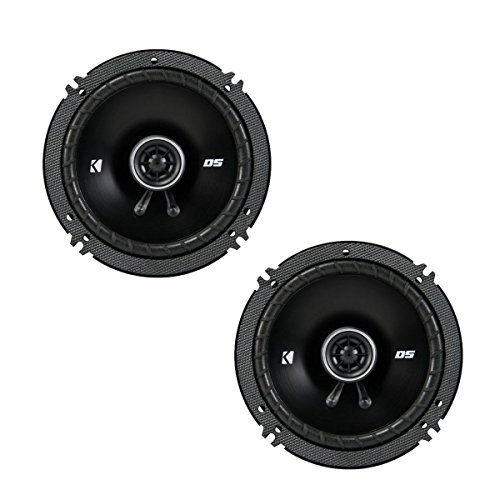
- KICKER DSC650 6.5-Inch Coaxial Car Speakers (Pair, 43DSC6504) – best full-range replacement choice; check price on Amazon.
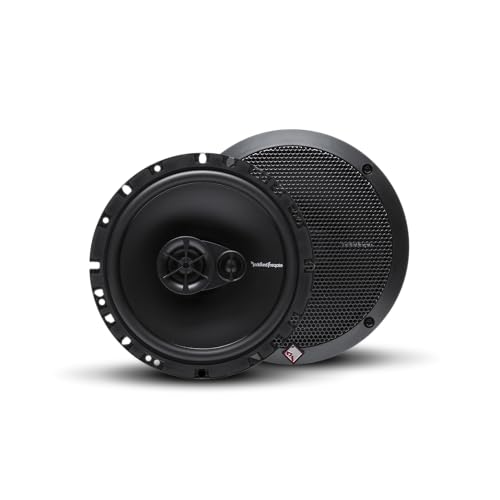
- Rockford Fosgate Prime R165X3 6.5-Inch 3-Way Car Speakers (Pair) – best for clarity on full-range locations choice; check price on Amazon.
- Low-impedance-compatible replacement speakers (prose-only pick, no single model linked) – best for low-impedance locations choice.
- Band-appropriate replacement driver for filtered locations (prose-only pick, no single model linked) – best for filtered channels choice.
- Factory amplifier bypass with a modern amplifier (prose-only pick, no single model linked) – best for a full rebuild choice.
- Modern head unit with built-in amplification (prose-only pick, no single model linked) – best source-first route choice.
The audit comes before the shopping, deliberately.
Disclosure: As an Amazon Associate, kajuandouglas.com earns from qualifying purchases. Links to Amazon on this page are affiliate links; they cost you nothing extra. Listing details such as price and availability change often, so check the current Amazon listing before you buy.
Start with a scene from any Dodge forum. An owner of a Durango, delighted with a weekend speaker swap, reports that the new premium speakers sound quieter and thinner than the rattling factory units they replaced. Nothing is broken. The Infinity amplifier expected a low-impedance load and received a conventional four-ohm pair, so it delivered a fraction of its intended power; meanwhile one location was only ever sent midrange, so its shiny new tweeter sits in silence. The factory system in these vehicles was designed as a chain, with filtering and amplification in the doors and dash decided by engineers rather than by the head unit. Break one assumption of that chain and the whole result sags. Understand the chain, and the same vehicles respond beautifully to thoughtful replacement parts.
So this guide refuses the usual order of business. No speaker is praised until the system it must join has been described: which locations receive a full-range signal, which are band-limited by design, what impedance the factory drivers present, and whether the amplifier itself is healthy. Only then do the picks appear, each assigned to the situation it actually solves. Two linked pairs cover the straightforward cases, where a location is full-range and the load is understood. The remaining routes are described in prose, because the right low-impedance driver or bypass hardware depends on measurements from your specific vehicle that no honest guide can take on your behalf.
None of this makes the project forbidding. It makes it diagnostic, closer to tracing a charging fault than to decorating a room. The tools are a screwdriver, a multimeter if you own one, a phone flashlight and a notebook. Owners who enjoy understanding their vehicles tend to enjoy this work, and the reward is a system that finally does what the badge on the door promised when the truck or car was new. A well-kept Infinity Dodge, speakers matched, is a genuinely pleasant place to hear music.
A word about the frustration that brings many readers here. When a blind swap fails in these vehicles, owners often blame the new speakers, then the brand, then the entire idea of upgrading. The speakers are usually innocent. The mismatch is the culprit, and mismatches are curable with information rather than money. Keep that in mind when the audit feels pedantic: every measurement you take is a refund you will never need to request, and every note you write is a future owner thanking you silently.
Key Takeaways
- An Infinity badge means an amplified system with its own rules, so the audit precedes any order.
- Impedance decides volume in these Dodges; read the factory driver’s label before choosing replacements.
- Filtered locations need band-matched drivers, while proven full-range locations take the linked pairs.
- A failing factory amplifier changes the answer entirely and makes the bypass the honest repair.
- One documented page per vehicle turns every future audio decision into a simple lookup.
In this guide
Quick Picks
Treat the table as a branching chart: the linked pairs belong on proven full-range locations, while the prose routes handle low-impedance and filtered positions.
| Buyer type | Pick | Why it stands out | Link |
|---|---|---|---|
| Best Full-Range Replacement | KICKER DSC650 | Standard fit that respects factory holes and wiring | Check price on Amazon |
| Best for Clarity on Full-Range Locations | Rockford Fosgate R165X3 | Three-way layout keeps midrange articulate at volume | Check price on Amazon |
| Best for Low-Impedance Locations | Low-impedance-compatible replacement speakers (Prose-Only Pick) | Restores the factory amplifier’s intended output | Prose-only – see review |
| Best for Filtered Channels | Band-appropriate replacement driver for filtered locations (Prose-Only Pick) | Works with the system’s design instead of against it | Prose-only – see review |
| Best for a Full Rebuild | Factory amplifier bypass with a modern amplifier (Prose-Only Pick) | Ends every impedance and filtering constraint | Prose-only – see review |
| Best Source-First Route | Modern head unit with built-in amplification (Prose-Only Pick) | Modern sources and connectivity in one step | Prose-only – see review |
How These Picks Were Chosen
Candidates faced an electrical filter before any listening judgement was allowed. Anything assuming a plain head-unit system was set aside unless it also behaved in an amplified, actively crossed-over environment. Survivors needed mainstream sizes, documented impedance, efficiency suited to modest factory power, and a maker whose specifications could be checked rather than admired. That sequence inverted the usual review process on purpose, because in an Infinity vehicle the wrong electrical answer cannot be rescued by beautiful sound in some other car.
Linked picks passed the same confirmation routine used across this site: the Amazon listing was cross-checked so the model named, the model pictured and the model delivered are one and the same. Anything that could not be pinned down to that standard became a prose-only category with explicit shopping checks, which is why half this shortlist carries no link at all. In a system where the correct part varies by vehicle, a described category honestly beats a confident link to the wrong speaker.
- Impedance and signal type for each location established before purchase
- Verified Amazon listing and manufacturer specifications for linked picks
- Efficiency suited to the factory amplifier’s real output
- Full-range replacements only where the location receives a full-range signal
- Specialist routes stated for low-impedance and filtered locations
- No advice that requires ignoring or fighting the factory amplifier blindly
The Best Aftermarket Speakers For Dodge Infinity System
Read the list as a set of doors, each labelled with the audit result that unlocks it. If you have not yet tested your locations, the reviews still make useful reading, but hold the ordering until your notes exist.

KICKER DSC650 6.5-Inch Coaxial Car Speakers (Pair, 43DSC6504)
Badge: Best Full-Range Replacement
6.5-inch (160-165 mm) 2-way coaxial car speakers, pair; 4-ohm impedance; 240W peak power per pair; polypropylene woofer cone with ribbed surround; drop-in factory-upgrade design for doors and rear decks
Where a location proves full-range and the impedance story is understood, the DSC650 is the calm first move. It asks little of the amplifier, forgives the shaped output these systems produce, and restores the full-bodied sound that perished factory cones have been withholding. In a Ram’s front doors or a Caravan’s rear quarters, fitted to a healthy full-range channel, it simply sounds like the system exhaling. Its efficiency matters here more than anywhere: factory Infinity power is adequate, not abundant, and a speaker that converts modest watts into honest volume respects that budget.
Daily life with the DSC650 in an Infinity system has a particular pleasure: balance. It does not excavate flaws in compressed radio streams or punish a scratchy auxiliary input, which matters in vehicles whose newest source is often a phone on a cable. The polypropylene cone tolerates the door environment that killed the original drivers, and the pair’s mainstream mounting pattern means the job stays reversible, factory harness intact with adapters. Owners planning a later bypass lose nothing by starting here either, because a sensible four-ohm pair remains useful on the far side of that rebuild, ready to be driven by modern amplification at standard impedances.
Key specs: 6.5-inch (160-165 mm) 2-way coaxial car speakers, pair; 4-ohm impedance; 240W peak power per pair; polypropylene woofer cone with ribbed surround; drop-in factory-upgrade design for doors and rear decks.
Strengths
- Standard fit that respects factory holes and wiring
- Voicing that flatters weak head units instead of exposing them
- Construction proven over years of door life
Trade-offs
- No sub-bass; a door is not a subwoofer enclosure
- Stamped basket rather than cast, as the tier dictates
- Factory covers usually hide it; no visual drama
Best for: locations proven full-range where an efficient all-rounder is wanted / Not suited for: filtered channels, where its tweeter would sit silent

Rockford Fosgate Prime R165X3 6.5-Inch 3-Way Car Speakers (Pair)
Badge: Best for Clarity on Full-Range Locations
6.5-inch 3-way full-range coaxial car speakers, pair; 45W RMS (90W peak) power handling per speaker; 4-ohm impedance; vacuum-formed polypropylene cone; grilles included; direct factory-replacement design
Give the R165X3 a location that receives the whole signal and it repays the trust with separation. Its three-way layout divides labour so the midrange stays articulate while the tweeter handles the air on top, and in the better Infinity locations that clarity is exactly what the system was always capable of delivering. Factory amplification voiced for presence flatters it. Voices in particular gain: newsreaders step out of the dash, and a singer’s diction survives the road noise of a working truck.
Owners notice the change in habits first. Audiobooks stop being a fair-weather feature and become motorway companions, because consonants stay intact at cruising volume. Family passengers comment on the radio sounding newer, which is the three-way design dividing frequencies the old two-way factory driver smeared together. One caution travels with the praise: on a filtered channel this speaker’s talents are wasted by definition, since no tweeter can play frequencies it is never sent. The audit decides whether this pick is brilliant or pointless in your vehicle, and it is a thirty-minute decision, not a gamble.
Key specs: 6.5-inch 3-way full-range coaxial car speakers, pair; 45W RMS (90W peak) power handling per speaker; 4-ohm impedance; vacuum-formed polypropylene cone; grilles included; direct factory-replacement design.
Strengths
- Three-way layout keeps midrange articulate at volume
- 45W RMS handling suits head units today and amps tomorrow
- Grilles included for exposed mounting locations
Trade-offs
- Detailed voicing can expose poor sources
- Bass depth still needs a subwoofer for real low end
- Some doors need adapter rings for the mounting pattern
Best for: full-range locations where clarity is the priority / Not suited for: low-impedance locations used without a matching plan
Low-impedance-compatible replacement speakers (Prose-Only Pick)
Badge: Best for Low-Impedance Locations
Low-impedance replacement speakers are designed for factory-amplified systems that expect a load around 2 ohms rather than the aftermarket-standard 4. Judge candidates by their stated impedance, sensitivity and an exact size match for the location.
Where your measurements show the factory amplifier expecting a low load, this category stops being exotic and becomes the correct engineering answer. Fitting a standard four-ohm speaker there halves the amplifier’s enthusiasm, which is the mechanical explanation behind those forum threads about quiet replacements. A driver built for the lower impedance restores the intended power delivery and, with it, the system’s designed volume and punch. This is the single most consequential matching decision in the whole guide, worth more than any difference between brands.
Because this route is a category, the listing itself must do the verifying. Demand the impedance in the specifications, not in a headline, and be suspicious of any seller who will not state it plainly. Confirm the sensitivity figure, since a low-impedance driver that is also inefficient merely trades one shortfall for another. Check the mounting depth against the factory driver’s, photograph your original unit beside its printed label, and keep that photograph: it is the reference every future purchase for this vehicle will need.
Key specs: Low-impedance replacement speakers are designed for factory-amplified systems that expect a load around 2 ohms. Judge the category by a clearly stated impedance, efficiency, and a size matched to your audited location..
Strengths
- Restores the factory amplifier’s intended output
- Fixes the quieter-than-stock failure mode
- Designed for exactly these factory systems
Trade-offs
- A smaller, more specialist market
- Impedance must be verified, not assumed
- Wrong for locations that test at 4 ohms
Best for: locations whose factory impedance is genuinely low / Not suited for: systems that test at standard impedance throughout
Band-appropriate replacement driver for filtered locations (Prose-Only Pick)
Badge: Best for Filtered Channels
Filtered locations need a driver designed for the band they receive: a woofer or midrange matched in size and impedance to a channel that was never sent the full signal.
A filtered channel is the system working as designed, and treating it as broken wastes money in a distinctive way: owners fit ever better full-range speakers to a location that receives, say, only the middle of the music, then wonder why nothing improves. The correct response is a driver intended for that band, doing one job properly. A fresh midrange driver on a midrange channel restores exactly the frequencies that channel exists to carry, and the whole system, heard together, sounds renewed because every location is finally healthy at once.
Comparing candidates for a filtered location, weight the dull specifications heavily. Exact diameter and depth come first, because these locations were packaged tightly. Impedance matching comes second, for the power reasons already covered. Then look for a cone and surround built for door life, since the replacement should outlast the original by years. Ignore tweeter counts, ignore peak wattage theatre, and let the maker’s data sheet arbitrate. A plain driver honestly specified will outperform a glamorous one guessed at, every single time.
Key specs: Filtered locations need a driver designed for the band they receive: a woofer or midrange matched in size and impedance to the factory unit it replaces. Judge by the band, the impedance and the mounting, in that order..
Strengths
- Works with the system’s design instead of against it
- Restores bass and midrange foundation
- Usually the most affordable route to real improvement
Trade-offs
- No high-frequency glory; the band is the band
- Requires the signal test to identify correctly
- Sizing and impedance must match the audited brief
Best for: filtered locations needing a band-appropriate driver / Not suited for: full-range locations, where a coaxial serves better
Factory amplifier bypass with a modern amplifier (Prose-Only Pick)
Badge: Best for a Full Rebuild
Bypassing replaces the factory amplifier with a modern unit feeding every location a full-range signal at standard impedances. Judge the job by amplifier quality, integration hardware and how much factory wiring can stay untouched.
The bypass is the escape hatch from every matching puzzle in this guide, and for some vehicles it is the right one. A modern amplifier, fed cleanly and feeding every location a full-range signal, turns an idiosyncratic factory system into a conventional one that any future speaker can join. Owners choose it when the factory amplifier is failing, when filtered locations frustrate a serious build, or when the vehicle is a keeper and the audio is becoming a hobby. It is more work and more money than any single speaker swap, and it should be chosen for those reasons, not stumbled into.
Buy the bypass in a deliberate sequence. First establish how the new amplifier will receive its signal, since that interface decides the whole parts list. Then size the amplifier’s RMS output to the speakers you actually own or have chosen, at four ohms, with headroom rather than heroics. Favour integration hardware that preserves the factory harness uncut, both for reliability and for the next owner’s sake. Finally, read the amplifier’s documentation for thermal and mounting guidance; a unit hidden under a seat in a Dodge summer works hard, and honest makers say so.
Key specs: Bypassing replaces the factory amplifier with a modern unit feeding every location a full-range signal at standard impedances. Judge the route by wiring access, amplifier channels and your appetite for a system rebuild..
Strengths
- Ends every impedance and filtering constraint
- Modern power and tuning for the whole vehicle
- Speakers become a free choice thereafter
Trade-offs
- The largest labour and wiring commitment here
- Discards a working factory architecture
- Demands care to keep the installation reversible and tidy
Best for: owners rebuilding the system around a new amplifier / Not suited for: owners happy to keep the factory architecture
Modern head unit with built-in amplification (Prose-Only Pick)
Badge: Best Source-First Route
A modern head unit brings current sources and its own amplification, letting the system be rewired around it. Judge by clean preamp or speaker outputs, vehicle integration support and the sources you genuinely use.
Some Infinity vehicles are suffering at the source rather than at the speakers: a tired head unit with dated inputs feeding a healthy amplifier and locations. For those, a modern receiver is the elegant intervention, adding Bluetooth and current media while the downstream system, audited and matched, carries on. Wired thoughtfully, it can feed the factory amplifier a cleaner signal than it has ever received. Wired as a full replacement with its own amplification, it becomes the foundation of the bypass route instead. Either way, it is a source decision, and it should follow the audit rather than precede it.
Owners who buy this category well share a habit: they write down their actual sources before shopping. If the vehicle lives on phone streaming and calls, integration quality and microphone provision matter more than a rainbow of legacy inputs. Confirm the unit’s output configuration against your plan, whether that is feeding the factory amplifier or replacing it, and check the installation parts list for your exact Dodge, since dash kits and harness adapters vary quietly across years that look identical from the driver’s seat.
Key specs: A modern head unit brings current sources and its own amplification, letting the system be rewired around it. Judge by its outputs, its fit in the dash, and whether it simplifies or complicates your vehicle’s integrations..
Strengths
- Modern sources and connectivity in one step
- Can anchor either matching or bypass strategies
- Fixes faults that live in the source, not the speakers
Trade-offs
- Dash fit and integrations vary by vehicle
- May disturb steering-wheel and factory integrations if rushed
- Does not by itself cure worn speakers
Best for: owners adding a head unit that simplifies the whole system / Not suited for: owners whose factory source is healthy and integrated
Comparison Table
Keep your audit notes beside this table while you read it. A row becomes a recommendation only when the conditions in your notes match the conditions the pick assumes, and not a moment sooner.
| Pick | Type | Connection / fit | Power | Standout |
|---|---|---|---|---|
| KICKER DSC650 | 6.5-inch 2-way coaxial pair | Speaker wire / factory harness | Passive – head unit or amplifier | 4-ohm; 240W peak per pair |
| Rockford Fosgate R165X3 | 6.5-inch 3-way coaxial pair | Speaker wire / factory harness | Passive – head unit or amplifier | 45W RMS per speaker; grilles included |
| Low-impedance-compatible replacement speakers (Prose-Only Pick) | Low-impedance car speakers | Speaker wire / factory harness | Passive – head unit or amplifier | For locations that test below 4 ohms |
| Band-appropriate replacement driver for filtered locations (Prose-Only Pick) | Replacement woofer or midrange driver | Speaker wire / factory harness | Passive – head unit or amplifier | For channels the amplifier filters |
| Factory amplifier bypass with a modern amplifier (Prose-Only Pick) | Amplifier bypass route | Speaker wire / factory harness | Passive – head unit or amplifier | For owners who want full control |
| Modern head unit with built-in amplification (Prose-Only Pick) | Replacement head unit | Speaker wire / factory harness | Passive – head unit or amplifier | Simplifies the system at the source |
What the Dodge Infinity System Actually Does to Your Speaker Choice
Understand what the badge bought originally. In these Dodges, Infinity supplied a system: speakers placed and sized for the cabin, an amplifier with real if modest power, and crossover filtering decided electronically rather than with a capacitor soldered to a tweeter. That architecture was a selling point when the vehicles were new, and the bones remain good: sensible locations, decent wiring runs, and amplification many base systems lacked. The complication is simply that replacement parts must join an existing design instead of starting a fresh one, and designs have terms and conditions.
Each term vetoes a naive purchase. A full-range coaxial on a filtered channel wastes its tweeter completely. A four-ohm speaker on a low-impedance channel plays quietly no matter its quality. A superb driver in the wrong depth fouls the window mechanism. None of these failures is the speaker’s fault, and all of them get blamed on speakers in forum posts every week. The audit exists to move the blame upstream, to the moment of choosing, where it can still do some good.
The encouraging half deserves equal time. Because the locations are sensible and the wiring exists, a matched Infinity system needs no heroics to sound genuinely good: healthy drivers, correct loads, every channel fed what it was designed to carry. Owners routinely report that the finished result feels like unmuting the vehicle. The system was never the problem. Time, perished surrounds and one or two mismatched replacements were the problem, and all three yield to method.
Impedance in Infinity Systems: The Number That Decides Volume
Impedance is a speaker’s electrical load, and amplifiers deliver different power into different loads. The aftermarket standard is 4 ohms. A number of Infinity applications specified speakers of lower impedance, around the 2-ohm region, allowing the compact factory amplifier to produce its rated power. Fit a 4-ohm speaker to such a channel and the amplifier’s output into that channel falls substantially; the new speaker, however efficient, starts its life underfed, and the owner hears a quieter system than the worn one they removed.
Begin the remedy with a number. The factory driver’s impedance is commonly printed on a label or stamped on the magnet, visible once the trim is off and the unit is in your hand. Photograph it. Where no label survives, a multimeter across the terminals of the removed speaker gives a resistance reading close enough to distinguish a low-impedance design from a standard one, remembering that measured resistance sits a little below nominal impedance. Record the figure per location, because a system may not use the same load everywhere, and assumptions are what this exercise exists to replace.
What must never happen is the blind swap, and the forums document its cost faithfully. Threads begin with excitement, pass through confusion about lost volume, detour into blaming the head unit, and end either in a return parcel or in somebody finally posting the impedance explanation to a chorus of relieved replies. You can skip the entire saga for the price of one photograph of a magnet label. Few bargains in car audio are that clear, and few mistakes are that well documented in advance by other people’s experience.
Full-Range or Filtered? Testing What Each Location Actually Receives
The second question is what signal each location receives. In actively filtered systems, a location may be sent only lows, only mids, or a tailored slice in between, and the speaker fitted there lives entirely inside that decision. Testing is simple in principle: connect a known full-range speaker temporarily to the location, play familiar music at moderate volume, and listen for what is missing. Absent cymbals and vocal air mean the highs are filtered out. Absent bass weight means the channel starts higher than a woofer would like. Your ears, given a reference speaker, are adequate instruments for this.
Where a location proves filtered, three honest options exist. Replace like-for-like with a driver intended for that band, as the prose pick describes. Reassign your ambitions, spending the serious money on the full-range locations and merely refreshing the filtered ones. Or choose the bypass, and abolish the filtering altogether with new amplification. All three are respectable. The only disreputable option is the fourth one, fitting a costly full-range speaker and hoping the channel will change its mind. It will not, and the disappointment gets misfiled under the speaker’s name.
Where a location proves full-range, and many rear locations plus some front ones do, the linked pairs in this guide come into their own. Those channels can use everything a good coaxial offers, and the choice between the KICKER’s warmth and the Rockford’s separation becomes a matter of taste rather than compatibility. Note how the audit transforms shopping: instead of one anxious decision about the whole vehicle, you hold several small, certain decisions, one per location, each with its own correct answer. Certainty, location by location, is the product the audit manufactures.
A Short History of Factory Premium Audio, and Why It Complicates Everything
Some context explains how these systems came to be so particular. In the decades when premium factory audio became a showroom battleground, car makers handed specialists like Infinity a cabin, a budget and a brief to make it sound expensive. The specialists responded with engineering: dedicated amplification, drivers voiced for their exact positions, filtering done in electronics. It worked, and it sold vehicles. It also meant the resulting systems were ecosystems rather than collections of parts, a fact that only becomes visible twenty years later, at replacement time, to owners holding a screwdriver.
That history is not trivia; it is the reason your audit findings look the way they do. The odd impedance is a deliberate design choice from an era of optimising amplifier cost against output. The filtered dash location is a soundstage decision made by people who listened carefully. Treating these choices as engineering rather than sabotage changes the owner’s posture from combat to collaboration, and collaboration is faster. You are not fighting the system. You are reading its documentation the slow way, with a multimeter, and then joining it intelligently.
There is genuine pleasure available in the work, too, for owners inclined that way. Auditing an Infinity system teaches you your vehicle at a level most drivers never reach: where the amplifier hides, how the harness runs, which engineer cared about the rear passengers. Vehicles of this age reward that intimacy because they will ask for other repairs, and an owner who has mapped one system approaches the next with confidence. Consider the afternoon an investment in the Dodge generally, with better music as its first dividend.
When the Bypass Is Right: Rebuilding on the Infinity Foundations
The bypass earns a fuller hearing because a growing minority of owners should choose it first rather than last. When the factory amplifier itself is failing, with channels dropping or distortion that follows the amplifier rather than any speaker, matching replacement speakers to it is money spent furnishing a condemned building. Likewise, a keeper vehicle whose owner wants modern sources, real power and freedom from impedance archaeology is honestly better served by rebuilding the amplification once. The foundations, locations and wiring runs, remain worth building on; it is the brain that gets replaced.
A bypass done well is conservative in everything except amplification. Factory locations stay, because they were well chosen. Harness cuts are minimised and documented, because the next owner deserves a map. Power is sized generously but gains are set modestly, because the goal is ease, not volume records. The result is a Dodge that behaves like a modern audio car: any standard speaker fits its future, any source can be added, and the impedance photograph in your notebook becomes a historical curiosity instead of a permanent shopping constraint.
What the bypass must not be is a tantrum. Owners who rip out a healthy, well-matched Infinity system because one blind speaker swap disappointed them are treating a symptom by amputating the patient. Diagnose first. If the amplifier is healthy and the locations are understood, the matched-speaker route delivers most of the joy for a fraction of the money and an afternoon rather than a weekend. Save the rebuild for the vehicles whose evidence demands it, and it will feel like a decision instead of a surrender.
Living With the System After the Audit
Owners who finish the audit often report a side effect nobody warns them about: they stop browsing speakers. The system, understood at last, stops generating anxious what-if purchases, because every location has a known job and a healthy driver doing it. Listening settles into the background of driving where it belongs. That calm is worth naming in a shopping guide, because it is the actual product being sold here, with speakers merely the means. A Dodge whose audio simply works, journey after journey, is the goal state.
That peace reframes the guide’s recommendations at every level. Whether your vehicle ends with two linked pairs on full-range locations, a set of specialist drivers on awkward ones, or a full bypass with modern power, the success criterion is identical: no lingering mismatch nagging at the edge of the music. Judge your finished system by the absence of that nagging. When a whole album passes without a single thought about equipment, the audit has been repaid in full, and the forums gain one more quiet success story.
The Amplifier Itself: Health, Heat and Honest Expectations
Since the factory amplifier is the system’s brain, its health deserves direct examination rather than hopeful assumption. Symptoms divide usefully. A fault that moves when speakers are swapped side to side lives upstream, in the amplifier or wiring. Distortion on one channel at all volumes, a channel that wakes only after a bump, or heat and smell from the amplifier’s hiding place all indict the unit itself. Conversely, rattles and buzzes that follow a particular speaker convict that driver. Ten minutes of swapping leads at the test stage separates these cases cleanly, and the separation decides whether your budget goes to speakers or to the bypass.
Set expectations for a healthy unit honestly. A factory Infinity amplifier is a competent, modest device designed for efficiency and durability, not a powerhouse, and matched speakers should be chosen to flourish on its output rather than to await a future upgrade that may never come. That is another argument for the efficient linked pairs on full-range locations: they were selected for the power that actually exists in these vehicles. Chasing specifications for an imaginary future system is how real present systems end up underwhelming and over budget.
Documentation: The Gift the System Keeps Asking For
Premium factory systems suffer an archival problem: their details lived in dealer documentation and specialist manuals that have largely scattered. The practical response is to become your own archive. One page per vehicle, kept with its documents, recording each location’s size, impedance, signal character and the amplifier’s hiding place, converts every future audio decision into a lookup. Add the date and model of anything you fit. Owners of ageing Dodges are, collectively, the only library these systems have left, and your page is a contribution to it.
The community dimension is real. Knowledge about these vehicles increasingly lives with their owners, in forum threads, photographed labels and write-ups of jobs done well or badly. Adding your audit findings to that commons, even as a short post with the magnet photograph attached, repays the threads that educated you and shortens the next owner’s afternoon. Manufacturers have moved on; the fleet remains, and it is maintained by exactly this kind of shared record. Documentation, in an ageing premium system, is a spare part like any other.
Voices From the Forums: Three Failures and Their Real Causes
Collective owner experience resolves into recurring stories, and three deserve retelling. The first is the Quiet Upgrade: premium speakers fitted blind, volume halved, cause eventually traced to impedance. The second is the Silent Tweeter: a fine coaxial installed on a filtered channel, its top end never fed, its owner convinced the brand was fraudulent. Both stories end happily once the matching facts surface, usually with the same speakers suddenly performing as advertised. They are comedies, in retrospect, but only in retrospect; at the time they cost weekends and return postage.
The third story is the Expensive Ghost: a distortion or dropout that migrates as each speaker is replaced in turn, because the fault lives in the amplifier and every new driver faithfully reproduces it. Owners have spent the price of a bypass chasing this ghost one speaker at a time, which is the audit’s strongest financial argument. A single afternoon of swapping and testing identifies a ghost before it is fed. When a fault follows the channel rather than the speaker, believe it the first time, and put the amplifier at the top of the list.
What the forums also record, less dramatically, is a large quiet majority: owners who matched their systems, fitted sensible drivers, and then simply drove the vehicles for years with working audio. Success writes fewer threads than failure, so the archive skews alarming. Weight it accordingly. The Infinity systems in these Dodges are not cursed; they are merely specific, and specificity yields to method with a reliability that should encourage anyone holding this guide and a screwdriver.
One Last Encouragement
If the audit feels like ceremony, weigh it against the alternative ceremony: ordering, waiting, fitting, disappointment, removal, returns, reordering, repeated per location. Measured against that, an afternoon with a notebook is the shortcut, not the detour. And the ceremony has a second product beyond correct speakers: you will know this vehicle. Which locations are filtered, what the amplifier expects, where everything hides. That knowledge compounds across every repair and upgrade the Dodge will ever ask of you. So take the afternoon. Photograph the magnet. Test the channels. Then order once, fit once, and spend the following years doing the thing the system was built for, which is listening while you drive, in a vehicle whose premium badge has been made true again by its owner’s patience.
How Do You Choose Speakers When a Factory Amplifier Runs the System?
Choose with the system rather than against it, in a fixed order that removes guesswork. First, establish each location’s impedance from labels or measurement. Second, establish each location’s signal, full-range or filtered, using a known reference speaker. Third, note the amplifier’s health from the swap tests. Only then open a catalogue, because those three facts convert the catalogue from a wall of maybes into a short list of correct answers, location by location. The linked pairs await the full-range answers; the specialist categories await the others; the bypass awaits a failing amplifier or a deliberate rebuild decision.
Budget follows the same order without strain. Testing costs an afternoon and nothing else. Matching impedances and bands costs ordinary speaker money spent correctly the first time. The bypass, if evidence calls for it, is the only stage that costs serious money, and by the time you reach it you will know exactly why you are spending it. Owners who invert this order, spending first and diagnosing later, reliably spend more for a worse result, which is the entire cautionary literature of the forums in one sentence.
How to Audit Your Infinity System Before Ordering Speakers
This audit takes an afternoon, a screwdriver, a multimeter if you have one, and a notebook. Its output is the shopping list your specific vehicle actually needs.
- Inventory the locations. List every speaker location in the vehicle and note its size by removing one example of each. Photograph each factory speaker’s magnet markings, which usually state its impedance.
- Record the impedances. Write down the impedance for every location. Where a magnet is unmarked, measure the old speaker with a multimeter and treat the reading as approximate evidence, or consult documentation for your exact model and year.
- Test the signals. Connect a known full-range speaker to each location in turn, play familiar music at moderate volume, and note whether the location receives the full spectrum or a filtered band.
- Locate the factory amplifier. Find the amplifier and note its connections. Decide now whether you are matching the system or bypassing it; the two strategies buy different shopping lists.
- Write the per-location brief. For each location, record size, impedance, signal type and role. This one page converts an Infinity system from a mystery into a specification.
- Order against the brief. Match each purchase to its location’s brief, check price on Amazon for the linked pairs where they fit the brief, and keep the brief with the car’s documents for the next owner.
File the audit page with the vehicle’s documents and mark any speaker you replace with its location and date, in pencil on the magnet if you like; future work, yours or a stranger’s, starts from that page.
Common Mistakes
Assuming the Infinity badge is merely a brand of speaker. It names an amplified system architecture, and treating it as a trim sticker is the root of nearly every failed swap.
Fitting 4-ohm speakers to low-impedance locations blindly. The system plays quieter than before and the new speakers get the blame. The factory speaker’s magnet states the number; read it.
Putting premium coaxials on filtered channels. A tweeter fed no high frequencies is furniture, however fine its pedigree, so test the signal before choosing the driver.
Replacing speakers to cure an amplifier fault. A distorted or dead channel that follows the wiring rather than the driver will still be there, faithfully reproduced, after the swap.
Cutting into the factory harness without a plan. These systems reward reversible work, with adapters and notes, and punish improvisation every time the system changes hands or mechanics.
Final Recommendation
If your audit shows full-range signals at understood impedances, buy with confidence: the KICKER DSC650 for all-round warmth on those locations, the Rockford Fosgate R165X3 where separation and vocal clarity matter most. Those are the easy vehicles, and they are more common than the forums suggest. Fit them carefully, keep the harness intact, and expect the system to sound like the premium option it was sold as, because that is precisely what a matched pair restores.
If your audit shows low impedances and filtered channels, respect the information. Specialist drivers exist for both conditions, described above with their checks, and a vehicle matched that way will outperform a vehicle fitted blindly with speakers costing twice as much. And if the amplifier itself is failing, take the bypass seriously as the honest repair rather than the extravagant one. The system’s terms are knowable. Meet them, and the music follows.
Related Guides
- Best 6.5 speakers for bass
- Best car speakers for sound quality
- Best 6.5 speakers for clarity
- Best amp for door speakers
Frequently Asked Questions
Why did my new speakers sound quieter than the old ones in my Dodge?
Almost always an impedance mismatch. Many Infinity amplifiers expect a lower load than the four ohms most replacements present, so the amplifier delivers less power and the new speakers play quieter than the worn ones they replaced, despite being better speakers. Confirm the factory driver’s rating from its label, then choose a replacement whose impedance matches what the system expects, or plan the bypass route where standard impedances apply throughout.
How do I know if a location receives a full-range signal?
Connect a speaker you know to be full-range to that location temporarily, play music you know well at a moderate level, and listen for missing regions. If cymbals, vocal air and the top of a piano are absent, the channel is filtered above the midrange. If bass weight is missing, it is filtered below. Compare against a location you trust, keep the volume sensible during testing, and write the result down per location, because memory is the one tool this job cannot rely on.
Can I just bypass the Infinity amplifier?
Yes, and it is the full-control route: a modern amplifier or head unit feeds every location a full-range signal at standard impedances, ending the matching exercise permanently. It suits vehicles whose factory amplifier is failing, and owners planning a long-term build. It costs more and takes longer than matched speakers, and it should preserve factory locations and as much harness as possible. For a healthy system with understood locations, matched replacements remain the better value.
Where is the Infinity amplifier in my Dodge?
It varies by model and year across the range: kick panels, beneath seats, and trunk or cargo areas all occur, sometimes with the amplifier mounted at a speaker location itself. Your vehicle’s forums and service documentation will narrow it down, and following the speaker harness from a door location often leads there physically. Photograph it when found and record the location in your audit notes, because the next owner will ask this exact question.
Do the linked pairs work with the Infinity system?
Where a location receives a full-range signal and its impedance is understood, yes: both linked pairs are efficient, mainstream-sized and well suited to factory power, which is why they anchor this guide. Where a location is filtered or expects a low impedance, the specialist categories are the correct choice instead, and no honest guide would link a four-ohm full-range pair for that job. The audit, not the badge on the box, decides which answer your vehicle gets.
Is it worth upgrading an Infinity system at all?
Very much so, when the work is done as a matching exercise. These vehicles offer good locations, real amplification and wiring already in place, which is a foundation many newer base systems would envy. The cost of entry is one diagnostic afternoon; the return is a premium system performing as designed, often for the price of a single pair of speakers. Owners who skip the diagnosis sometimes conclude otherwise, but their verdict belongs to the method, not the vehicle.
Are Infinity speakers themselves worth replacing like-for-like?
Where the architecture suits you, yes: a fresh driver matched in size, impedance and band restores a filtered or low-impedance location to full health without disturbing the system’s design. Specialist suppliers serve exactly this need, and the checks in the relevant review above will guide the choice. Like-for-like is the conservative route, and in a well-kept vehicle whose amplifier is healthy, conservative is frequently the smartest money in this entire guide.
My Dodge’s Infinity system has one dead channel. Speakers or amplifier?
Test before spending anything. Connect a known-good speaker to the silent location: if it stays silent, the fault lives upstream in the amplifier channel or wiring, and a new speaker would only reproduce the silence more expensively. If the borrowed speaker plays, your original driver has failed and replacement, matched per the audit, is the cure. This ten-minute swap is the highest-value diagnostic in the whole guide, and it should precede every order placed in response to a dead channel.