Disclosure: As an Amazon Associate, kajuandouglas.com earns from qualifying purchases. Links on this page are affiliate links; they cost you nothing extra. Prices and availability change often, so check the current Amazon listing before you buy.
The case fan push vs pull question sounds like a coin toss and behaves like a rounding error, which is exactly why it deserves a proper guide: builders spend real money and real evenings chasing a difference that, on a modern radiator with decent fans, usually amounts to a degree or two in either direction. Push means the fan sits before the radiator and drives air through the fins. Pull means the fan sits behind the radiator and draws air through. Push-pull mounts fans on both sides and does both at once. This guide explains what each arrangement actually does to temperatures, noise, dust and maintenance, when the small differences matter, and when the honest answer is to choose by convenience and spend your optimisation energy somewhere it can still be felt. Two verified fans serve as the worked examples throughout, because configuration advice without hardware is weather forecasting without a sky.
The short answer first, so the detail has somewhere to live: on a slim to medium radiator, a single set of good fans in push and a single set in pull perform within a small margin of each other, with push usually holding a slight edge at low speeds and pull offering easier cleaning. Push-pull earns its keep on thick radiators, at low fan speeds, and in silence-first builds, where the second set buys back pressure the fins consumed. Everything below is the evidence, the exceptions, and the method for testing your own radiator rather than trusting anyone’s chart, including this guide’s.
Case Fan Push Vs Pull: What Each Configuration Really Does
A radiator is a resistance device: its fins tax the air that passes through them, and the fan’s job is to pay that tax without going bankrupt on noise. In push, the fan works against the resistance directly, pressurising the radiator’s face; the arrangement is mechanically simple, seals naturally against the fins, and historically posts the slightly better numbers at the low speeds quiet builds live at. In pull, the fan works in the radiator’s lee, drawing air through a partial vacuum; the physics is a touch less efficient at the margins, but the fan blades sit away from the fins, which changes the acoustic texture slightly and, more importantly, leaves the radiator’s intake face exposed for cleaning. Push-pull splits the tax between two sets, so each fan works less hard for the same total flow, which is why the configuration’s true product is not raw cooling but cooling at lower speed, which is to say at lower noise.
Key Takeaways
- Push and pull differ by a small margin on typical radiators; fan quality and speed matter more.
- Push usually edges ahead at low speeds; pull makes the radiator far easier to clean.
- Push-pull earns its cost on thick radiators and in silence-first builds, not as a default.
- Dust accumulates where air enters the radiator, so configuration decides your cleaning routine.
- Test your own radiator under your own load; one variable at a time beats any published chart.
In this guide
The worked-example fans for radiator duty
Configuration cannot rescue a fan that lacks pressure, so the guide’s examples are two verified fans whose pressure credentials suit radiator work in either orientation: Noctua’s 120mm benchmark and Arctic’s pressure-optimised value pack. Each review states the configuration roles the fan serves best.

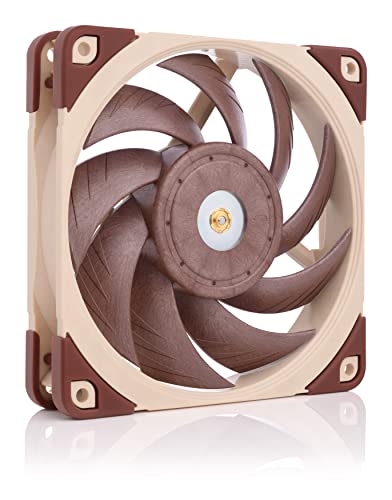
Noctua NF-A12x25 PWM — the radiator benchmark in any orientation
Badge: Best worked example for push, pull or push-pull on a performance radiator.
- Size: 120mm, 25mm thick
- Control: 4-pin PWM, up to 2000 RPM class
- Design: high static pressure and airflow, low-noise brief, for coolers and radiators
- Kit: rich accessory package
The NF-A12x25’s reputation was built exactly here, forcing air through fin stacks while staying composed, and that makes it the cleanest instrument for feeling configuration differences: when the fan is this capable, push and pull converge toward their small honest margin, and push-pull’s benefit shows up purely as speed reduction. Its accessory kit, with the seals and hardware radiator mounting wants, removes the friction that makes builders avoid reconfiguring, which matters more than it sounds, because the best configuration is the one you are willing to test.
Strengths
- Pressure performance that makes any configuration viable
- Acoustic composure that reveals push-pull’s low-speed dividend
- Mounting accessories suited to radiator work
Trade-offs
- Premium cost doubles painfully in a push-pull set
- Its competence can mask a configuration’s small sins
- Signature colours divide showcase opinion
Best for: performance radiators, silence builds and configuration experimenters. Not suited for: budget push-pull arrays across long radiators.

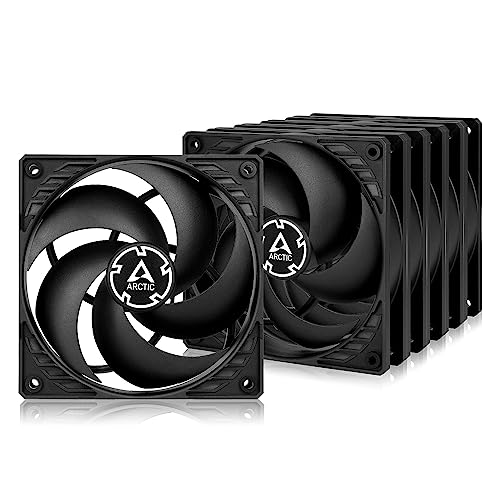
ARCTIC P12 5 Pack — the value route to a full push-pull array
Badge: Best worked example for affording push-pull across a whole radiator.
- Size: 120mm fans, pack of five
- Design: pressure-optimised blades
- Speed: up to 1800 RPM class
- Character: quiet motor focus
Push-pull’s barrier has never been knowledge; it is arithmetic, since doubling the fans doubles that line of the budget. A pressure-optimised five-pack dissolves the barrier for most radiator lengths, letting a builder populate both sides of a 240mm or 360mm radiator and still hold a spare. The P12’s pressure-first design is the correct tool for the job, and its quiet motor keeps the doubled array from doubling the voice, which is the configuration’s entire point. If this guide persuades you to test push-pull anywhere, it will probably be with a pack like this, where the experiment costs little and the verdict is yours.
Strengths
- Makes a complete push-pull array affordable in one purchase
- Pressure-optimised design suits fin resistance
- Quiet character protects the configuration’s low-speed purpose
Trade-offs
- Premium fans still win on acoustics at the extremes
- Plain appearance for showcase radiators
- Five fans of wiring to dress on both radiator faces
Best for: push-pull experiments, thick radiators and value silence builds. Not suited for: flagship acoustic showcases.
Push, examined honestly
Push is the default for reasons that survive scrutiny. The fan seals against the radiator face with its frame, the pressure it generates is applied exactly where the resistance lives, and at the low-to-middle speeds where most systems live, controlled tests across the industry consistently find push at parity or a degree ahead. Its costs are custodial: the dust cake forms between fan and fins, on the radiator’s hidden face, so cleaning a push radiator means removing fans or accepting a fouled core. Push also places the fan’s hub and blades upstream, where any slight turbulence the fan generates meets the fins immediately. None of that dethrones it; it merely explains why the default has a maintenance price that pull does not charge.
Pull, examined honestly
Pull’s case rests on custody and character. The radiator’s intake face stands naked to the room, so a brush or a vacuum restores it in seconds without a screwdriver, an advantage that compounds over years of ownership in a dusty home. Acoustically, some builders prefer the pull texture, the fan drawing through the fins rather than striking them, though this guide files that preference under personal and room-dependent rather than universal. Its cost is the small performance margin at low speed and a mounting subtlety: the fan must seal against the radiator’s far face just as carefully, because a pull fan leaking around its frame is a fan moving the room’s air in a circle. Sealed and honest, pull is the configuration of owners who maintain their machines and intend to keep doing so.
Push-pull, examined honestly
Push-pull is the configuration with the most inflated reputation and the most specific true value. It does not double cooling; nothing about a second fan set can repeal the radiator’s own limits. What it does is share the pressure work, so the same airflow arrives at lower speeds on both sides, and the system’s noise falls by an amount silence builders can hear across the room. The thicker and denser the radiator, the more pressure there is to share, which is why thick radiators are push-pull’s homeland and slim radiators its tourist destination. Its costs are the obvious ones, double fans, double wiring, double purchase, plus a cleaning sandwich that makes pull’s advocates wince. Buy it for quiet or for thickness, never for bragging, and it will pay you back in the currency you bought it for.
How does radiator placement interact with configuration?
Configuration lives inside a case, and the case votes. A front radiator in push doubles as the case’s intake, delivering warmed air to the graphics card, while the same radiator in pull draws case air outward through the front, an arrangement some cases’ layouts quietly assume. A top radiator in push exhausts through the roof with the fans visible inside, the showcase arrangement, while pull hides the fans above the core and eases the dust routine for a PC under a desk. Clearances vote too: push-pull consumes depth on both faces, and in compact cases that depth is the motherboard’s or the graphics card’s living space. The mature method is to decide placement by the case’s airflow doctrine first, then choose the configuration that placement accommodates best, rather than falling in love with a configuration and evicting components to house it.
How to test push versus pull on your own radiator
Your radiator is the only laboratory whose results you will live with, so run the experiment properly. Fix every variable but one: same coolant or processor load, same game or stress load for the same duration, same ambient room, same fan curve expressed in actual speeds rather than percentages where the software allows. Record the component temperatures and, just as importantly, the noise at your chair, because the configurations trade in both currencies. Test push for a session, pull for a session, and push-pull only if the first two leave you curious, since it is the configuration that costs money to audition. Keep the notes; thermal impressions evaporate, and the builder with notes owns a specification while the builder with impressions owns an opinion.
Common push and pull mistakes
Mounting fans in opposition, one side pushing while a misread arrow has the other side pushing back, is the first and most literal. Leaving gaps around the fan frames is the second, a silent leak that taxes every configuration equally. Running both sides of a push-pull array on unrelated curves is the third, defeating the load-sharing that justified the array. Judging by a two-minute benchmark is the fourth, since radiators and coolant reach their verdicts slowly. And copying a configuration from a build with a different radiator thickness is the fifth, because thickness is the variable that decides how much any of this matters.
Final recommendation
Choose push for a slim radiator and a simple life, pull for a dusty home and a maintained machine, and push-pull for a thick radiator or a silence brief, with the fans’ pressure quality, the Noctua for performance and the Arctic pack for value, mattering more than the orientation in every case. Then test once, on your own hardware, and let your radiator have the final word.
how many case fans does a gaming pc need
Push and pull on tower air coolers, the forgotten half of the question
Radiators monopolise this debate, but the same geometry governs every tower air cooler in every air-cooled build, and the verdicts rhyme. A single fan on a tower almost always belongs in push, mounted on the fin stack’s front face, driving air through the tower toward the rear exhaust that waits behind it like a relay partner. Adding the second fan in pull, the classic dual-fan tower arrangement, shares the pressure work exactly as it does on a radiator, and its dividend is the same: a degree or two at equal speed, or equal temperatures at gentler speeds. Memory clearance writes the exceptions, since a push fan overhanging tall memory modules is a fan that does not fit, and many builders run the tower’s fan in the middle or in pull for purely architectural reasons, losing little and gaining a build that closes. The tower’s lesson generalises the guide’s whole thesis: orientation is a small variable, fit and fan quality are large ones, and the builder who internalises that ordering will configure anything correctly on the first attempt.
The noise science of configuration
Configuration changes not just how much noise a system makes but where the noise is born, and the ear cares about the birthplace. A push fan’s turbulence meets the fins immediately, generating a faint interaction tone at the radiator’s face that some listeners in quiet rooms can identify blindfolded. A pull fan generates its turbulence downstream, inside the case’s lee, where panels and distance soften it before it reaches the room. Push-pull, running both sides slowly, often produces the least objectionable total signature despite having the most fans, because each fan operates in the calm region of its range and the interaction tones stay beneath the room’s floor. None of these effects is large, and all of them are room-dependent, which is why this guide refuses to crown an acoustic winner and instead prescribes the chair test: the configuration your room forgives at your working speeds is the quiet one, whatever any chart, including the mental charts this article has given you, predicted.
Dust, filters and the five-year view
Stretch the timeline and configuration becomes a maintenance philosophy. A push radiator in a filtered front intake lives a protected life, its dust arriving pre-sieved, and its deep cleans can be annual events. The same radiator in pull, breathing the case’s interior air, gathers the dust that the case’s own filters missed, on a face that at least stands open for a monthly brush. An unfiltered installation in either orientation is a fouling schedule waiting to be discovered, and push-pull in an unfiltered case is the fastest fouling of all, since it processes the most air through the most protected sandwich. The five-year owner therefore chooses configuration and filtration together: filtered intake with push for the set-and-forget temperament, pull for the hands-on temperament, and push-pull only where the cleaning ritual has been honestly budgeted alongside the fan bill.
Fan curves for each configuration
A configuration is only as good as its curve, and each arrangement asks for a slightly different one. A single set in push or pull takes the standard doctrine: tied to the temperature of the component the radiator cools, stepped rather than linear, capped at the speed your room forgives. Push-pull adds one rule of its own, symmetry: both sides should run the same curve, or curves deliberately offset by a small, tested margin, because an array whose sides fight at different speeds surrenders the load-sharing it was bought for and can sing at the beat frequency between them. Radiator fans also reward patience in the curve’s shape, since coolant temperature moves slowly and a curve that chases every processor spike will hunt audibly for no thermal benefit. Set the radiator’s fans to the coolant’s tempo, or to a smoothed component temperature where coolant sensing is unavailable, and every configuration in this guide will sound like it was tuned by someone patient, because it was.
Dual-radiator and custom-loop notes
Custom loops multiply radiators and with them the configuration decisions, but the principles hold per radiator rather than per loop. The intake radiator usually takes push behind its filter, the exhaust radiator takes whichever orientation its clearance and cleaning access prefer, and push-pull is rationed to the thickest core in the loop, where its pressure-sharing earns the space it consumes. The loop’s total airflow still answers to the case doctrine from this site’s fan-count guide, intake ahead of exhaust in aggregate, because two radiators do not repeal the physics of dust. Builders planning a loop should decide configurations on the bench, where radiators can be flipped in minutes, rather than inside the case, where every flip is a drain and a refill of patience.
Why the published charts disagree with each other
Anyone who researches this question meets contradictory charts within the first evening, and the contradictions are instructive rather than scandalous. Test rigs differ in radiator thickness and fin density, the two variables that most change the answer. Ambient control differs, fan models differ, and the load’s duration decides whether the coolant ever reached the temperature at which configurations separate. Some charts measure at maximum speed, where differences compress, and others at silence-tuned speeds, where they widen. The mature reader treats every chart as a measurement of its own rig and extracts the pattern rather than the digits: push and pull are close, thickness widens gaps, push-pull buys quiet. That pattern has survived every rig it has been measured on, and it is the pattern this guide has built its recommendations on, with your own radiator prescribed as the final authority for the digits.
Installation craft: seals, screws and arrows
Configuration is decided on paper and delivered by handwriting, and three small crafts decide whether the delivered version matches the plan. The seal comes first: a fan frame must sit flush against the radiator across its whole face, with any gasket or anti-vibration pad the maker provided in place, because a two-millimetre leak around a pull fan can cost more performance than the push-pull distinction itself. The screws come second, snug and even, since a corner torqued harder than its opposite warps the frame’s seal and can set a fan humming against the fins. The arrows come third and last, checked with the fan powered before the panel closes, because the most elegant configuration in this guide is worthless with one fan blowing homeopathically against the others. Builders who perform those three crafts in that order will get the performance their chosen configuration actually offers, which is more than many louder builds can say.
When configuration cannot save you: the real bottlenecks
A troubleshooting honesty belongs in this guide: if a liquid-cooled system runs hot, configuration is rarely the culprit, and flipping fans is rarely the cure. The usual suspects, in the order experienced builders check them, are a pump running below its intended speed or a loop with air gathered in the radiator, a cold plate mounted with poor contact, a radiator starved by a case panel that seals its face, fan curves governed by the wrong temperature sensor, and a room whose summer has quietly raised every baseline. Configuration enters the list near the bottom, as a refinement to apply once the system is healthy. The builder who works the list in order will fix the machine; the builder who starts by re-mounting fans will own a beautifully configured machine with the same fault it started with, plus an afternoon’s practice at radiator screws.
Three builds, three configuration verdicts
The showcase build, glass on two sides and a slim 360mm radiator in the roof, takes push, because the fans belong in the photograph and the slim core asks nothing of a second set; its owner’s money went to the benchmark fans whose composure the glass displays. The silent workstation, thick 280mm radiator in the front of a sealed, damped case, takes push-pull without a debate, because its entire brief is heavy cooling at speeds the room cannot hear, and the second set is the cheapest silence in the whole parts list. The dusty farmhouse build, slim radiator, unfiltered room, an owner who maintains monthly and tinkers never, takes pull, because its radiator face will be brushed clean a dozen times a year and never once unscrewed. Three radiators of similar size, three different correct answers, and the variables that decided them were glass, silence and dust, which is the guide’s whole argument in one paragraph: configuration is a property of the build’s life, not of the radiator alone.
The history of a small argument
Push versus pull is one of PC building’s oldest recurring arguments, and its longevity is explained by its stakes: small enough to argue forever, real enough to measure. In the hobby’s early liquid era, radiators were thick, fans were crude, and push-pull’s advantage was large enough to feel; as fans improved and radiators slimmed for case compatibility, the margins narrowed and the argument should have retired, but arguments in a hobby are also social rituals, a way for builders to signal care. This guide’s position is the one the measurements keep returning: care is better signalled by seals, curves and cleaning than by orientation, and the builder who masters those will configure any radiator, in any era of the argument, correctly. Enjoy the debate at the level of sport, and build at the level of physics.
What about the graphics card’s radiator and hybrid coolers?
Hybrid graphics cards carry their own small radiators, and every word of this guide applies to them at reduced scale. Their radiators are slim, their fans are fixed by the maker more often than chosen, and the configuration question usually arrives as placement, whether the card’s radiator exhausts at the rear or the top, rather than as a push-pull deliberation. Treat the hybrid’s radiator as an exhaust citizen in the case’s overall balance, feed it the same filtered courtesy as any radiator, and resist modifying its fan arrangement unless the maker’s design invites it, because warranty and fit both live closer to the surface on a card than on a case radiator. The doctrine scales down intact: placement first, orientation second, and the card’s own engineers have usually voted already.
One final calibration for the reader pricing a push-pull array tonight: the second set of fans is the only upgrade in this entire subject whose benefit you can audition before you commit, by running your existing single set at the lower speeds push-pull would use and listening to the room. If that quieter register is worth money to you, the array will deliver its temperatures at something like it. If the room sounds the same to you at both speeds, save the money with a clear conscience; your radiator has told you which configuration family it belongs to, and it is the simpler one.
Reconfiguring later: the upgrade nobody regrets planning for
Configurations are not marriages. A builder who starts in push can add the second set when a thicker radiator or a quieter brief arrives, provided the original build left the depth, the headers and the wiring slack for the wedding. Planning that headroom costs nothing at build time: choose a case whose radiator positions admit fans on both faces, run the first set’s cables with a little generosity, and keep the spare fans from the value pack in the drawer rather than selling them on. The same foresight serves the opposite journey, the push-pull array simplified to pull when a smaller case inherits the radiator. Builds that treat configuration as a setting rather than as an identity age gracefully through hardware generations, and their owners argue about push and pull with the serenity of people who can change their minds in an afternoon.
The external radiator and open-bench exceptions
Two habitats exempt themselves from most of this guide’s case logic and deserve a paragraph of diplomatic recognition. External radiators, mounted outside the case in enthusiast loops, breathe room air directly, so configuration there is a pure contest of pressure and cleaning with no intake doctrine attached, and push-pull’s thick-core case applies at full strength. Open benches and test rigs invert the problem entirely, drowning the radiator in ambient air until orientation becomes undetectable, which is why bench results should never be quoted in a case argument. If your build lives in one of these habitats, take this guide’s physics and leave its case doctrine at the door; if it lives in a case, as nearly every reader’s does, the doctrine stands as written.
Reading your own results without fooling yourself
The self-test this guide prescribed has one more rule, the hardest: decide the verdict before you run it. Write down what temperature or noise difference would change your configuration, in figures, before the first session, because a builder who tests without a threshold will find a reason to prefer whichever arrangement they secretly favoured, and the afternoon will have purchased confirmation rather than knowledge. A degree at equal noise, a clearly audible step at equal temperature, a cleaning routine you will actually perform: any of these is an honourable threshold. Fix one, run the sessions, and obey the result even when it acquits the configuration you did not expect to keep. That obedience is the difference between a builder and a fan of a configuration, and radiators can tell the difference even when their owners pretend they cannot.
What the fin stack itself has to say
Radiators are not interchangeable resistances, and two of their specifications quietly govern this entire debate. Thickness sets the total pressure tax: a slim core taxes lightly and forgives a single fan set, while a thick core taxes like a toll road and rewards every fan that shares the bill. Fin density sets the tax’s character: dense fins reward pressure-rich fans and punish airflow fans regardless of orientation, while open fins let almost anything through and compress the configurations into near-identity. A builder shopping a radiator and its fans together should read those two figures first and let them nominate the configuration, thick and dense calling for push-pull with pressure fans, slim and open calling for the simplest set that seals. The fans in this guide’s worked examples were chosen because their pressure credentials keep every nomination open, which is the correct way to buy before a configuration is final.
So the guide’s last word is an encouragement disguised as a warning: do not let the smallness of this difference make you careless, and do not let its literature make you anxious. Mount good fans, seal them well, blow them all the same way, clean the face the air enters, and the configuration you chose will be the right one in every way that survives measurement. The rest is sport, and sport, in a hobby, is allowed.
The shroud and ducting footnote
One historical technology deserves mention because it clarifies the physics by exaggeration: the shroud, a short duct that spaces the fan a small distance from the radiator face. Shrouds exist because a fan’s hub is a dead spot that pushes no air, and spacing the fan lets the airstream spread across the hub’s shadow before it meets the fins, evening the radiator’s workload. Modern radiators and fans have absorbed most of the shroud’s benefit through design, and few builders fit them now, but the principle survives inside this guide’s advice: what matters is not the fan’s label but the air’s actual journey across the whole fin face. A configuration that leaves corners of the radiator unbreathed, through poor sealing or a mismatched fan size, is wasting core it paid for, in any orientation, and the fix is fit rather than philosophy.
Configuration and the warranty-era builder
Most readers of this guide own an all-in-one liquid cooler rather than a custom loop, and that ownership adds one practical filter to every recommendation here: the cooler’s fans and radiator arrive as a designed unit, often with the fans pre-mounted in the maker’s chosen orientation. Reconfiguring an all-in-one is legitimate and usually simple, but it should be done with the unit’s manual open, its screws kept in order, and its original arrangement photographed, because the maker’s default encodes their own testing of that exact core. Change it for a reason this guide has named, clearance, cleaning, a silence brief, and keep the parts to change it back. The custom-loop builder faces no such mediation and may treat this entire article as a bench manual. Both readers end in the same place: a configuration chosen on evidence, reversible in an afternoon, and subordinate to the health of the system it cools.
And spare one thought for the builder reading this at the planning stage, radiator still in its box: your advantage over every owner in this guide is that your configuration costs nothing yet. Sketch the case’s air path, mark the radiator’s faces, decide where the dust will land and who will clean it, and the orientation will choose itself on paper, correctly, the first time. That is the entire subject, mastered before a single screw turns.
The one-degree question: why small margins still get guides
A sceptical reader may ask why a difference of a degree or two merits thousands of words, and the answer is that the words were never really about the degree. They are about the habits the question trains: measuring instead of inheriting, sealing instead of assuming, cleaning the face the air enters, and spending the next unit of money where the system can still feel it. A builder who learns those habits on the push-pull question applies them to every question the hobby asks afterwards, from thermal paste to case selection, and the compound interest on that education dwarfs any single configuration’s margin. The degree is the tuition; the habits are the degree. Read the guide that way and even its smallest finding has been worth your evening.
Mount the fans, then, in the configuration your build’s life describes, and get back to the games and work the cooling exists to serve. A radiator’s highest compliment is to be forgotten, and every configuration in this guide, honestly installed, earns exactly that forgetting.
What changes at the extremes: sub-zero rooms, mining rigs and render farms
Extreme duty rewrites margins, and intellectual honesty requires the guide to visit it. A machine that runs at full load around the clock, rendering, compiling or computing, lives at the top of its fans’ ranges where push-pull’s pressure sharing stops being a refinement and becomes sustained capacity, and where the cleaning calculus tilts toward whichever configuration the operator can service without downtime. A machine in a cold room gains margin everywhere and can run any configuration at speeds so low the debate evaporates. The gaming PC between those poles, which is to say nearly every reader’s machine, sits where this guide placed it: margins small, custody and curves decisive. Knowing where your duty sits on that spectrum is worth more than any single recommendation in this article, because recommendations expire at the extremes and self-knowledge does not.
The radiator’s neighbours: what configuration means for the rest of the case
No radiator cools alone, and its configuration sends consequences downstream. A front radiator in push warms the case’s intake air by the processor’s contribution, a tax the graphics card pays and the case’s exhausts must clear; the same radiator in pull becomes an exhaust that relieves the case while asking the remaining intakes to feed the card unaided. A top radiator in either orientation exhausts, but its fans’ orientation decides whether the case’s dust settles on a cleanable face or a hidden one for years. Even the motherboard’s own components live downstream, bathed in whatever air the radiator arrangement delivers to them. The system view is this guide’s final technical lesson: choose the configuration that makes the whole case’s story coherent, intake to exhaust, dust to cleaning, and not merely the configuration that wins the radiator’s private contest by a degree.
There is also a small aesthetic covenant worth honouring in glass cases: a configuration chosen for the photograph should still be a configuration the physics can respect, and the good news of this entire subject is that it almost always can be. Push for the portrait, pull for the housekeeping, push-pull for the silence, and let no one tell you the portrait was a compromise; on a slim radiator, it was a rounding error with better lighting.
Keeping records: the configuration log
Close the subject the way this site closes every cooling subject, with a record. Note the radiator, its thickness and placement, the fans and their orientation, the curve that governs them, and the temperatures and noise verdict from your chair on the day it was built. That log turns the next question, a hotter processor, a new case, a second radiator, from a fresh research project into a revision of a document you trust. It also settles future arguments with your past self, who was there and measured it. Push, pull and push-pull will all appear in that log across a builder’s lifetime, each in the build where it belonged, and the log, not loyalty, will be the proof that the choices were made well.
Now close the case. Whatever you mounted, mounted carefully and measured once, will cool the machine through seasons of games and work, and the argument, such as it was, will have been settled the only way it ever truly settles: by a radiator doing its quiet work, in the orientation your build asked for, asking nothing further of you but an occasional cleaning and the grace to be forgotten.
A brief defence of simply choosing
Some readers will finish this guide still torn, and to them it offers its most practical paragraph. If the radiator is slim, the room is ordinary and the build is waiting, choose push, seal it well, and spend the saved evening on the fan curve, which will return more than the orientation ever could. Indecision is the only configuration with a guaranteed cost, paid in unbuilt machines and unplayed games, and every option in this article beats it by the length of the whole hobby. The fans are reversible, the screws are patient, and the machine wants to exist. Choose, build, measure, and adjust only what the measurements indict.
And when a fellow builder asks your allegiance at the next meetup or in the next thread, give them the answer this guide has earned the right to give: it depends on the radiator, the room and the cleaning, and here is how to tell. That answer, unfashionable as it is, is the one that will still be correct when the next generation of fans arrives to restart the argument all over again.
The summary a builder can pin above the bench
Push: the default, a degree’s edge at low speed, dust hidden behind the fans. Pull: the custodian’s choice, a breath behind, dust in the open and gone in seconds. Push-pull: the thick radiator’s partner and the silence builder’s instrument, bought with double fans and repaid in lower speeds. Fans: pressure first, seals always, arrows checked. Curves: one per radiator, shared by both its faces, written to the coolant’s slow tempo. Tests: one variable, one long session, one threshold fixed in advance. That card, pinned above the bench, contains the whole guide, and the pages behind it exist to make each line of it trustworthy.
Print that card, then, in memory if not on paper, and let the radiator in front of you be the last voice in the discussion. It has been waiting, patiently and at room temperature, for exactly that courtesy.
What this means for your next fan purchase
The configuration lens changes how fans themselves should be bought, and the guide would be incomplete without saying so. Buy pressure credentials before diameter dreams, because every orientation spends pressure and only pressure. Buy fans whose accessories respect radiators, seals and proper screws, because installation craft is half the configuration’s delivered value. Buy in matched sets where an array is planned, since two production runs of the same fan can differ enough in voice to sing against each other across a radiator. And buy the count the configuration needs plus one spare, because the fan that fails in year three should be replaced by its twin, not by a stranger whose curve will never match its siblings. Purchased that way, fans outlive configurations, and the push-pull question becomes what it always should have been: a setting you revisit, on hardware that never has to be re-bought to revisit it.
With the purchase made wisely and the configuration chosen by the build’s life, the subject closes itself. Your radiator will not know which side of the hobby’s oldest small argument it landed on; it will only know clean air, honest pressure and a curve written by someone who read to the end of the guide. That is enough. That was always enough.
A last scenario: the hand-me-down radiator
Hardware inherits, and a radiator arriving from a friend’s build or a previous machine of your own arrives with its configuration already chosen by someone else’s case. The inheriting builder’s correct move is not loyalty to that arrangement but a fresh reading of this guide against the new case: the donor’s push may become your pull the moment your cleaning access, your clearances and your dust change hands. Fans and cores are indifferent to their history; only the fit is real. Re-decide without sentiment, keep the donor’s spare screws, and the hand-me-down will cool its second life as honestly as its first.
The guide rests its case there, in both senses: the argument is complete, and the case, cooled and quiet, is closed.
The radiator’s confession: push, pull and the dust between them
Months after the benchmarks fade, the arrangement writes its real report in dust. A push fan feeds the radiator from the room side and parks its dust in the fin stack’s front face, where a brush and a vacuum can reach it during the seasonal cleaning this site’s guides keep prescribing. A pull fan parks the same dust on the far face, against the case, where it hides until a temperature graph betrays it. Neither deposition is a failure; both are schedules, and the owner who knows which face their arrangement feeds can inspect the right one first. This is the sense in which the push-versus-pull question outlives its small thermal answer: it decides where your machine will keep its dirt, and a builder who chooses that deliberately has understood the question more deeply than one who memorised a percentage.
When both is the answer: push-pull and its honest price
Sandwiching a radiator between two fan banks is the arrangement builders reach for when a single bank’s static pressure runs out, and its honesty deserves stating plainly. Push-pull buys its gains at the restrictive end of the world, thick radiators, dense fins, low governed speeds, and charges for them in fans, in wiring, in cleaning surfaces and in the slow accumulation of everything two banks can vibrate. On the thin radiators of most all-in-one coolers the purchase is mostly ceremony. Deploy it where the restriction is real, govern both banks from one curve so they age as a unit, and let the single-bank builds enjoy their simplicity without envy. The hierarchy of this whole guide is contained in that sentence: arrangement serves restriction, restriction is measured, and nothing in a case should be doubled on a rumour.
Choose the side your case cleans easiest, govern it gently, and spend the saved worry on the parts of cooling that pay in whole degrees. The fan will not mind which side of the radiator it lives on. It will mind, over the years, whether anyone ever brushed the dust off the face it feeds.
Frequently asked questions
Is push or pull better for a radiator?
Push holds a small edge at low speeds on most slim and medium radiators, while pull is close behind and far easier to clean. On thick radiators, push-pull beats both by sharing the pressure work. Fan quality moves the result more than orientation does.
Does push-pull double cooling performance?
No. Push-pull’s real product is the same cooling at lower fan speeds, which means lower noise, plus better handling of thick, dense radiators. Expect a modest temperature gain at equal speed and a meaningful quiet gain at equal temperature.
Which configuration collects less dust?
Both collect dust where the air enters the radiator. In push that face hides behind the fans, while in pull it faces the room and wipes clean in seconds. The total dust is similar; the cleaning effort is not.
Can I mix push on one radiator and pull on another?
Yes, and many dual-radiator builds do exactly that, choosing per radiator according to placement, clearance and cleaning access. Just keep each radiator’s own fans coordinated on a shared curve.
How do I know which way my fan blows?
Air moves from the fan’s open face toward the side with the support struts and label, and most fans mould small direction arrows into the frame’s edge. Confirm with a tissue at the frame before mounting, since a reversed fan is the most common configuration error of all.
Is push-pull worth it on a 240mm slim radiator?
Usually not for temperatures, and only sometimes for silence. A single set of good pressure fans handles a slim 240mm well; push-pull there buys a small noise reduction at double the fan cost, which most builders are better spending on better fans.