Disclosure: As an Amazon Associate, kajuandouglas.com earns from qualifying purchases. Links on this page are affiliate links; they cost you nothing extra. Prices and availability change often, so check the current Amazon listing before you buy.
This kailh box switches complete guide exists because the Box family is not simply a line of switches with a shape — it is a small engineering philosophy with a product range attached. Every Box switch seals its contact mechanism inside an enclosed stem housing, the box of the name, which keeps dust and moisture away from the leaves that make the electrical connection. Around that sealed heart, Kailh built linears, tactiles, and a famous family of clickies whose click bar produces the crispest acoustic in the mainstream switch world. This guide walks the whole family: what the box actually does, which members deserve your board, and where the design’s strengths stop.
The family’s reputation rests on two pillars that rarely coexist. The first is durability theatre: ingress protection ratings, dust resistance, switches marketed as surviving environments that would retire ordinary switches. The second is the click bar, a small torsion spring inside the clicky models that snaps against the housing to produce a click of unusual clarity — twice per press on some models, down and up, like a tiny castanet with perfect attendance. Owners tend to arrive for one pillar and stay for the other.
Key Takeaways
- The box is a sealed chamber around the stem’s contact area, designed to keep dust and splashes away from the electrical leaves.
- Box clickies use a click bar rather than a click jacket, producing a crisper, more separated click that fires on the way down and again on the return.
- The family spans linear (Red, V2 Red), tactile (Brown), and clicky (White, Jade, Navy) personalities across a wide weight range.
- Box stems historically ran slightly wider than standard, which mattered for certain keycaps in the family’s early years; modern production and modern caps have largely settled the quarrel.
- These are among the most satisfying switches to type on stock, with factory smoothness that reduces the urgency of lubing.
In this guide
Kailh Box Switches Complete Guide: What the Box Actually Is
Open a conventional MX switch and the stem stands exposed: its legs meet the leaves in open air, and whatever the room offers — dust, crumbs, the occasional aerosol of a nearby beverage — can settle into the mechanism. The Box design wraps the stem’s lower portion in an enclosed housing-within-the-housing, so the contact event happens inside a chamber with controlled entrances. The practical consequence is a switch less interested in its environment. Workshops, dusty desks, humid climates, and households with shedding animals all tax ordinary switches; Box switches treat those conditions as weather rather than as threats.
The design carries a second, quieter benefit: the box guides the stem. A stem travelling inside a close-fitting chamber has less room to wander, and Box switches earned an early reputation for restrained wobble that made them favourites under tall keycap profiles. Combined with Kailh’s generally good factory lubrication in recent production, the family presents as the switch line for people who want to install, type, and postpone the modding chapter indefinitely.

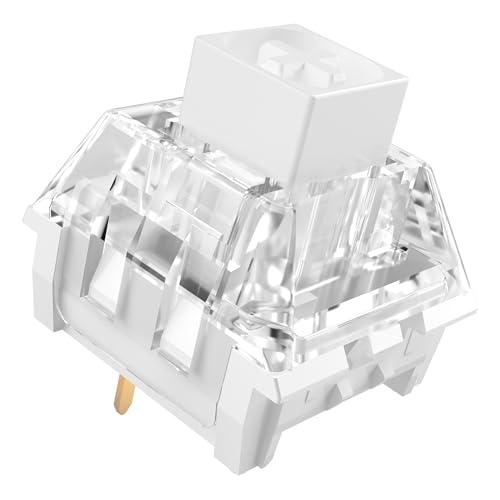
Kailh Box White — the Reference Clicky
Badge: The click bar, tuned friendly
- Configuration per its listing: 3-pin, 45gf, clicky, dust and waterproof design
- Pack in its listing: 108 pieces
- Character: light, crisp, double-clicking
- Best room: a solo office that enjoys percussion
Strengths
- The most approachable click in the family — bright and precise without the Jade’s extra weight behind it.
- Its lighter spring keeps fast typing fluent where heavier clickies begin to feel like exercise.
- The sealed design shrugs off the dusty desks where click mechanisms usually go to die.
Trade-offs
- A click this clear carries; housemates will learn your typing schedule.
- Three-pin legs ask the plate for alignment discipline in loose boards.
- Clicky commitment is total — there is no quiet mode, only a different switch.
Best for: click lovers who type quickly and want the bar’s clarity at a friendly weight. Not suited for: shared rooms, libraries, or stealth builds of any kind.

Kailh Box Jade — the Heavyweight Click
Badge: The click, with a thicker bar and a stronger spring
- Configuration per its listing: 3-pin, 50gf, clicky, factory lubed
- Distinguishing part: a thicker click bar than the White’s
- Pack in its listing: 108 pieces
- Character: deeper, louder, more deliberate
Strengths
- The fullest clicky experience in the mainstream market — a click with body, followed by a return click with intent.
- The heavier spring resists accidental presses and rewards deliberate typists.
- Factory lube keeps the travel civilised beneath the acoustic theatre.
Trade-offs
- Fatigue is a real line item across a full working day of heavy, loud presses.
- It is the least welcome switch in any shared space ever constructed.
- The bar’s enthusiasm can dominate recordings and calls alike.
Best for: devoted click enthusiasts typing alone, on purpose, at volume. Not suited for: endurance writers with light hands or thin walls.

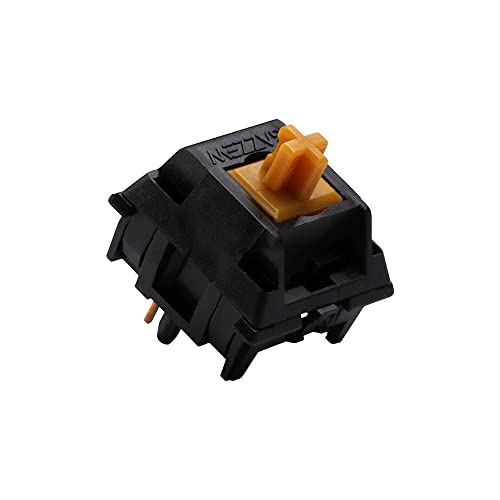
Kailh Box Red — the Sealed Linear
Badge: Smooth, light, and unbothered by dust
- Configuration per its listing: linear, 45g actuation, IP56 dust and waterproof, 3-pin
- Pack in its listing: 120 pieces via Glorious
- Character: clean linear travel with the family’s stem discipline
- Best desk: gaming rigs and working boards in real rooms
Strengths
- Linear smoothness plus environmental sealing is a rare and practical combination.
- The stem’s guided travel keeps tall caps composed during fast play.
- A generous pack size covers full boards with a tuning reserve.
Trade-offs
- Its lightness invites bottoming out until the hands calibrate.
- Linear anonymity applies: no bump will ever confirm a press.
- The stock spring can sing faintly in a quiet case until lubed.
Best for: gamers and typists in dusty, busy, real-world rooms. Not suited for: tactile seekers or heavy-handed mashers.

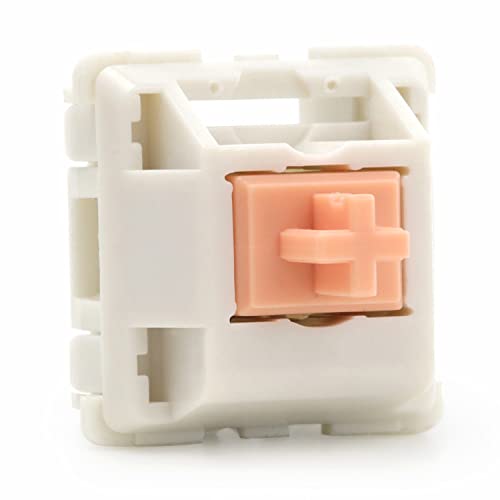
Kailh Box Brown — the Sealed Tactile
Badge: A polite bump in a protective coat
- Configuration per its listing: tactile, medium actuation force, IP56, 3-pin
- Pack in its listing: 120 pieces via Glorious
- Character: a rounded, office-friendly tactile event
- Best desk: shared workspaces that still want feedback
Strengths
- Delivers genuine tactility with the family’s environmental protection.
- The bump’s manners suit offices where stronger tactiles would grandstand.
- Stem stability flatters every keycap profile it wears.
Trade-offs
- Bump maximalists will find it diplomatic to a fault.
- It shares the family’s 3-pin seating considerations in loose plates.
- Its middle character pleases crowds rather than devotees.
Best for: office typists who want feedback without theatre. Not suited for: panda-class bump hunters.

Kailh Box Navy — the Click at Maximum Conviction
Badge: Heavy spring, thick bar, no apologies
- Configuration per its listing: 3-pin, 60gf, clicky, factory lubed, IP56
- Pack in its listing: 108 pieces
- Character: the family’s deepest, heaviest clicky
- Best room: a detached house, emotionally and structurally
Strengths
- The most deliberate keystroke in the family — every press is a decision ratified in sound.
- Heavy springs eliminate accidental actuations for heavy-handed typists.
- Shares the Jade’s thicker-bar lineage with even more authority.
Trade-offs
- Sixty grams across a full day is a training regimen, not a preference.
- Volume and weight together exclude nearly every shared context.
- Its charms are invisible to anyone who does not already love heavy clickies.
Best for: heavy-handed click devotees with a room of their own. Not suited for: almost everyone else, which the Navy wears as a badge of honour.

Kailh Box V2 Red — the Second-Generation Linear
Badge: The family’s refinement, in linear form
- Configuration per its listing: 5-pin, 40gf, linear, dust and waterproof
- Generation: the V2 revision of the Box design
- Pack in its listing: 108 pieces
- Character: lighter, smoother, more secure in its seating
Strengths
- The 5-pin legs seat with a security the first generation’s 3-pin designs envy.
- A lighter spring suits rapid gaming inputs and gentle typists alike.
- V2 refinements polish the stem’s travel and the housing’s manners.
Trade-offs
- Forty grams is light enough to punish resting fingers with stray characters.
- As the newer generation, its long-term folklore is still being written.
- Linear smoothness remains its whole personality — no bump hides inside.
Best for: light-touch gamers and typists who value seating security. Not suited for: heavy-handed writers or tactile loyalists.
The Click Bar, Explained With Affection
Most clicky switches make their sound with a click jacket — a loose collar on the stem that snaps against the housing when the stem’s leg releases it. The jacket works, but its click is a by-product, and it can feel as vague as it sounds. The Box clickies take a different road: a thin metal bar, tensioned like a tiny diving board, sits in the housing where the stem’s leg can strike it as it passes. The bar flicks, rings for a millisecond against the housing wall, and resets. Because the bar is a spring with its own resonance, the click it produces is pitched, crisp, and astonishingly consistent from switch to switch. And because the leg passes the bar again on the way up, many Box clickies click twice — a down-click and a return-click, a rhythm section in each key.
The bar’s thickness is the family’s tuning dial. The White’s thinner bar gives a higher, lighter tick. The Jade and Navy carry thicker bars that speak lower and louder, with the Navy’s heavy spring completing the impression of a switch designed by someone who considered subtlety and declined it. This is why the Box clickies dominate clicky roundups across the hobby, including our own survey in the best clicky switches for your mechanical keyboard: the mechanism is simply better at the one job a clicky switch has.
The Keycap Question, Settled With History
No Box guide is complete without addressing the family’s oldest controversy. Early Box stems measured slightly wider than the MX standard, and certain keycaps — particularly some thick aftermarket sets — developed stress cracks at the stem mount after living on Box switches. The community’s memory of this is long and mostly justified for its era. The present-day position is calmer: Kailh revised the stem dimensions, modern keycaps are moulded with the episode in mind, and the combination that caused the original trouble is now the exception rather than the rule. Prudent owners still test a prized artisan cap on a spare Box switch before committing it, the way you would test any treasure on any stem. But the era of warning buyers away from the family on keycap grounds has passed, and guides that repeat the warning without its dates are selling yesterday’s weather.
Ingress Protection: What the Ratings Do and Do Not Promise
Several Box listings carry an IP56 designation, and the number deserves translation. The first digit speaks of dust: the switch resists the ingress of harmful dust deposits. The second speaks of water: protection against powerful splashes and jets from any direction, at the level of the switch as a component. What this does not make is a waterproof keyboard — the PCB, the controller, and the case have their own vulnerabilities, and a spilled drink remains an emergency for the board as a whole. What it does make is a switch that shrugs off the slow environmental insults: the dusty workshop, the humid summer, the desk beside the kitchen. Owners in those environments report Box switches ageing with unusual grace, and the sealed chamber is the reason — the leaves live in a cleaner world than the room provides.
Buying Guide: Choosing Your Box
Start with the acoustic treaty of your household, because the family’s loudest members are genuinely loud. Solo room and click-curious: begin with the White, whose bar sings at a weight your hands can sustain. Click-committed and strong-fingered: the Jade, and the Navy only if your devotion is total and your walls are thick. Shared room: the Brown for feedback with manners, the Reds for silence-adjacent smoothness, with the V2 Red earning the nod where its 5-pin seating and lighter touch suit a gentle typist or a fast gamer.
Continue with environment. A board destined for a workshop, a garage desk, a streamer’s snack-adjacent battlestation, or a home with heroic quantities of pet hair should weight the sealing heavily — it is the family’s founding argument, and the switches in this guide all carry it. Finish with pin format: 3-pin Boxes are at home in plate-mount boards, while the V2’s 5-pin design rewards PCB-mount sockets with its seating security. The wider Kailh universe — Speed, Choc, and the rest — is mapped in kailh switches a comprehensive guide, for readers whose curiosity outgrows the box.
How to Install and Tune Box Switches
Step one: the keycap test
Before the full set goes in, seat one switch, fit the keycap you intend to use — especially any thick or artisan cap — and type on it for an hour. The stem-fit question, the sound, and the weight all introduce themselves on that single key at no risk to the set.
Step two: install with the family’s grip in mind
Box switches follow the standard hot-swap liturgy of removing and replacing switches on a hot swappable board: pins audited, alignment hovered, pressure vertical and supported. The 3-pin members rely on the plate for their posture, so confirm each sits flush before moving on; a Box seated at a tilt will click at the room from an angle.
Step three: lube with a lighter hand than usual
Box switches arrive smoother than most, and their enclosed stem punishes greed: excess grease inside the box has nowhere to emigrate. If you lube at all, confine it to a whisper on the rails and the spring treatment in how to lube keyboard switches, and keep every trace away from the click bar’s neighbourhood on the clicky models — a greased bar is a muted bar, and muting a Jade is a small tragedy in one act.
Step four: tune the room, not just the board
Click bars broadcast. A desk mat, a case with some foam, and a door’s courtesy do more for household harmony than any switch-level intervention. Tune the environment with the same intent you tuned the board, and the family’s loud members become good citizens of a solo room rather than exiles from a shared one.
Common Mistakes Box Buyers Make
Buying the Navy as a first clicky is the family’s rite-of-passage error — a magnificent switch mistaken for a starter switch, usually rehomed within the month. Lubing the click bar is the second, committed by owners who lube by reflex rather than by diagnosis. The third is judging the White by a recording, because the bar’s pitch in a microphone flatters and flattens in ways the room will correct. The fourth is assuming the IP rating licenses beverages; the switch may survive the spill that kills the board. The fifth is mixing Box clickies into a board destined for calls and recordings, where the double click annotates every sentence its owner speaks.
Final Recommendation
The Box family is Kailh’s masterpiece of focus: one idea — protect the contact, guide the stem — executed across every personality a switch can have. For most buyers the White is the clicky to beat and the Red or V2 Red the linear to beat, with the Brown as the sealed tactile for civilised rooms and the Jade and Navy reserved for the devoted. Buy for your room first, your hands second, and your environment third, and a Box set will serve for years with its mechanism living in cleaner air than your desk can offer it. Readers comparing the click bar against the wider clicky field should continue to optical switches versus mechanical switches compared for the other great sensing divide, and to keyboard switches explained for the fundamentals beneath every family.
The Family at a Glance: Weights and Personalities
| Switch | Type | Weight character | Voice | Natural habitat |
|---|---|---|---|---|
| Box White | Clicky | Light, 45gf in its listing | Crisp double tick | Solo typing rooms |
| Box Jade | Clicky | Medium-heavy, thicker bar | Deep, emphatic click | Devotee desks |
| Box Navy | Clicky | Heavy, 60gf in its listing | The family’s foghorn | Detached offices |
| Box Red | Linear | Light, 45g actuation | Smooth hush | Gaming and mixed desks |
| Box V2 Red | Linear | Feather, 40gf in its listing | Smooth hush, lighter | Fast, gentle hands |
| Box Brown | Tactile | Medium | Polite murmur | Shared workspaces |
Read the table as a map of intent. Kailh did not scatter these weights randomly; the clicky line ascends in conviction from White to Navy like a volume dial with detents, while the linears descend toward the featherweight responsiveness competitive players chase. The Brown stands apart as the diplomat, the one member whose design brief included other people’s ears. A buyer who can place their hands and their room on this map has effectively chosen their switch, and the detailed reviews above merely confirm the geography.
Box Switches at the Gaming Desk
Gaming exposes a switch’s manners under repetition, and the Box linears have built a quiet following there for reasons beyond their sealing. The guided stem keeps fast, off-centre strikes honest — a virtue when a movement key is caught by the edge of a finger mid-strafe — and the family’s consistent factory finish means a gaming cluster feels uniform without a tuning weekend. The V2 Red’s featherweight spring suits rapid repeated inputs, while the original Red’s slightly firmer hand gives typists moonlighting as players a better compromise. The clickies, by contrast, are gaming switches only for the player whose microphone discipline is impeccable or whose squad enjoys the percussion; the bar’s double click will narrate every ability rotation to the voice channel with perfect clarity. Tactile Brown occupies the civilised middle, confirming presses for players who distrust linears’ silence about actuation.
One gaming caveat belongs to the whole family: none of these switches offers the rapid-reset behaviour of the Hall effect boards surveyed in hall effect switches versus mechanical switches. A Box board is a mechanical board, with a mechanical reset point, and players buying specifically for competitive movement tech should compare across that divide before the family’s charms close the question.
Durability Diaries: How Box Switches Age
Switch ageing announces itself as scratch, spring song, and eventually contact misbehaviour, and the Box design was drawn specifically to delay the third act. By keeping the room out of the contact chamber, the seal slows the oxidation-and-grit story that ends ordinary switches’ careers in hostile environments. Owners in workshops and pet-rich homes consistently report Box sets outlasting the standard switches they replaced, and while such reports are anecdotes rather than laboratory data, they rhyme with the design’s intent. The parts that do age — springs, stem surfaces — age at the usual rates and respond to the usual maintenance, with the caveat from the tuning section: a lighter hand, because the box keeps what you give it.
The family’s other ageing trait is acoustic stability. A click bar does not tire the way a click jacket’s loose collar can, so a Jade at year two clicks with much the same conviction as a Jade at week two. For clicky devotees this consistency is the family’s deepest virtue: the sound you fell for is the sound you keep, which cannot be said of every mechanism that makes noise for a living.
Box Versus Standard Kailh: When the Box Is Not the Answer
Kailh’s catalogue extends well past this family, and the comparison clarifies the Box’s brief. The Speed line trades the seal for shorter travel and faster actuation, serving players who want a mechanical switch that hurries. The standard Pro line offers conventional open-stem tactiles and linears at friendly tiers. The Choc line goes low-profile for slim boards. Against those siblings, the Box’s identity is protection and the click bar — which means a buyer in a clean room with no clicky ambitions may be paying for armour they never use. The honest guide says so: the Box premium buys a sealed mechanism and, on clickies, the best click in the business. If neither is on your shopping list, the wider Kailh survey linked in the buying guide will route you to the family’s other talents without the sealed surcharge.
Sound Portraits, Switch by Switch
Because recordings flatter and flatten, a verbal portrait gallery may serve the undecided better. The White sounds like a good typewriter remembered kindly — bright, even, quick to finish each note. The Jade sounds like that typewriter’s older brother, lower in the throat and in no hurry whatsoever. The Navy is a door latch in a quiet house: definitive, mechanical, faintly comic in its seriousness. The Red is a fingertip on a wooden desk, present and gone. The V2 Red is the same fingertip wearing a glove. The Brown is a knuckle rapping once on a paperback book. None of these portraits is a measurement, and all of them are truer to the room than a waveform; pair them with a tester switch and the family’s voices resolve from prose into preference within an afternoon.
The Box in Custom and Prebuilt Keyboards
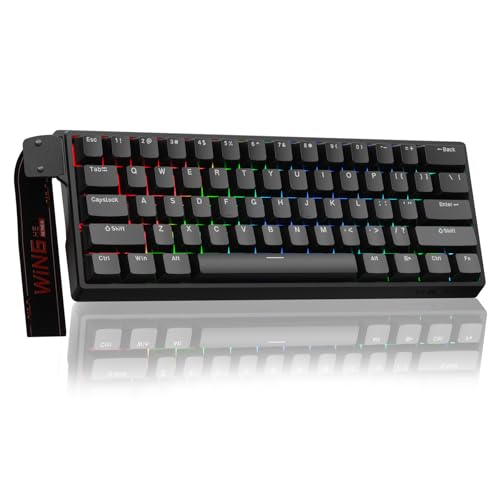
Box switches appear in two kinds of homes: the custom build, where the owner chose them deliberately from a menu of hundreds, and the prebuilt board, where a manufacturer specced them as a feature. The prebuilt route deserves more respect than hobby folklore grants it, because a Box-equipped board from a reputable maker arrives with the family’s virtues installed and its seating done by people with jigs. Owners of such boards often discover the family by accident and become its ambassadors, which is how the White in particular built its congregation. Custom builders choose Box for the same reasons plus one more: the family’s consistency across large packs flatters full-size builds, where a hundred switches must agree with each other and the Box line’s manufacturing discipline makes that agreement likely rather than hoped for.
Springs, Swaps, and the Box Owner’s Bench
Box switches open with standard openers and accept the usual internal crafts — spring swaps, films where housings allow, the light lube discipline described earlier. Spring swapping is the family’s most rewarding bench work, because the click bar’s character survives spring changes intact while the hand’s experience transforms: a Jade on a lighter spring keeps its voice and loses its gymnasium membership. Keep notes as you experiment, because the family’s members look alike on the bench and a Navy spring in a White’s housing is a surprise with a long fuse. The parts discipline from the swap guides — labelled bags, one switch closed before the next opens — applies with its usual force, and the sealed design rewards it by keeping each experiment’s internals clean enough to reverse.
A Buyer’s Walk Through Three Desks
Consider the workshop desk first: sawdust in the air, a board that shares the bench with projects, an owner who types between making things. This desk is the Box family’s founding story, and a set of Box Reds or Browns will outlive the standard switches that preceded them there, because the mechanism’s enemies are locked out of the mechanism. Consider the study next: quiet house, serious writing, a partner asleep one wall away. This desk takes the Brown or a Red and leaves the clickies to their natural habitat, gaining the stem discipline and factory finish without declaring war on the household. Consider finally the studio of one: a writer-performer whose room is theirs alone and whose typing is part of the furniture’s music. This desk earns the Jade, or the White for lighter hands, and the double click becomes the sound of work happening — the family’s full theatre, deployed exactly where theatre belongs. Three desks, three answers, one family: that breadth, more than any single switch, is what a complete guide exists to demonstrate.
How the Box Family Got Here: A Compressed History
Kailh spent years as the industry’s understudy — manufacturing switches that lived inside other brands’ keyboards, respected by engineers and invisible to marketing. The Box line, arriving in the late twenty-teens, was the company’s bid for a name of its own, and it was shrewdly aimed: rather than out-Cherrying Cherry on the original’s home ground, Kailh engineered around a problem the incumbents had not prioritised, the contamination of the contact chamber, and attached the solution to a click mechanism that sounded better than the standard the market had settled for. The enthusiast community, which adopts switches the way it adopts stray cats — sceptically, then completely — tested the family’s claims in the rudest environments available and reported back with unusual warmth.
The keycap episode belongs to this history and explains the family’s defensive folklore. A young product, a dimensional miss, a community with long memories: the ingredients of a reputation that outlives its facts. Kailh’s revisions and the market’s adaptation closed the issue technically within a few production cycles, but the story still circulates in buying threads as if it were this morning’s news, which is why this guide gave it a dated, bounded treatment rather than either silence or alarm. The mature position — test a precious cap, then type without anxiety — is what the evidence supports now.
The V2 generation marks the family’s transition from insurgent to institution. Five-pin seating, polished tolerances, and a range that now spans from the featherweight V2 Red to the Navy’s deliberate thunder suggest a company maintaining a platform rather than chasing a trend. For buyers, that maturity is itself a feature: a Box set purchased today joins an ecosystem with parts, folklore, and resale demand, the three forms of permanence the hobby actually offers.
The Sealed Chamber, Considered as a Design Argument
It is worth pausing on why the box matters beyond its ratings, because the argument generalises across the hobby. Every switch is a negotiation between the mechanism’s needs and the room’s behaviour. Open designs trust the room; sealed designs distrust it, politely and completely. The room, over a switch’s years, offers dust that abrades, humidity that oxidises, and the occasional catastrophic beverage. A design that conducts its electrical business in a chamber with controlled entrances simply receives fewer of those offers. The trade is complexity and a certain forgiveness in manufacturing tolerances — a sealed stem must be made well to travel well — and Kailh’s execution turned that trade into the family’s reputation for out-of-the-box smoothness.
The same philosophy explains the family’s behaviour under keycaps of every height. A chamber-guided stem is a stem with a chaperone: lateral play is limited by architecture rather than by the owner’s choice of plate. Tall, sculpted profiles amplify whatever wobble a switch permits, and the Box permits little, which is why the family keeps appearing under premium cap sets in builds whose owners had every switch on the market to choose from. Design arguments are usually invisible in a finished keyboard. This one can be felt at the top of every keystroke, as a steadiness that reads, simply, as quality.
Choosing Between Box Generations and Packs
Pack architecture quietly steers this family’s purchases. The large packs — the one-hundred-and-eight and one-hundred-and-twenty piece configurations in these listings — are sized for full boards with a genuine reserve, and they reward the buyer who counts a layout before ordering. Compact-board owners buying the large pack are not wasting money; they are buying a second board’s worth of switches at the family’s bulk manners, plus a lifetime of spares for the board they own. The Glorious-packaged members add a retail layer of presentation and support that some buyers value and others happily skip. What matters in every configuration is the arithmetic of spares, because Box owners, like all switch owners, eventually bend a pin at midnight — and the family’s sealed virtues do not extend to teleporting a replacement into the drawer.
Between generations, the decision is simpler than the marketing suggests. A plate-mount board with happy 3-pin seating loses nothing by choosing the original members, whose prices and pack sizes often flatter them. A PCB-mount board, or any owner who has fought a loose switch, should let the V2’s legs make the argument. The switches’ characters did not change across the revision — the Red is the Red, lighter in V2 form by design — so the generation question is a seating question wearing a generational costume, and it should be answered by the board rather than by the calendar.
Box Switches and the Rest of Your Setup
A switch family this characterful interacts with everything around it. Stabilisers on a Box clicky board carry a heavier burden than usual, because the bar’s authority makes any wire rattle sound like a heckler in a concert hall; tune them with the thicker-grease discipline the lubing guides teach. Case choice conducts the family’s voices faithfully: metal cases give the clickies a hall to sing in, softer cases round the linears into near-silence, and foam earns its keep under every member. Desk surfaces, as ever, are the final amplifier. Owners often discover that a Box board is the first board whose sound they can describe precisely to a stranger — the family has that effect — and the setup around it should be chosen to conduct the description they want to give.
Field Notes From the Clicky Wing
Spend time with Box clicky owners and a pattern emerges that spec sheets never capture: the switches reorganise their owners’ typing habits. The double click rewards a decisive press and a clean release, and sloppy half-presses announce themselves in a way that quietly trains them out of a typist’s repertoire within a month. Writers who migrated from membrane boards, where every press was an act of faith, describe the bar’s confirmation as the first time a keyboard ever answered them. That conversation has a cost in shared spaces, which this guide has not concealed, but it explains the family’s evangelists better than any measurement: a switch that talks back, crisply and consistently, for years, earns a loyalty that quieter mechanisms must find other ways to inspire.
The clicky wing also holds the family’s collectors. Because the bar’s thickness and the spring’s weight compose like instruments, owners assemble the White, Jade, and Navy the way guitarists assemble related guitars — not from indecision, but because each is a distinct voice worth having in the room. A tester holding all three is the hobby’s smallest orchestra, and it has converted more visitors at desks than any review, including this one, ever will.
Maintenance Calendar for a Box Board
A Box board asks for less maintenance than most, and what it asks for is mostly external. Monthly, blow the board out with the caps on, sweeping debris away from the stems rather than into the plate’s seams — the seals protect the contacts, but the plate’s surface still collects the room’s history. Seasonally, pull a handful of the hardest-working switches and inspect their stems and the sockets beneath them; the family’s promise is that the insides will look boring, and boring is the report you want. Annually, give the springs a listening audit at close range in a quiet room, because a spring’s song is the one ageing signal the seal cannot suppress, and a single evening’s spring treatment restores the board’s composure for another year. Keycaps wash as keycaps do. That is the whole calendar — a maintenance regime measured in minutes per season, which is precisely the ownership experience the sealed design was built to sell.
The Verdict Restated for the Impatient
Guides this long owe their skimmers a compressed truth, so here it is in the family’s own order. The White is the clicky most people mean when they praise the click bar, and it is where click-curious money should go first. The Jade is the same idea with the volume and the weight turned toward devotion. The Navy is a specialist instrument that knows its audience is small and suits it perfectly. The Red is the sealed linear for real rooms, the V2 Red its lighter, better-seated refinement, and the Brown the tactile for people whose bump must mind its manners at work. Underneath all six sits the same argument — a protected mechanism, a guided stem, a factory finish that respects the buyer’s evening — and it is an argument that has now survived years of the hobby’s rudest testing. Choose the member whose voice your room can host, and the box will handle the rest.
One Last Consideration: The Board You Will Build Next
A switch set outlives the board it first serves more often than buyers expect, and the Box family’s durability makes the point sharper. Buy with the second board in peripheral vision: a set whose character you love will migrate through cases and layouts for years, gathering the small history that turns components into possessions. The family’s large packs, its documented behaviour, and its resale liquidity all serve that migration. Judge the purchase, then, not as furnishing for one keyboard but as the founding of a small, sealed, click-capable republic that will govern several. Chosen that way — by voice, by room, by the environments your desks actually endure — a Box set is among the safest long-term bets in the switch market, and this guide’s six citizens are its whole parliament.
What Reviewers Get Wrong About This Family
A closing service to the reader: the three errors that recur in Box coverage elsewhere, so they can be discounted on sight. The first is treating the IP designation as a waterproofing promise for whole keyboards, which this guide has already corrected — the rating belongs to the switch, and the board keeps its own counsel about beverages. The second is reviewing the clickies’ volume in a bare room with a close microphone and reporting the family’s voice as an assault, when the same switches at a furnished desk, at a listener’s distance, read as percussion rather than provocation; context is not a detail in acoustics, it is the acoustics. The third is the undated keycap warning, repeated from the family’s infancy as though production had frozen there. A guide’s job is to date its facts, and the dated facts are these: the seal works, the bar sings, the stems were revised, and the family has earned its place in the first rank of switch designs by surviving the hobby’s least sentimental testing — years of daily typing, in real rooms, by owners with every alternative available. That survival, more than any specification in the listings above, is the family’s credential, and it is why this guide can recommend its six citizens without a single asterisk of doubt about the design itself — the only asterisks belong to rooms, hands, and households, which is where they have belonged all along. Bring your room’s treaty, your hands’ honest weight, and your desk’s real weather to the listings, and the family’s parliament will elect the right member without a single wasted pack, and the board that results will still be introducing itself, crisply or quietly as chosen, years after lesser switches have retired to the spares tin. If a single sentence from this long guide deserves to survive the scroll, let it be that one: buy the Box whose voice your room can host, and let the sealed little chamber handle everything the room throws at it, season after season, without ever asking to be opened, defended, or explained again. That is the whole promise of the design, stated the day the first Box switch shipped, and kept, click after click and year after year, in workshops and studies and studios of one across the entire hobby, wherever a keyboard is expected to work for a living, in weather, in dust, in pet hair, in sawdust, and in good company.
Frequently Asked Questions
Can I mix Box switches with other switches on one board?
Freely, within the usual mixed-board discipline of coherent zones. A common and happy pattern runs Box clickies on the alphas where their voice lives, Box linears on the gaming cluster, and a calm tactile on the modifiers. Keep the spring weights within a family resemblance so the board reads as one instrument with districts rather than a committee of strangers, and note the arrangement in your swap journal before memory starts improvising. Future you, mid-swap at midnight, will read that note the way sailors read a chart — gratefully, and with renewed respect for the cartographer.
How do Box switches compare with standard Cherry-style switches for a first build?
They trade the standard design’s infinite modding folklore for out-of-the-box polish and protection. A first-time builder who wants to type immediately, in a real room with real dust, is better served by the Box family’s finished manners. A first-time builder whose real ambition is the modding craft itself — lubing, filming, frankenswitching — will find more doors open in the standard ecosystem. Neither answer is a compromise; they are different hobbies sharing a socket.
Do Box switches work with shine-through keycaps?
The family’s housings are not the clearest in the market, so board lighting reads as a glow around the keys rather than a beam through them, varying by model and by whether the board’s LEDs sit north or south. Owners for whom legend illumination is the board’s headline feature should test one switch under their caps with the lights low before the full set is ordered; owners who treat lighting as ambience will find the Box family’s diffusion perfectly civilised.
How long will a Box set realistically serve?
Owners should think in years of daily service rather than in keystroke arithmetic. The sealed contacts remove the failure mode that retires most switches in imperfect rooms, the springs are ordinary good springs with ordinary good lifespans, and the click bars — where fitted — hold their voice across the set’s life. A Box set retired at year five has usually been retired by curiosity, layout changes, or a new board, not by death, and it typically passes to a second board or a second owner with its manners intact.
Are Box switches compatible with my hot-swap board?
Any board with MX-pattern sockets accepts the family’s switches, with the usual pin-count etiquette: the 3-pin members rely on plate-mount boards for their firmest seating, and the V2’s 5-pin legs reward PCB-mount sockets. The one compatibility to verify is not electrical but mechanical — a tester switch seated in your board confirms the plate’s grip and the keycap’s fit in a single minute.
Which Box switch is best for a beginner?
The White for the click-curious and the Red for everyone else. Both sit at the family’s friendly weights, both demonstrate the sealed design’s smoothness immediately, and neither demands the commitment that the Jade and Navy extract. A beginner who starts with the Navy learns about heavy clickies; a beginner who starts with the White learns about Box switches, which is the broader and more useful education.
Are Kailh Box switches good for typing?
The family’s tactile and lighter clicky members are excellent typing switches, with the Brown as the office diplomat and the White as the solo-room performer. The stem’s guided travel gives long sessions a composed feel, and the factory smoothness means the switches type well from the first day rather than after a tuning weekend. Heavy members — Jade and especially Navy — suit typists with strong hands and short days better than marathon writers.
Do Box switches really resist water?
At the level of the switch component, the sealed design and its IP56 designation in several listings mean dust and splashing water are kept away from the contacts. The keyboard as a system is not waterproof: the PCB and controller remain vulnerable, and a spill is still a power-off emergency. Read the rating as environmental insurance for the switch’s mechanism, not as permission to type in the rain.
Will Box switches crack my keycaps?
That risk belongs mostly to the family’s early production, whose stems ran wide, paired with certain keycap sets of the same era. Revised stems and modern caps have made the combination unremarkable. The surviving prudence is cheap: test a treasured or unusually tight cap on one switch before filling a board, exactly as you would with any stem you have not paired before.
Why do Box clickies click twice?
The stem’s leg passes the click bar in both directions — once descending, once returning — and the bar answers each pass. The double click is the mechanism’s signature rather than a defect, and owners divide into those who hear a rhythm section and those who hear an echo. A tester switch settles which listener you are before a full set commits you to the arrangement.
Can I lube Box switches?
Yes, with more restraint than standard switches ask for. The rails accept a thin film and the springs accept their usual treatment, but the enclosed design traps excess, and the click bar must stay completely dry on clicky models. Many owners find the family smooth enough stock to skip the ritual entirely — one of the line’s genuine conveniences — and reserve lubing for the springs alone.
What is the difference between Box V1 and V2?
The V2 revision refines the original design’s details: seating moves to a 5-pin format on models like the V2 Red in this guide, stem travel and housing tolerances are polished, and the family’s sealing philosophy continues. In the hand, a V2 feels like the same idea with its manners improved. In the socket, the extra legs make it the easier citizen of PCB-mount boards.